
Cenni biografici
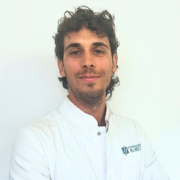
Ignazio Niosi earned his bachelor’s degree in Biomedical Engineering from the University of Palermo (Italy) in 2019, specializing in the field of biomaterials. Subsequently, in March 2020, he moved to Milan to pursue a master’s degree in Biomedical Engineering for Biotechnology, Cells, and Tissues (BCT) at the Politecnico di Milano.
During his master’s program, he enriched his academic training by participating in the Erasmus+ program at the University of Coimbra in Coimbra, Portugal. This six-month experience allowed him to engage with an international context and deepen his field of study within a European academic environment.
For his experimental master’s thesis, Ignazio collaborated with the Institute of Biorobotics at the Scuola Superiore Sant’Anna, developing a research project aligned with the objectives of both institutions and his scientific interests. After earning his master’s degree in 2022, he received a fellowship at the Institute of Biorobotics, within the Regenerative Technologies Lab. In this context, he had the opportunity to work on European projects focused on biomedical engineering and regenerative medicine, further consolidating his experience in biomedical research.
Currently, Ignazio Niosi is conducting a research fellowship abroad at the McGowan Institute for Regenerative Medicine at the University of Pittsburgh. This work is supported by a Fulbright Visiting Student Research Scholarship and a grant from the Blanceflor Foundation, which he received to lead an experimental research project focused on the fabrication and in-situ tissue engineering of engineered heart valves. This experience represents an important opportunity for his scientific and personal growth within a context of international excellence in the field of regenerative medicine.
Outside of academia, Ignazio pursues passions related to nature, engaging in activities such as rock climbing, fishing, and hiking. He believes that contact with nature rejuvenates both body and mind and helps him face daily challenges with balance and serenity.
Attività Scientifica
Ignazio Niosi is a young researcher in the biomedical field with a solid scientific background in the synthesis, design, and characterization of biocompatible polymers, both natural and synthetic. His research lies at the intersection of biomaterials science, tissue engineering, and advanced biofabrication techniques. He is particularly interested in the potential of biomaterials and their possible applications as smart materials for future biomedical technologies.
During his research career, he has worked on a regenerative medicine project aimed at cartilage regeneration, contributing to the development of an injectable gelatin-based hydrogel mechanically reinforced with electrospun PCL fibers dispersed within the matrix. In this context, he conducted a feasibility study to explore the possibility of injecting the mixture by varying various process parameters, including temperature, formulation composition, and needle type, with the aim of optimizing its use in minimally invasive approaches.
He also actively contributed to the management of project activities within a bioengineering project, focusing on the fabrication of the tip of a bio-actuated catheter consisting of an optimized silicone mixture. In this context, he studied and compared fabrication techniques such as warmed dip-coating and injection molding, highlighting their advantages and limitations in relation to the technical and functional objectives of the device.
He has also gained experience in tissue engineering and biocompatibility, working on the preparation of composites for bone tissue engineering applications based on dextran and diisocyanate prepolymers incorporating tricalcium phosphate, the synthesis of bioactive glasses via the aqueous sol-gel method, and the fabrication of porous PCL scaffolds through foaming processes and mixing with supercritical carbon dioxide.
Since the start of his doctoral studies, Ignazio has further expanded his expertise by acquiring a solid foundation in numerical fluid dynamics modeling techniques and electrodeposition processes. He has also worked on 3D solid modeling for the design and development of anatomically shaped stents for cardiovascular applications, integrating advanced design approaches with the specific requirements of biomimetic structure biofabrication.
His current expertise focuses on biofabrication techniques, with a particular emphasis on robotic electrodeposition technologies, which are considered promising tools for the creation of complex, biomimetic constructs intended for applications in tissue engineering and regenerative medicine.
Thanks to a solid technical and multidisciplinary foundation, Ignazio is able to handle a wide range of tools, methodologies, and techniques, ranging from the design to the characterization of biomimetic devices. His dedication to research, combined with his ability to collaborate in multidisciplinary settings, makes him a highly adaptable professional capable of contributing effectively to complex scientific projects.
His technical skills include 3D CAD modeling using SOLIDWORKS, Fusion 360, and Autodesk Inventor; numerical simulations with COMSOL; programming in MATLAB, Arduino, and Python; biofabrication techniques such as electrospinning, electrowriting, electrodeposition, TIPS, dip-coating, injection molding, and casting; 3D printing and bioprinting using SLA, FDM, and REGENHU; polymer synthesis; mechanical and rheological testing, including uniaxial tests, flexural tests, flow tests, and oscillatory tests; chemical characterization using FTIR, DSC, and H-NMR; image analysis and processing using scanning electron microscopy, optical microscopy, IDL, and ImageJ.