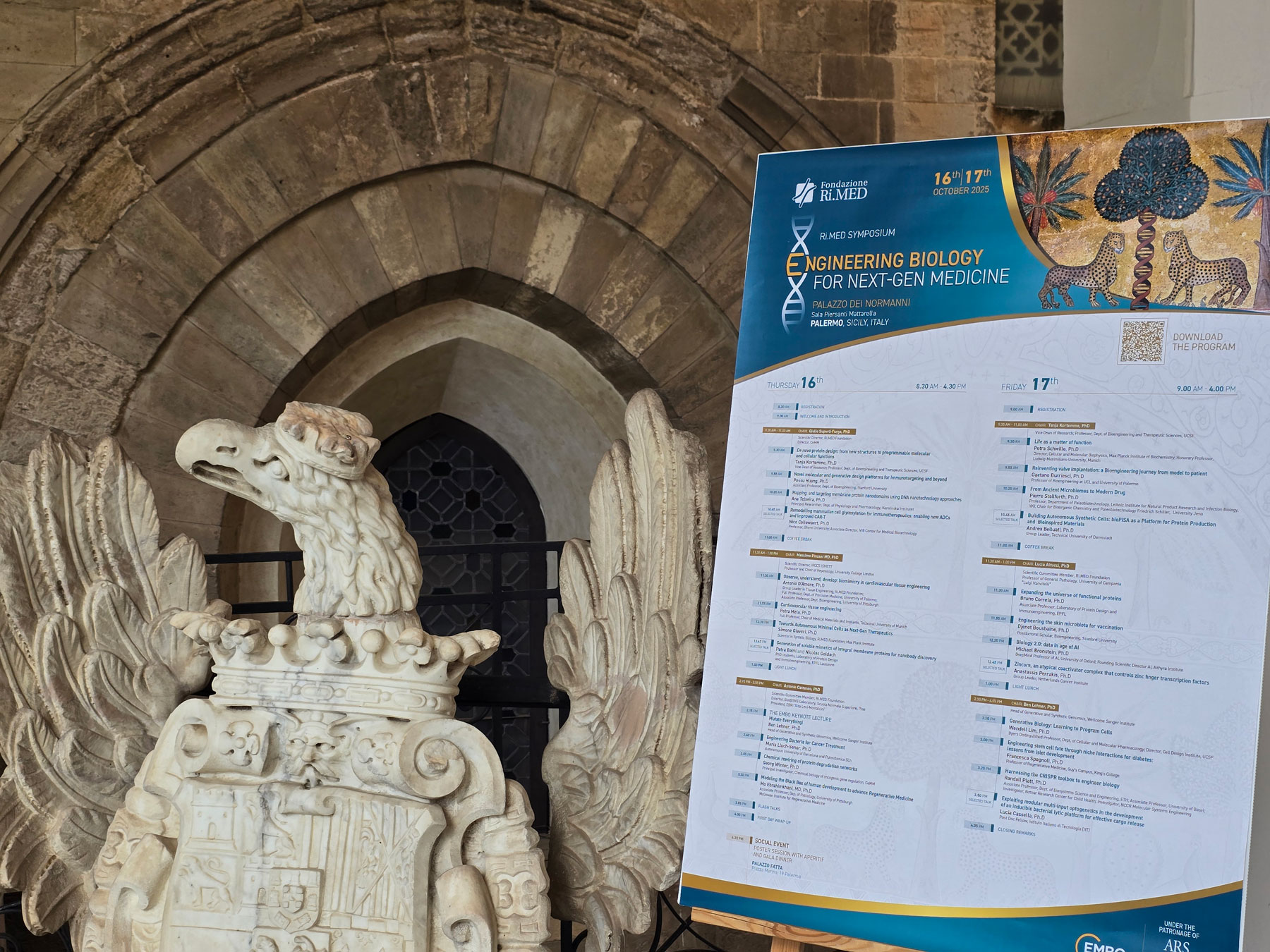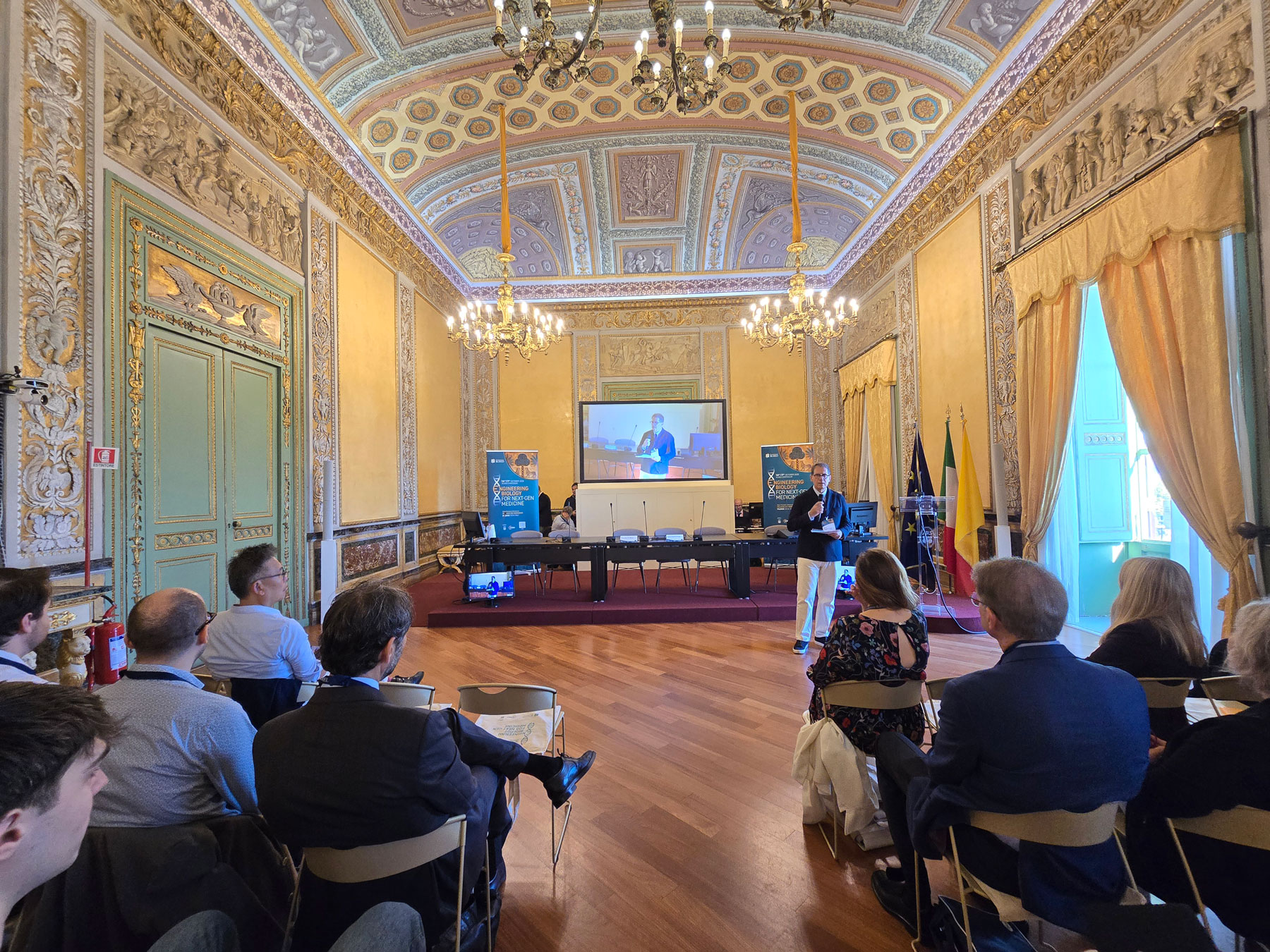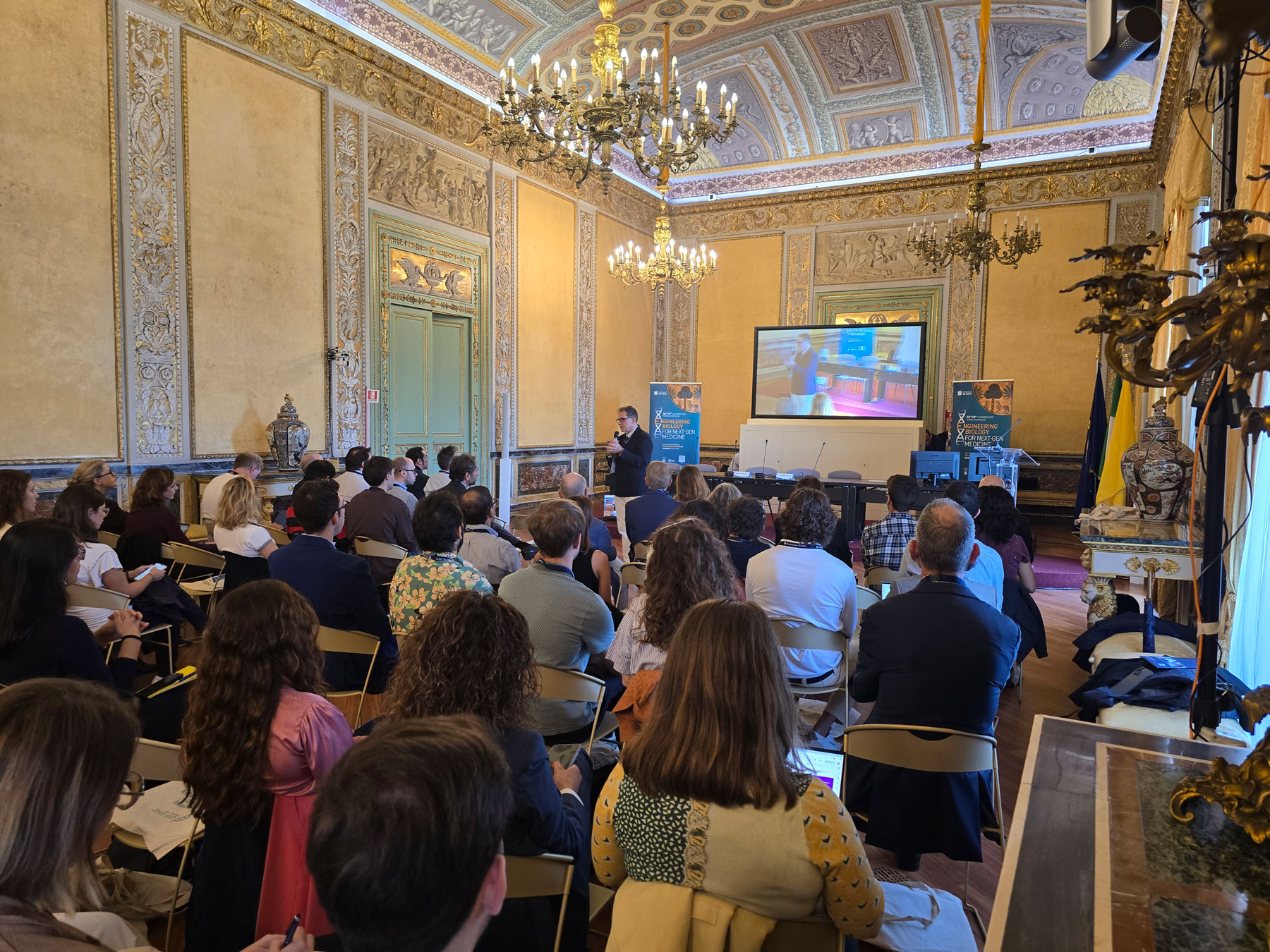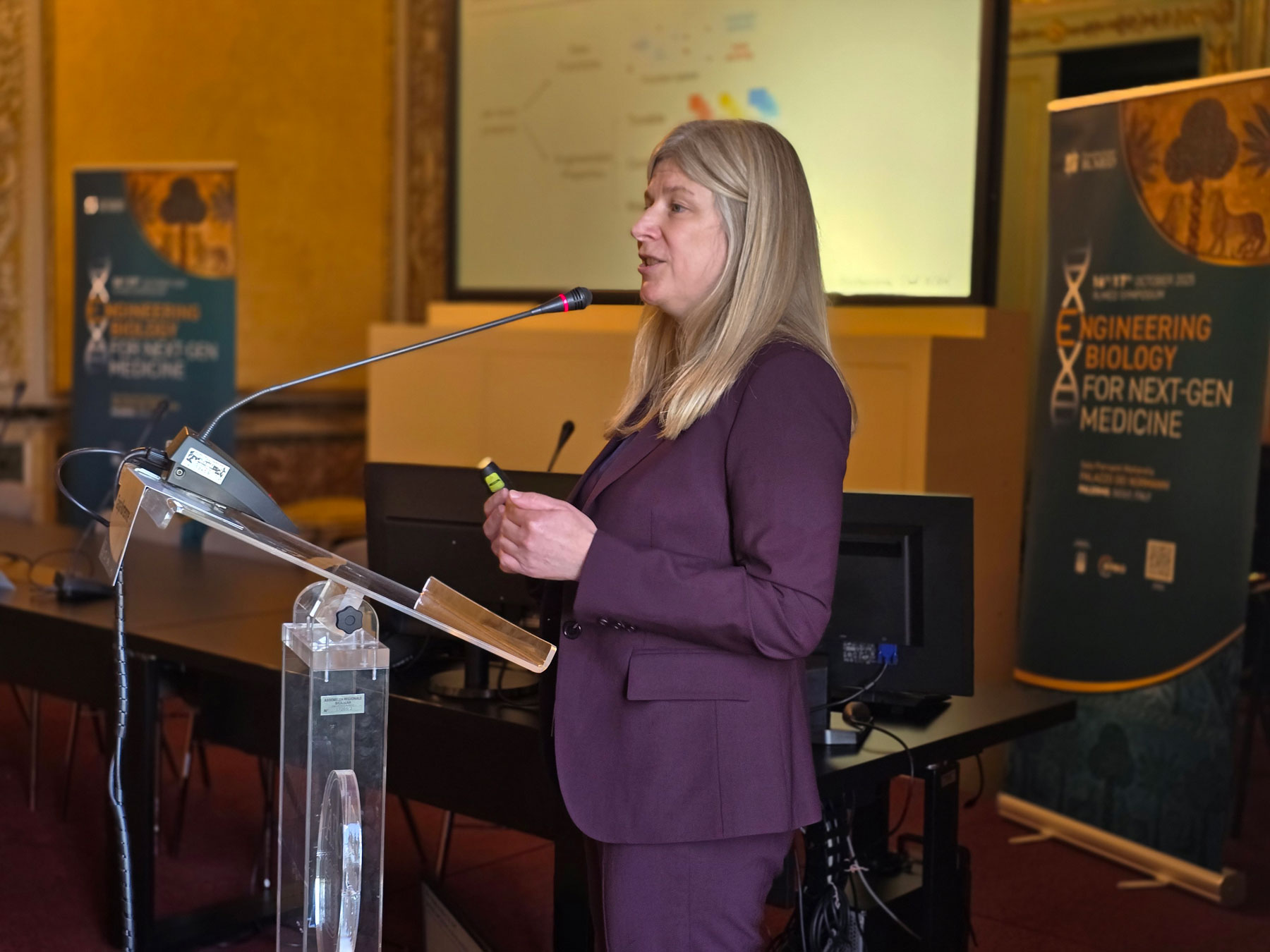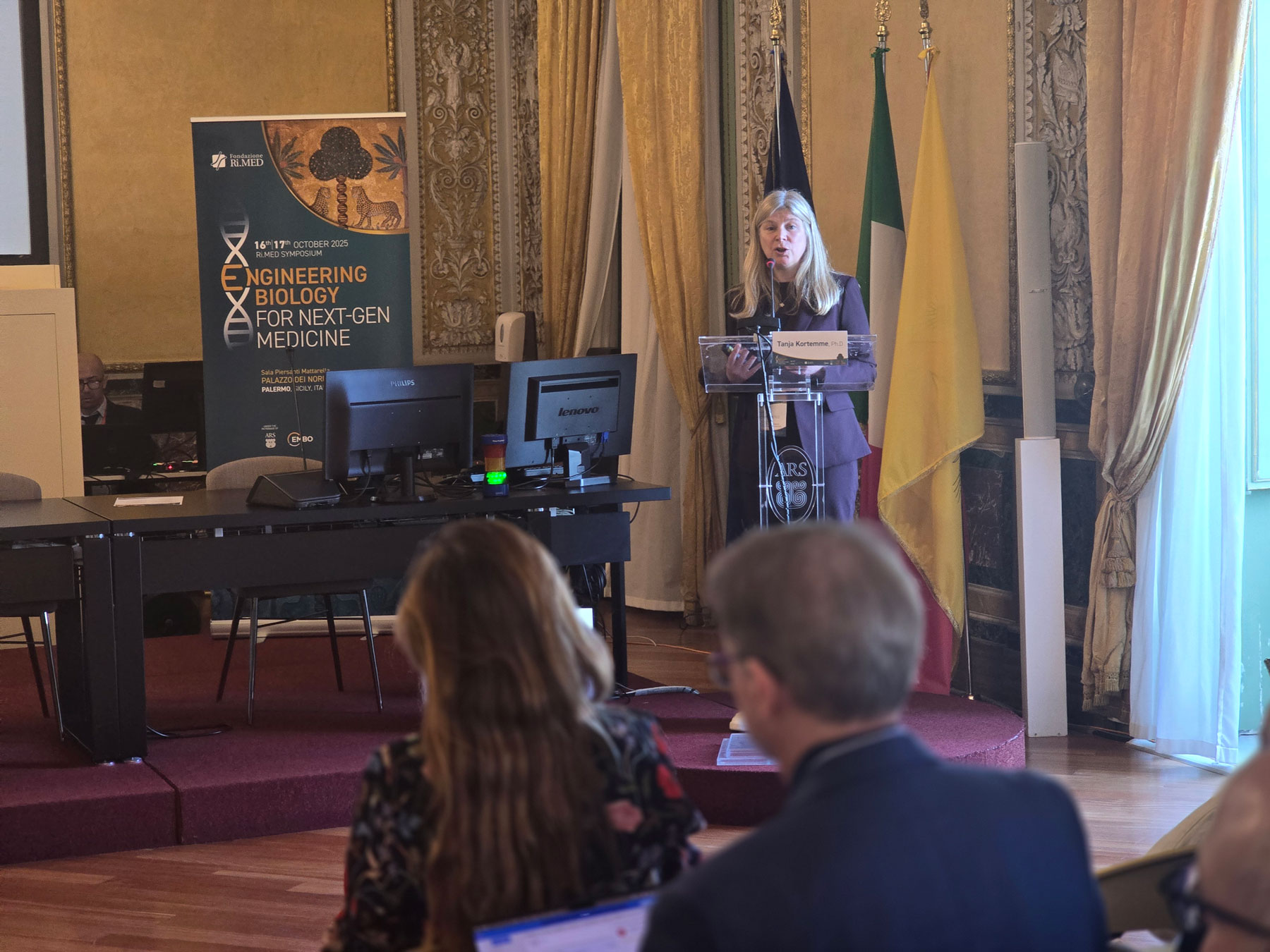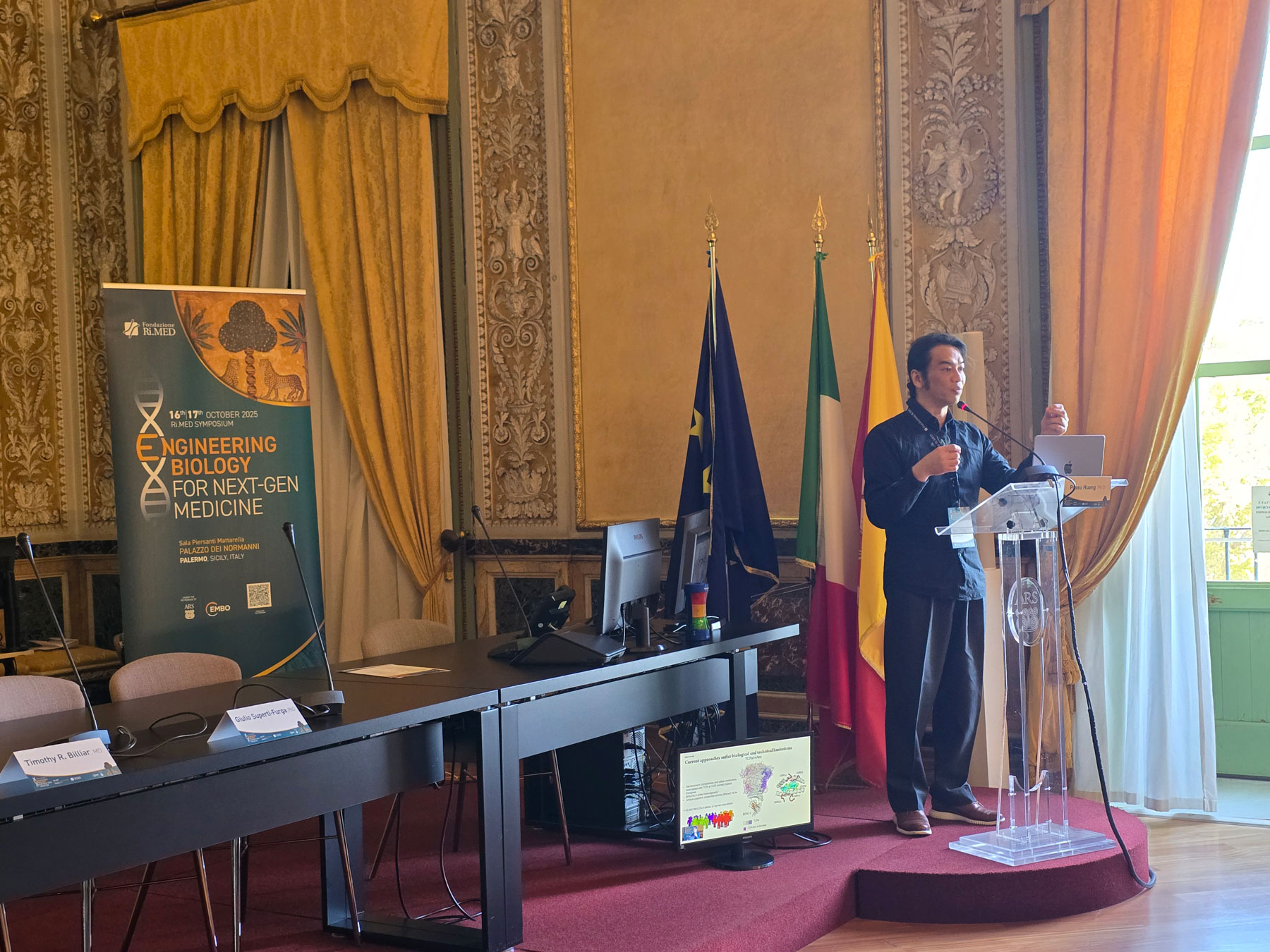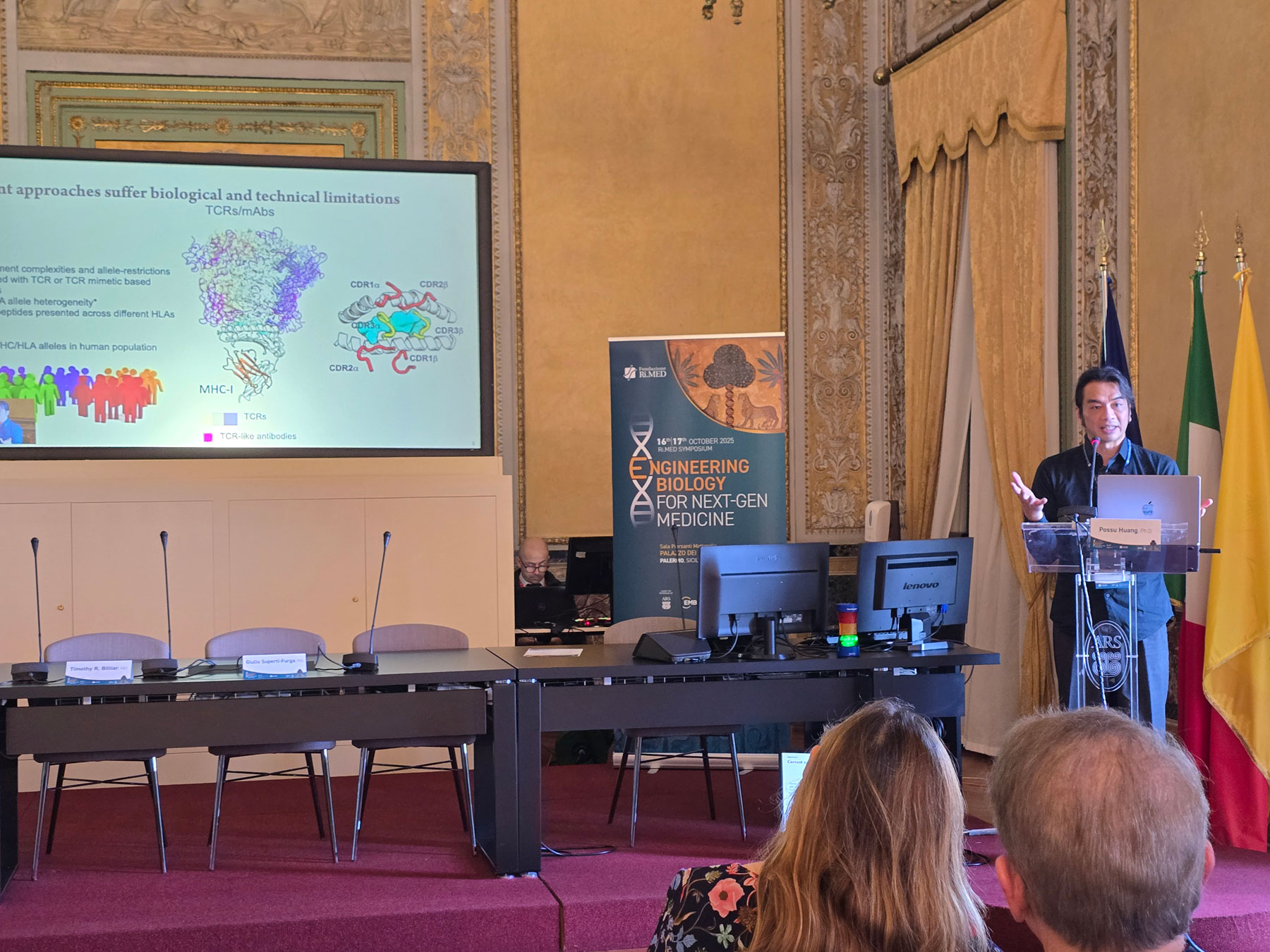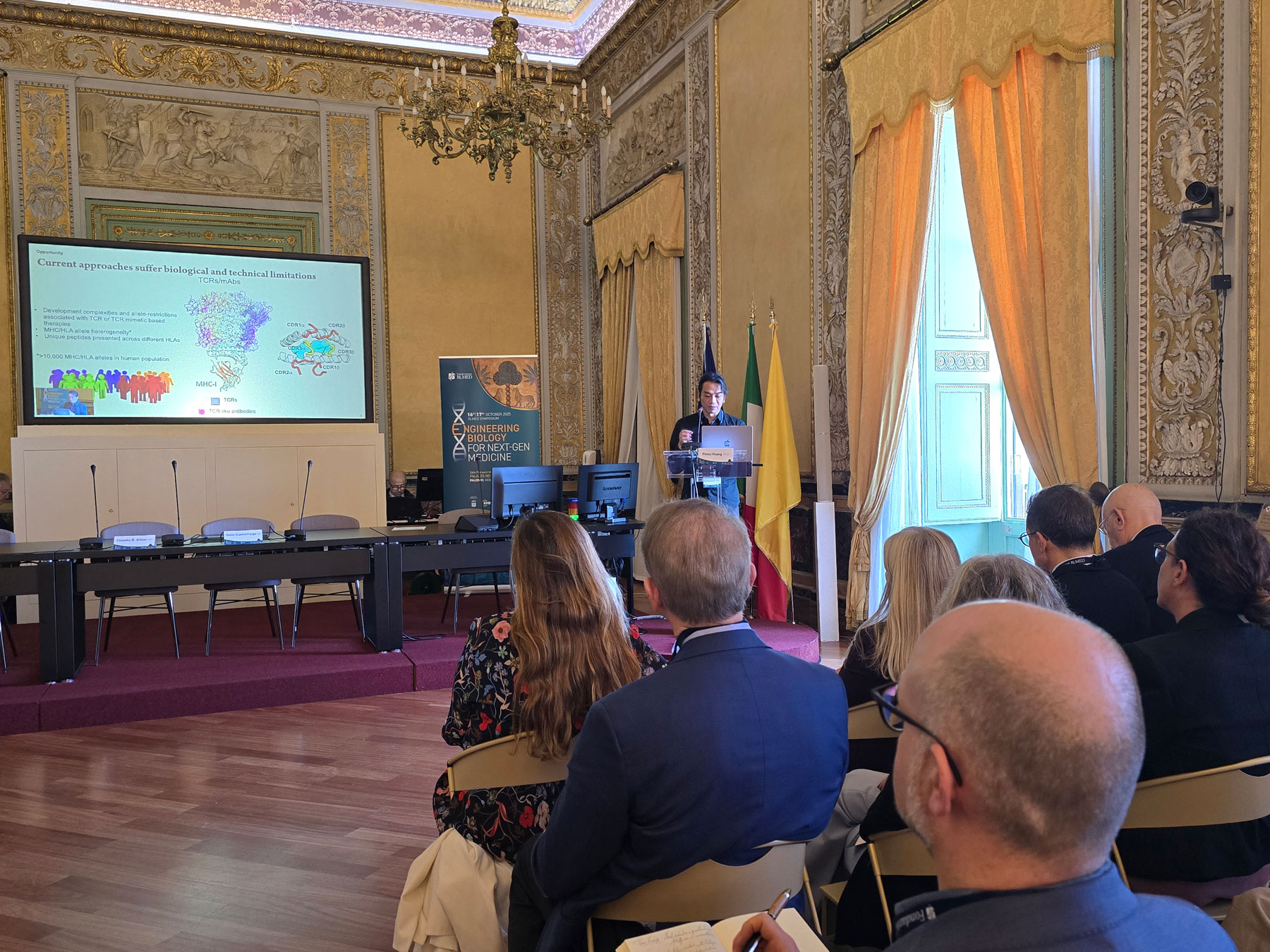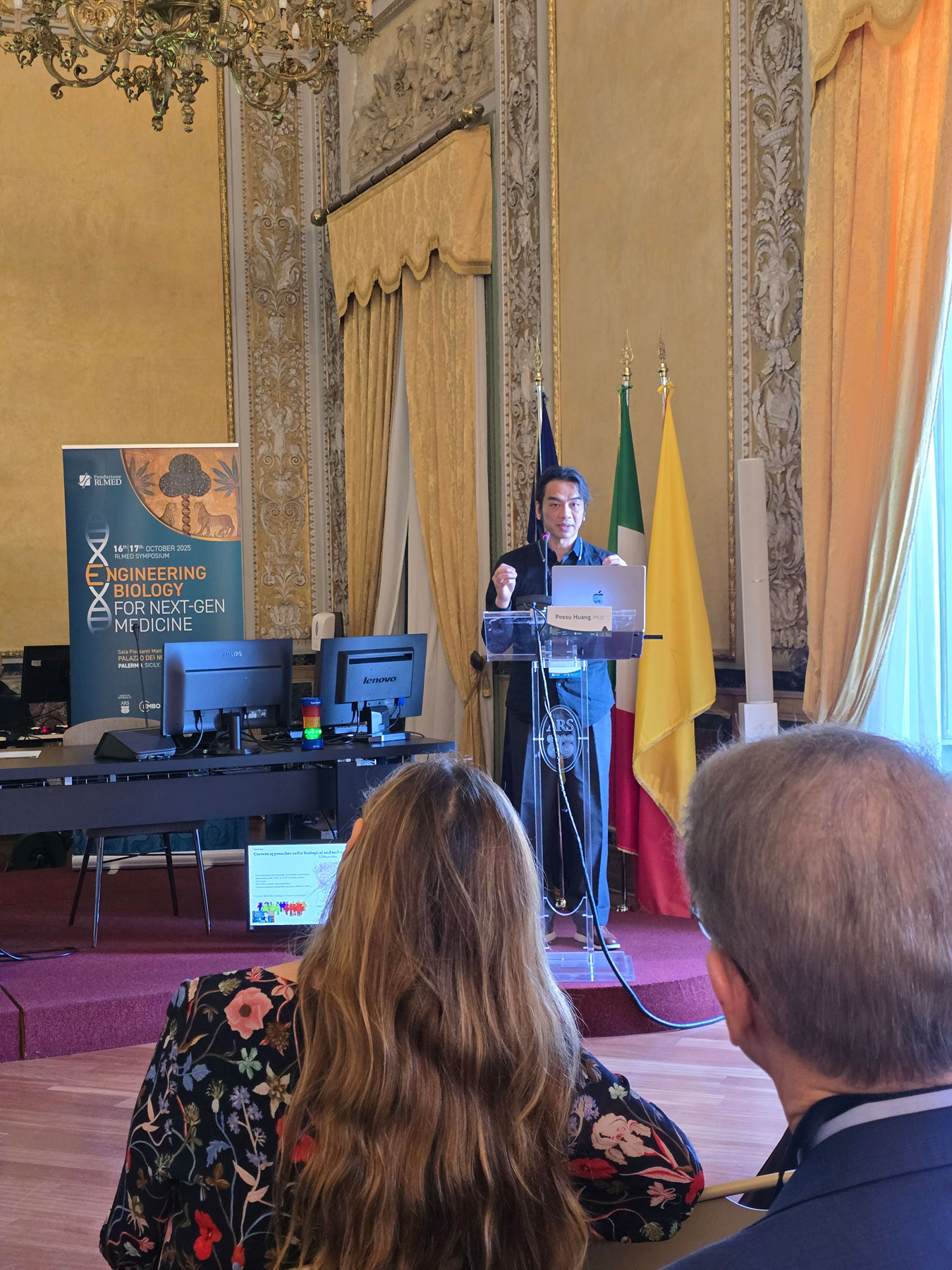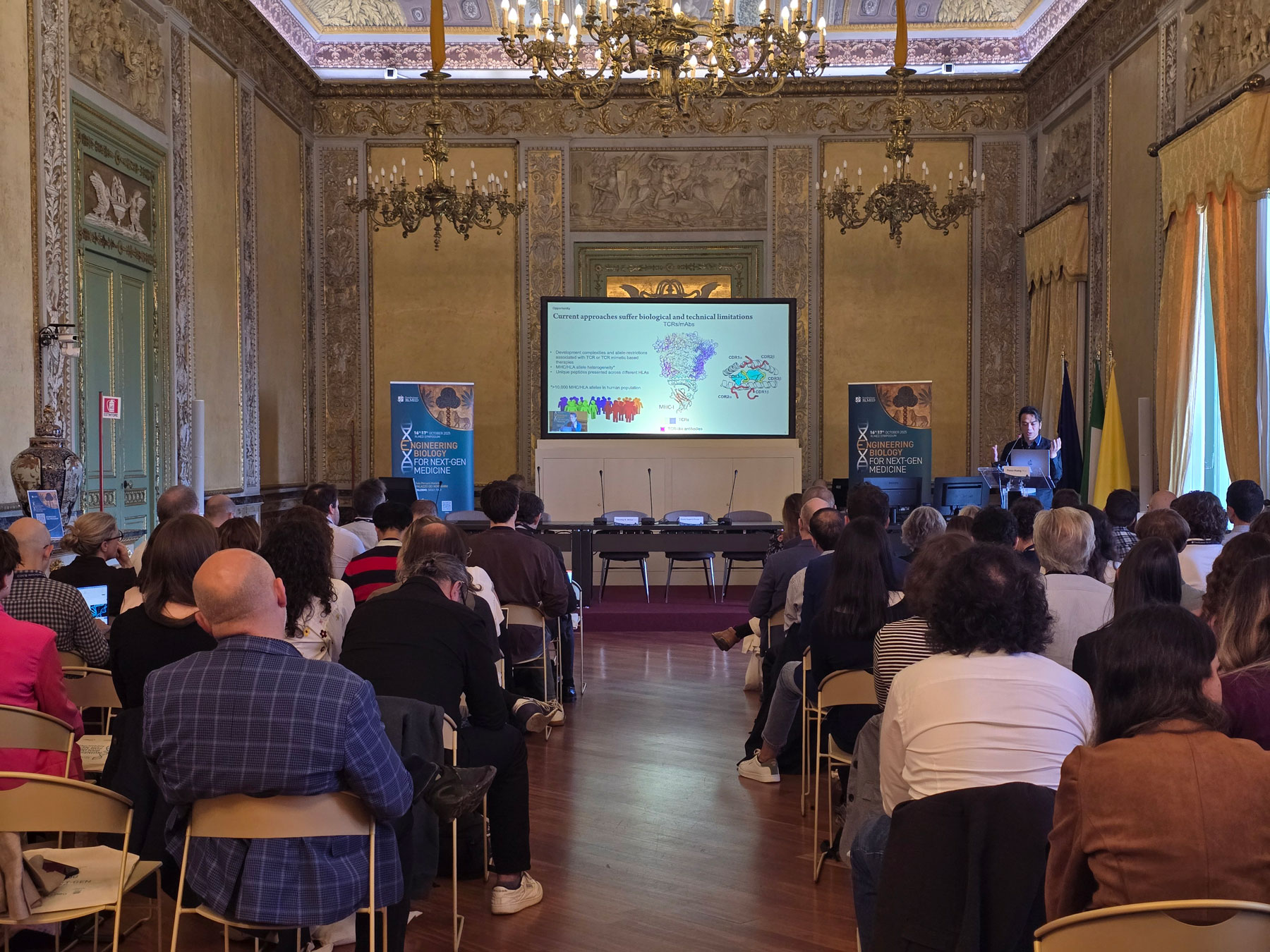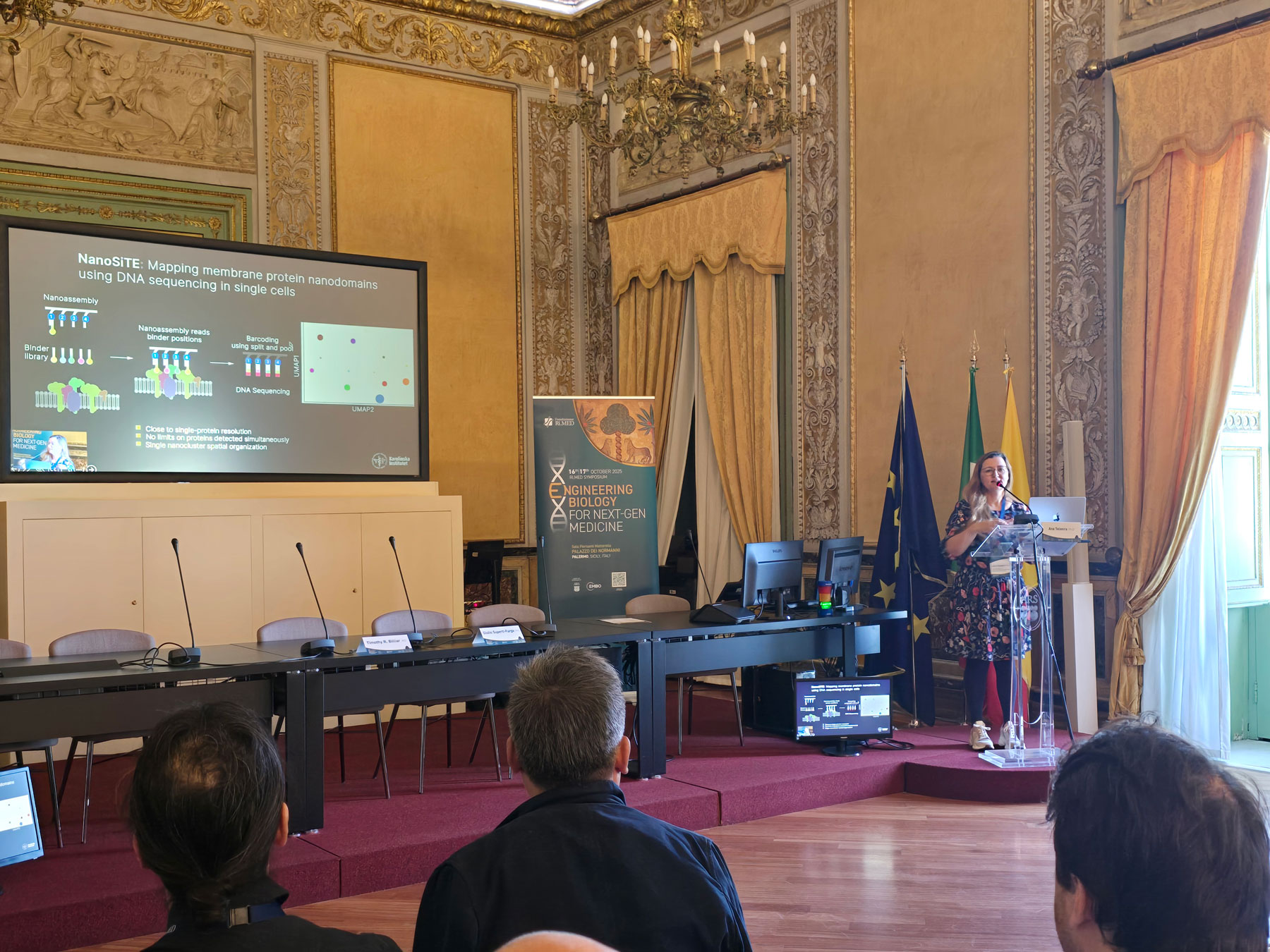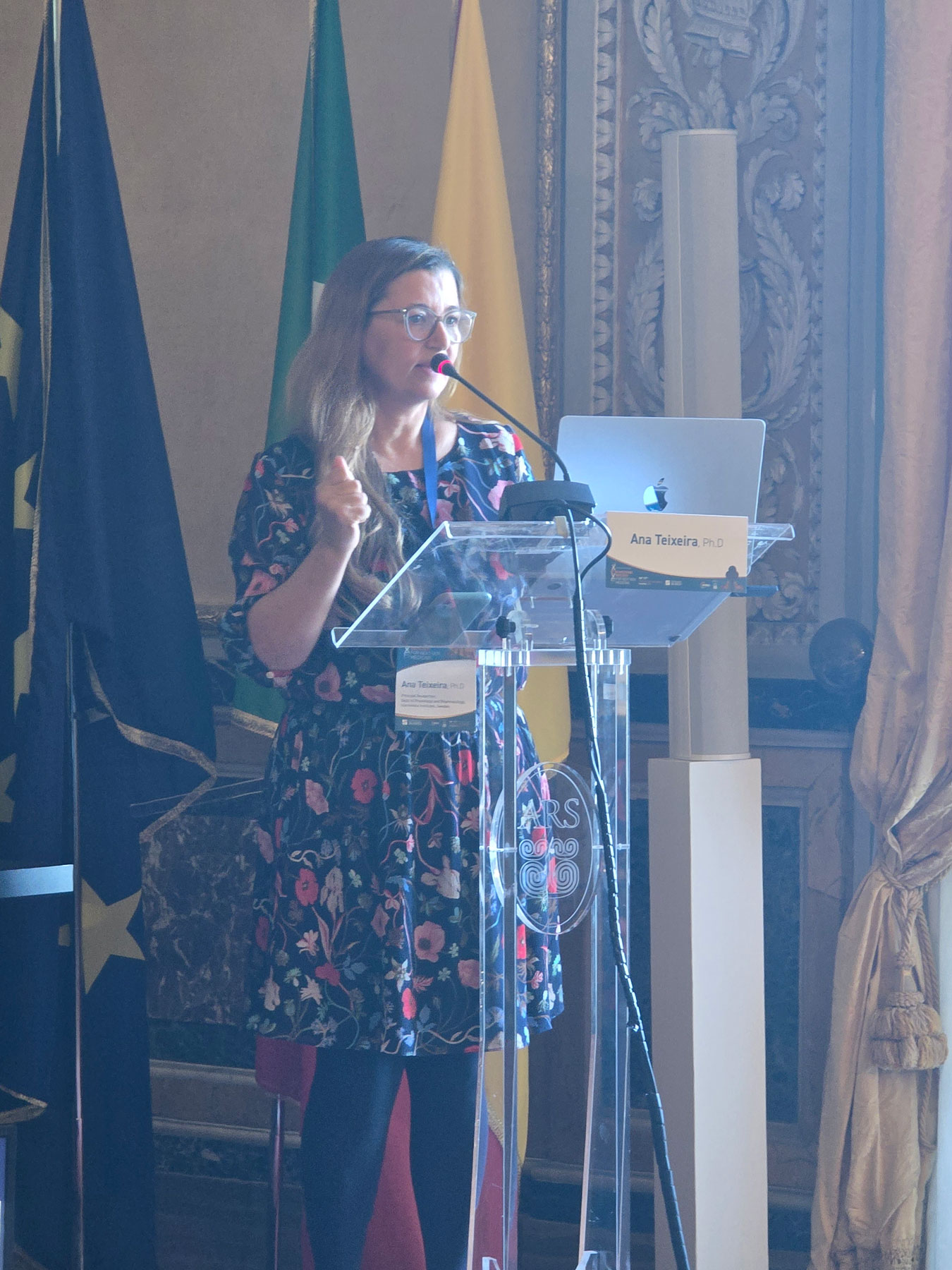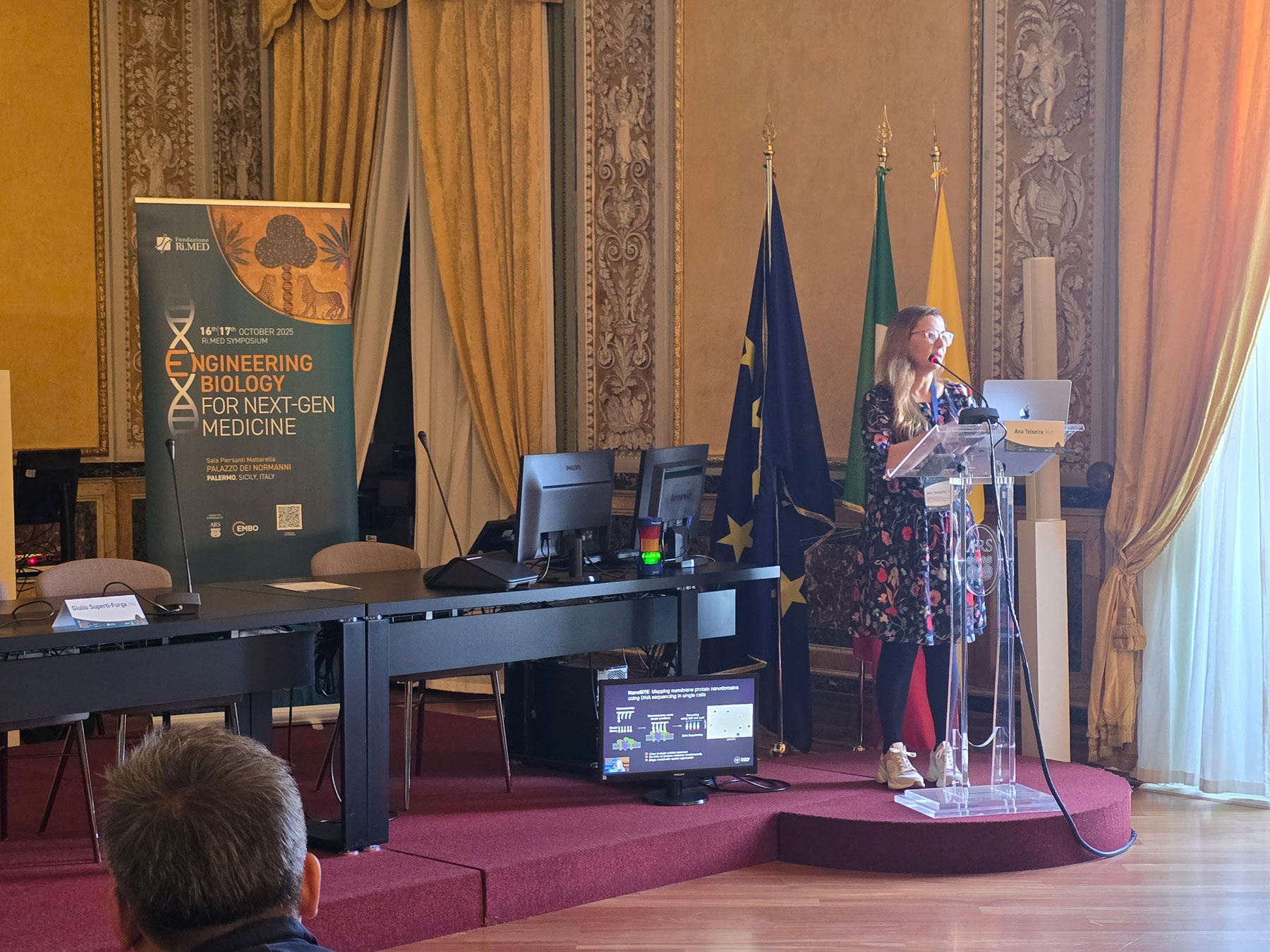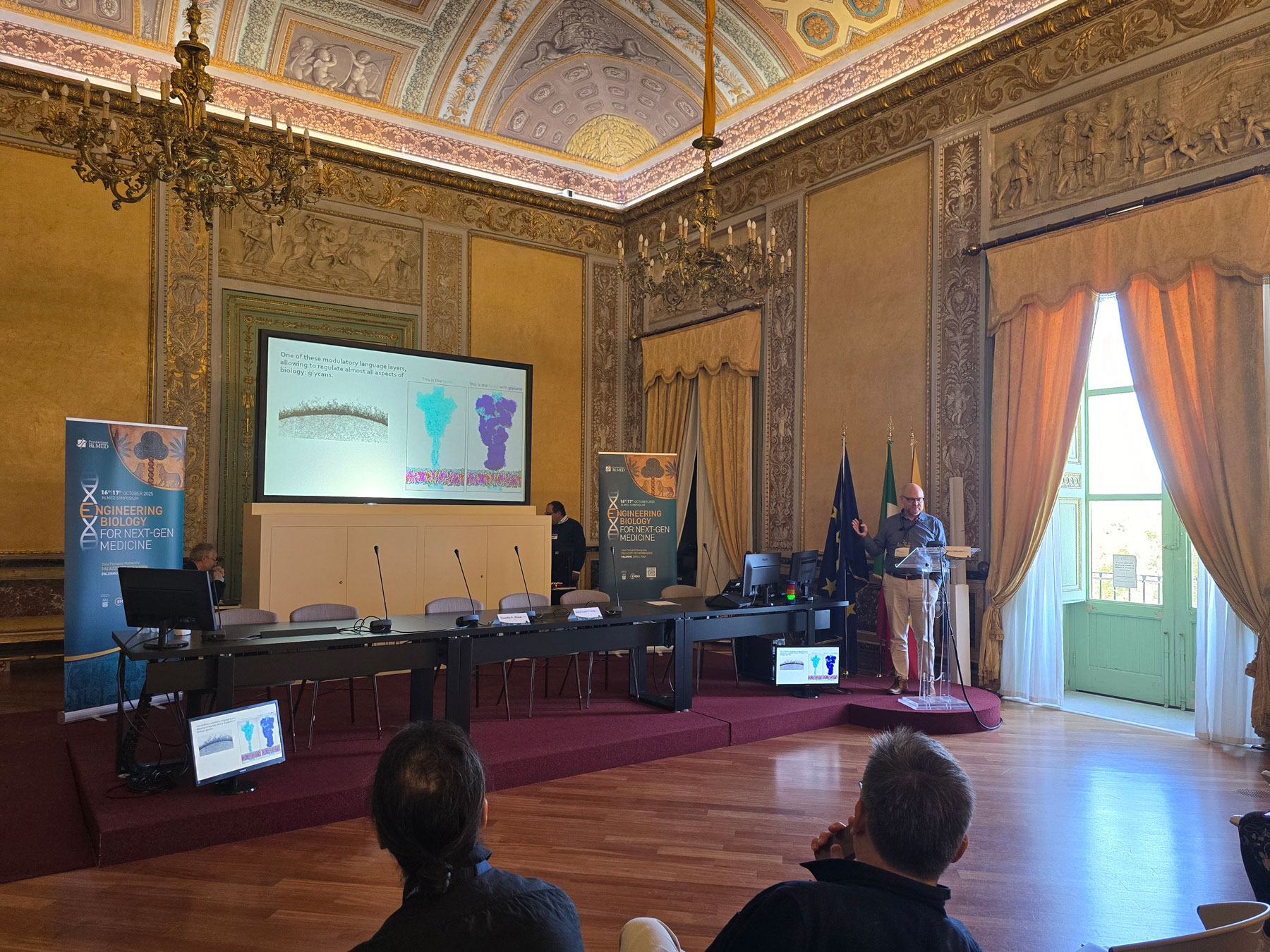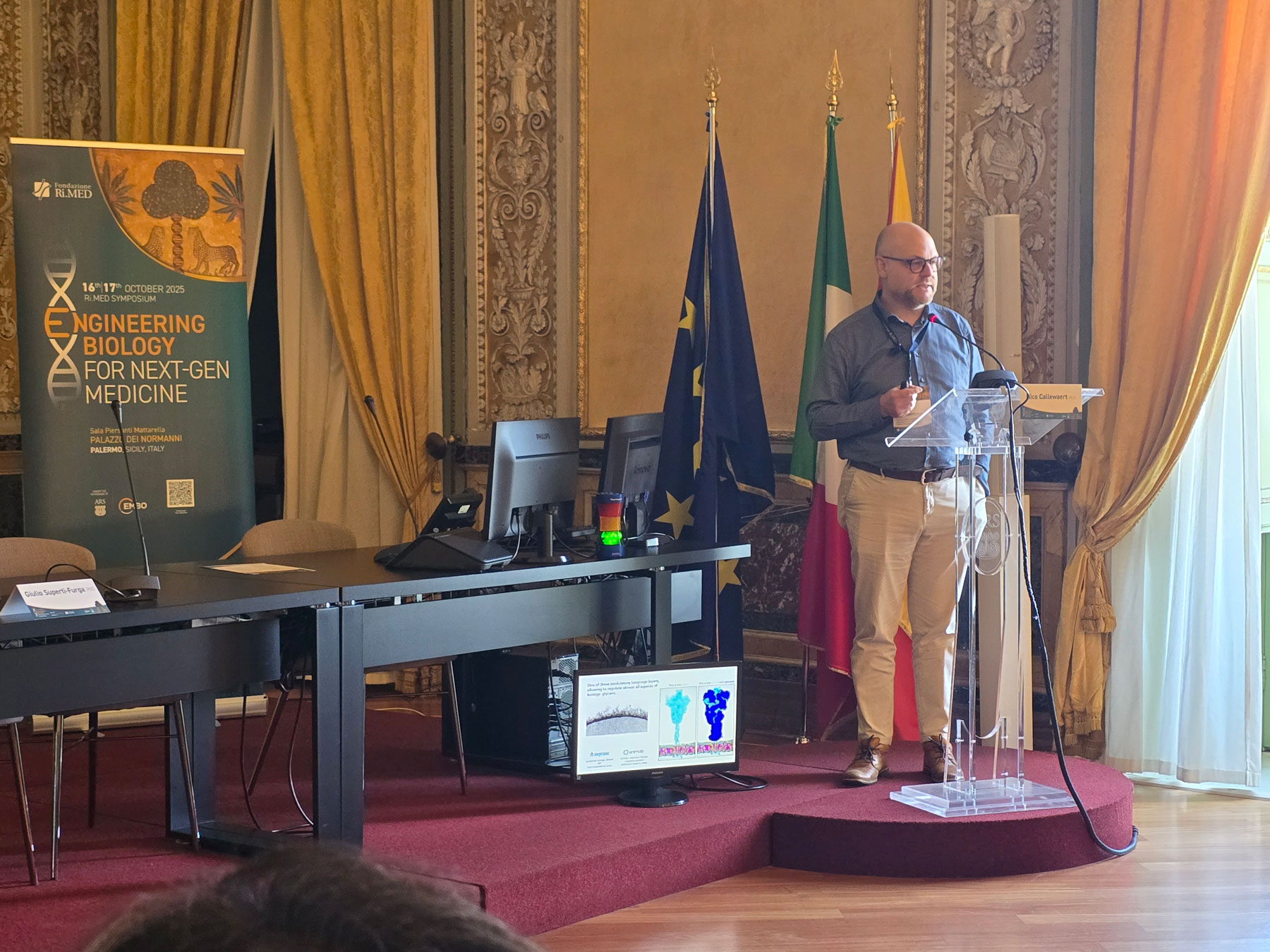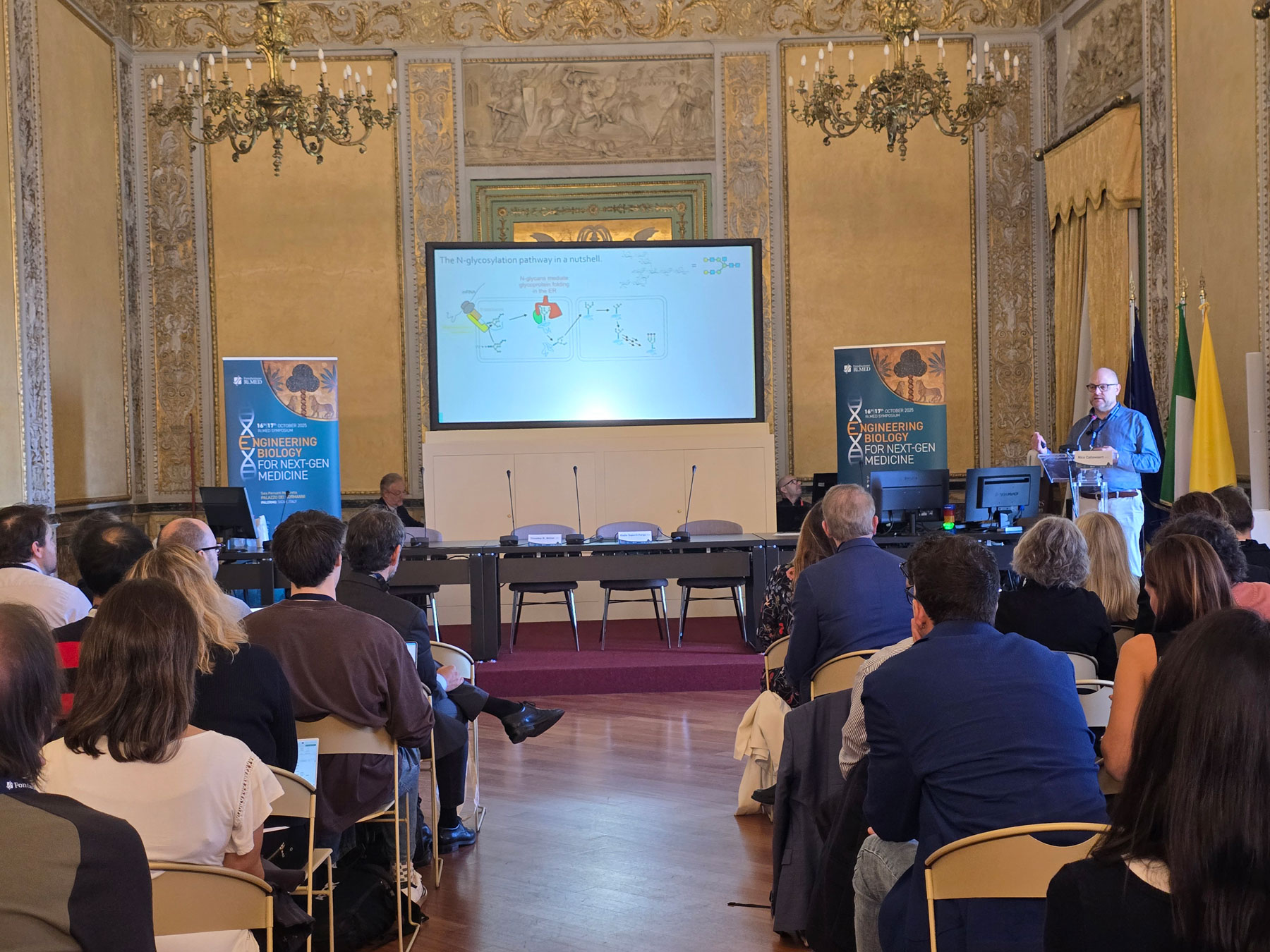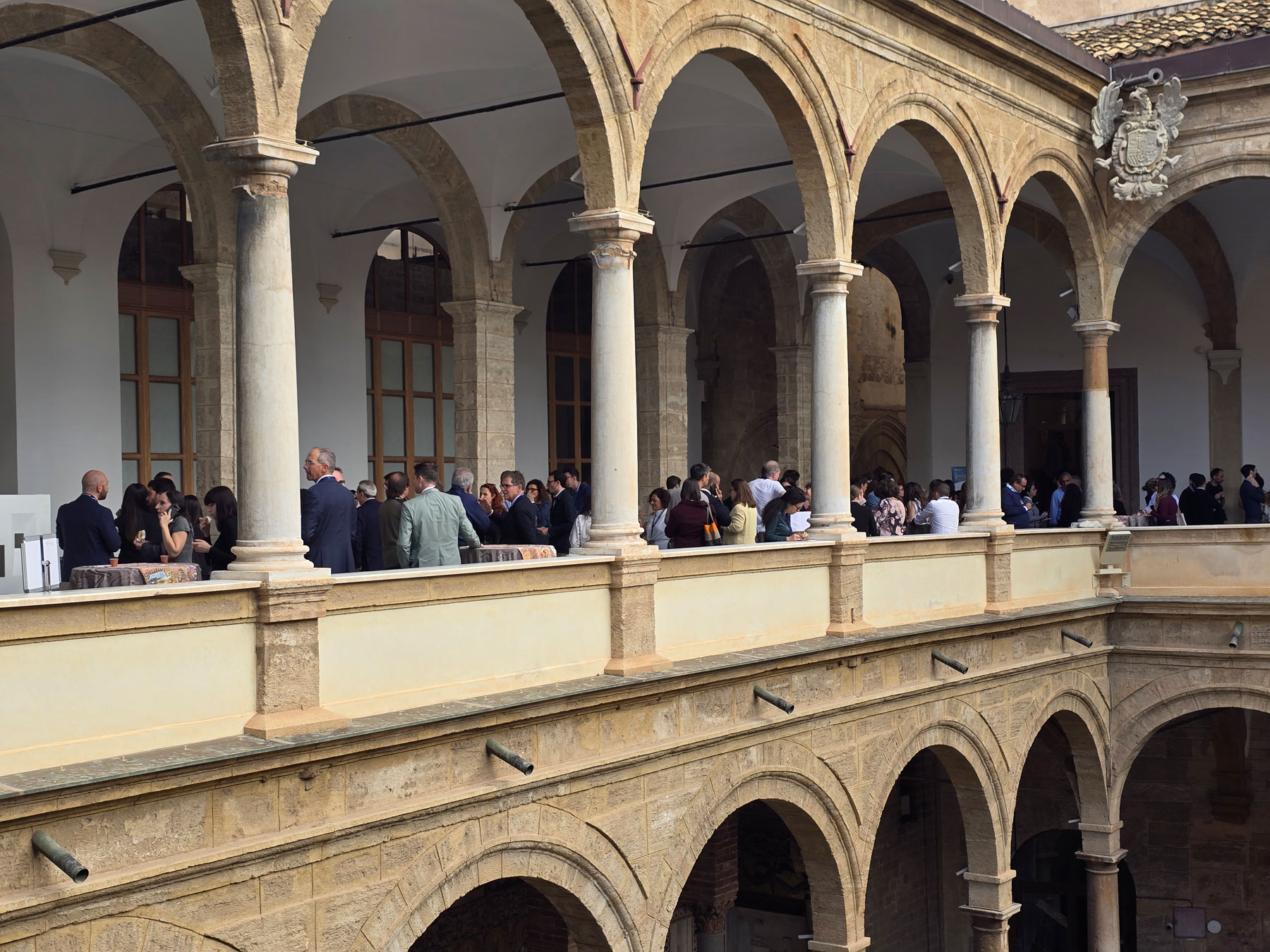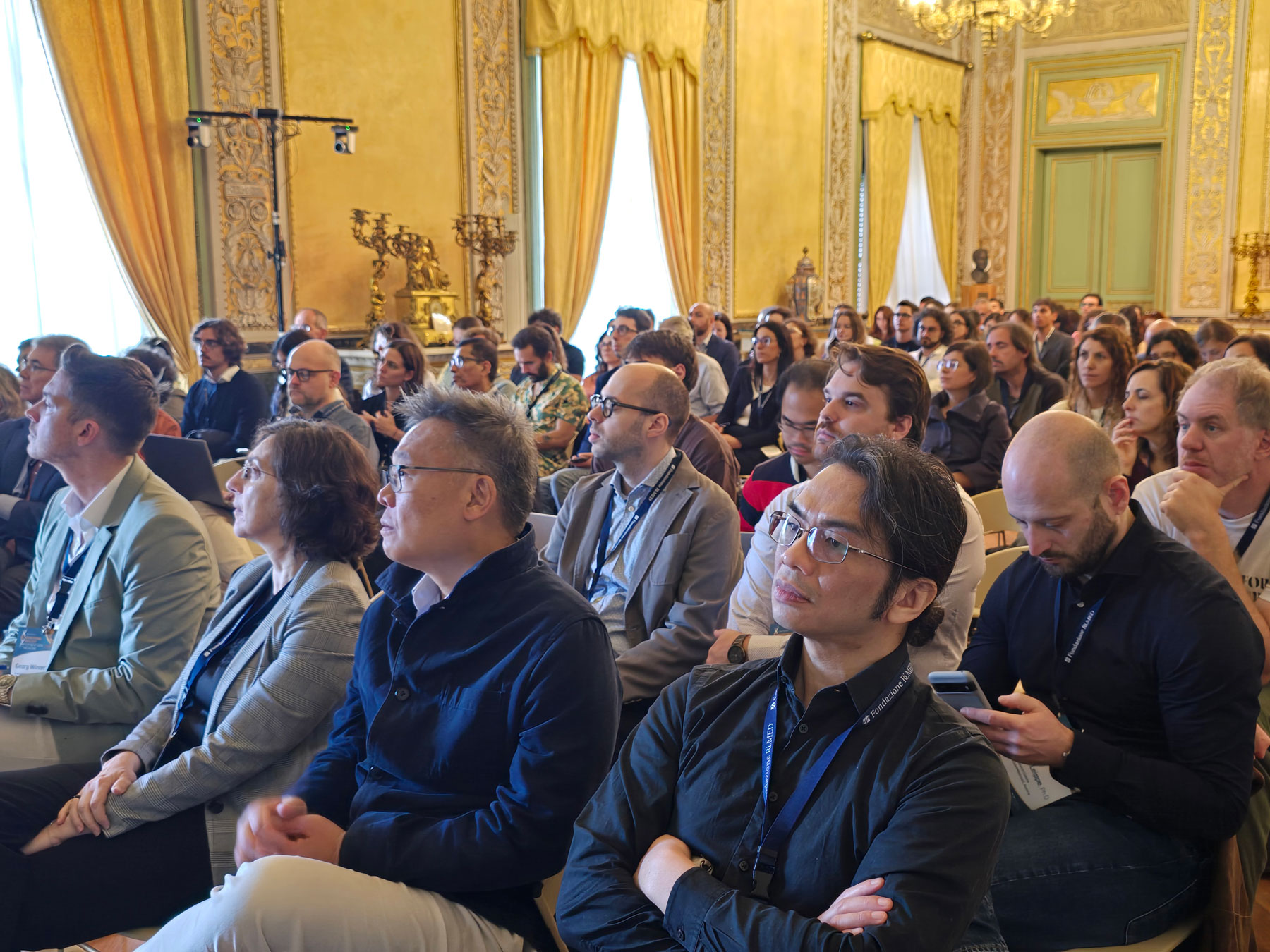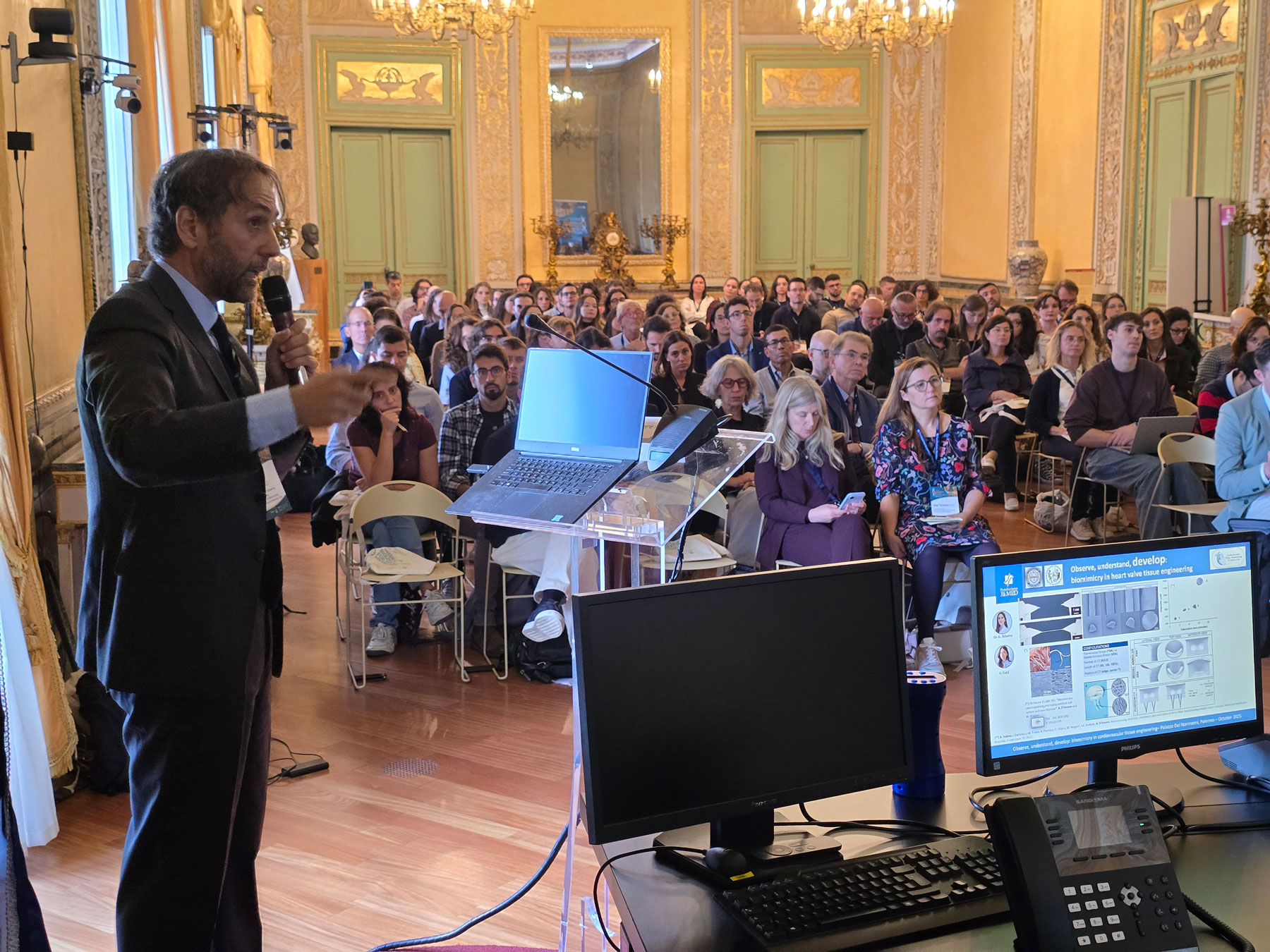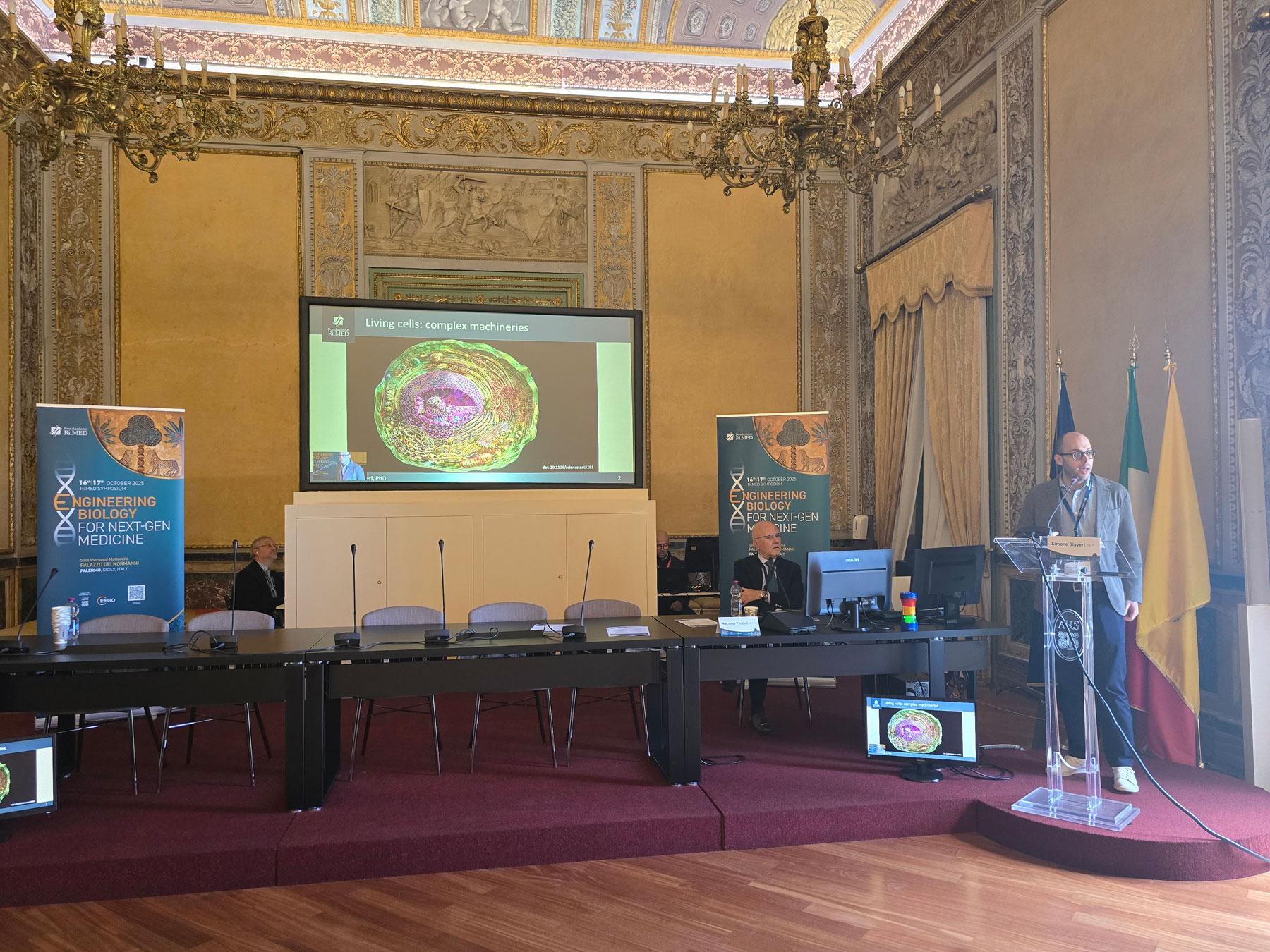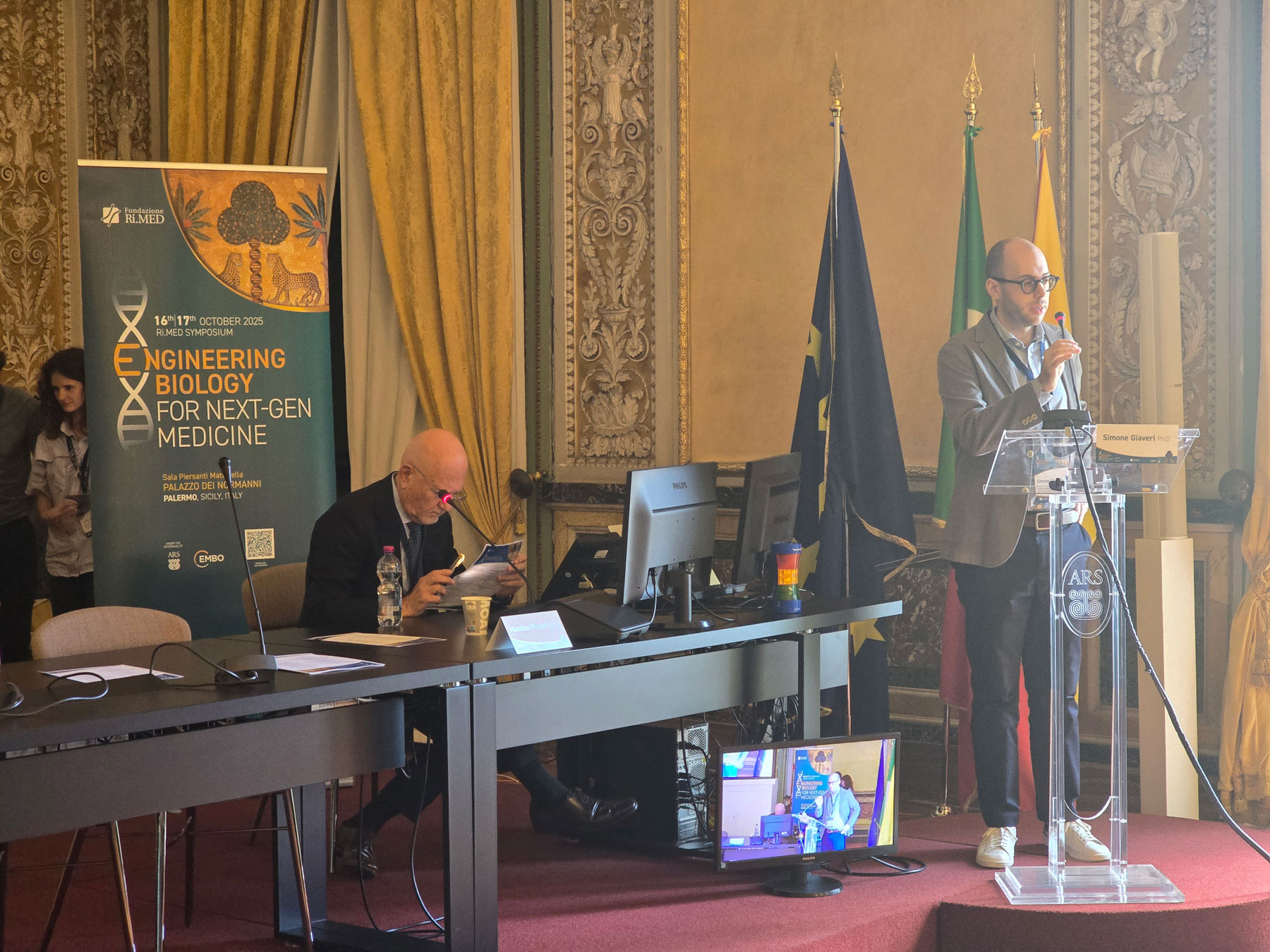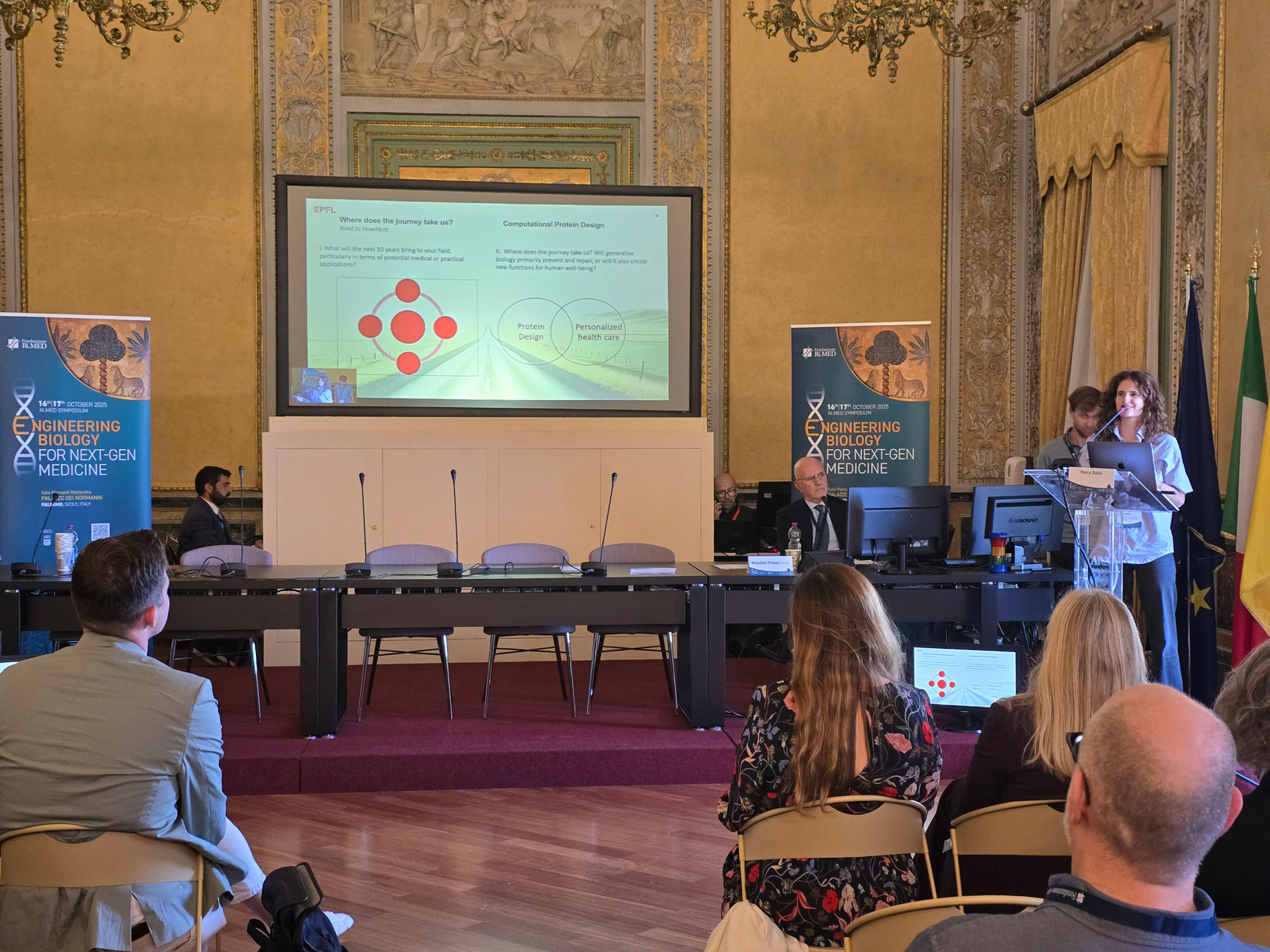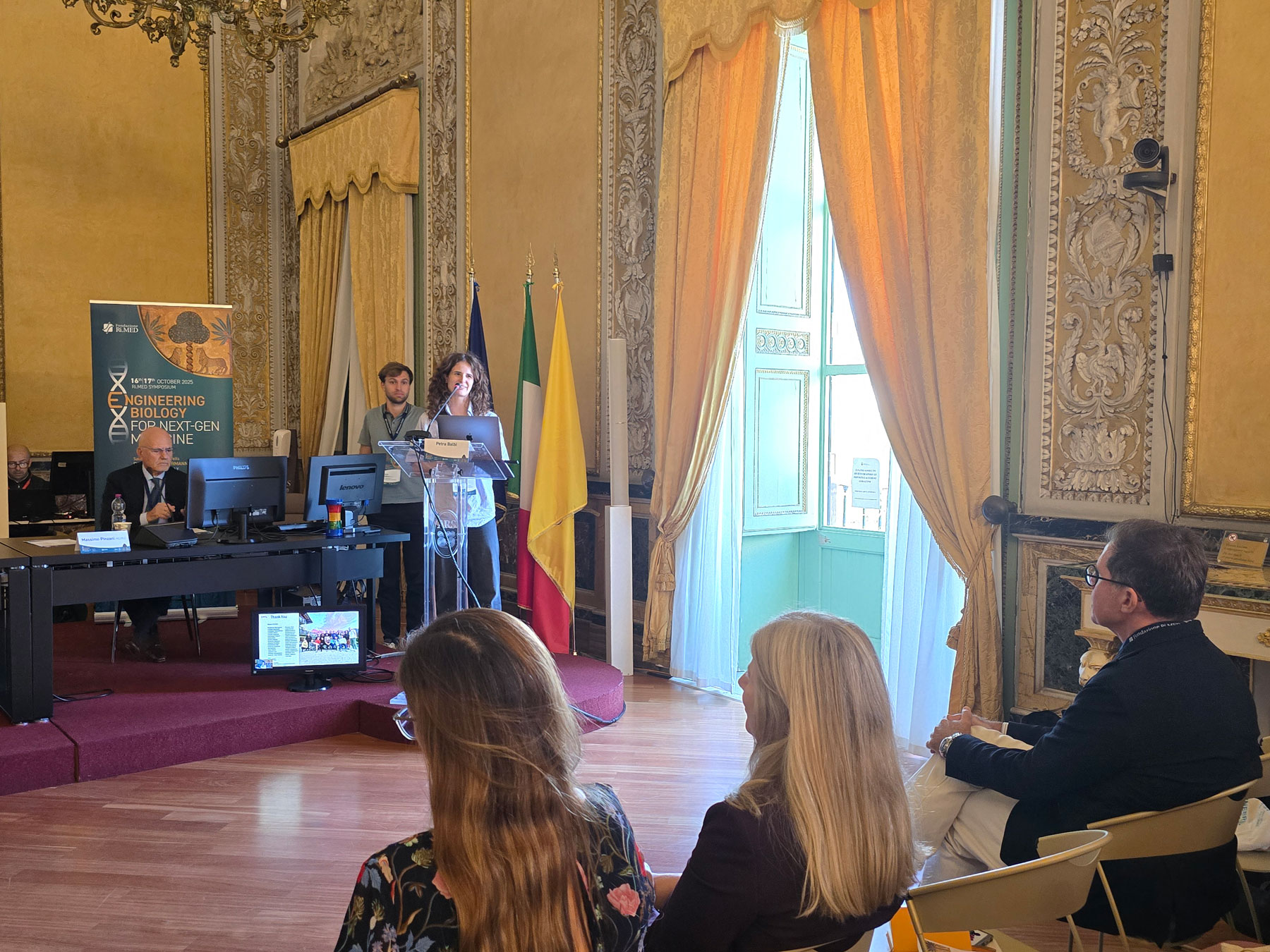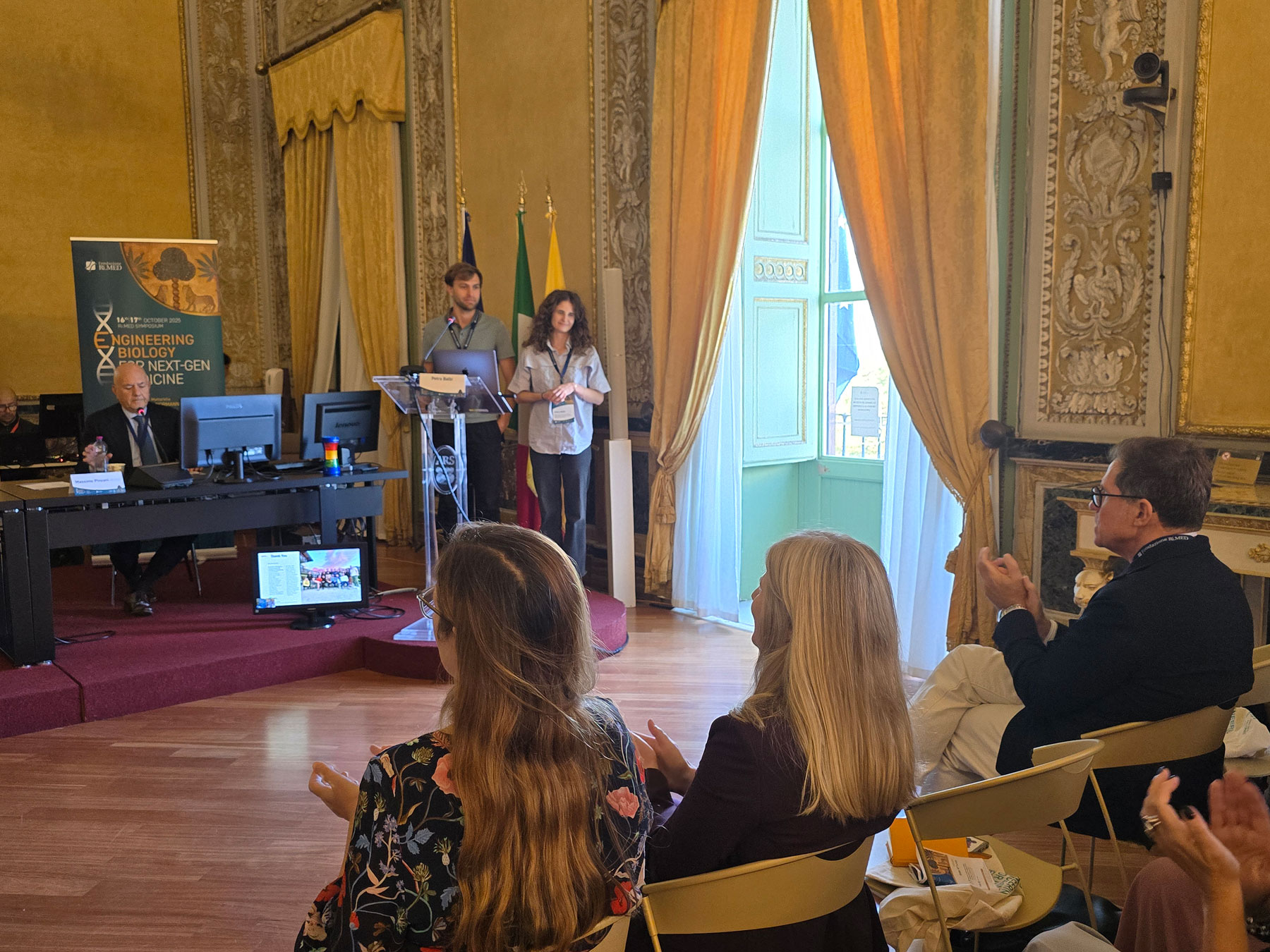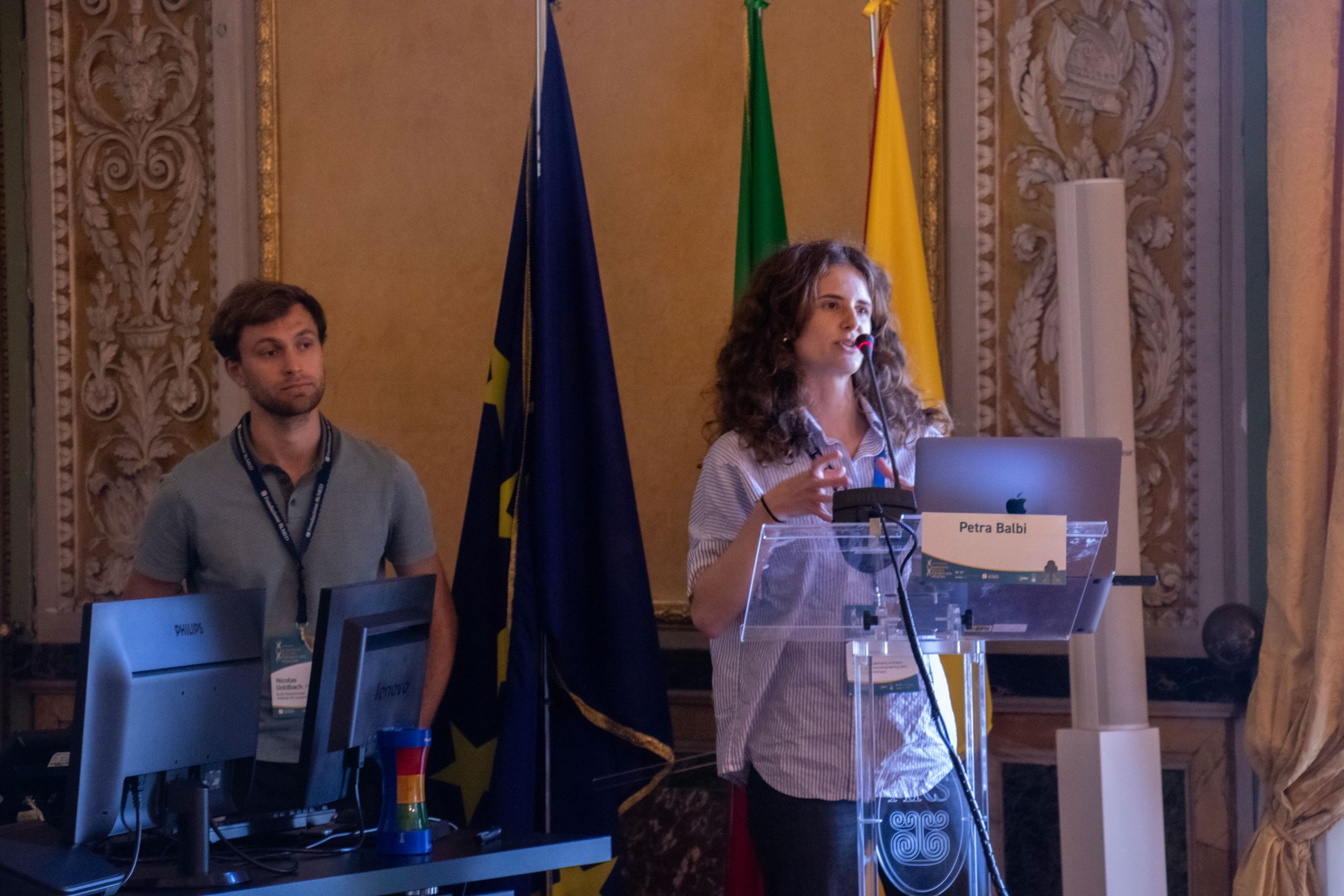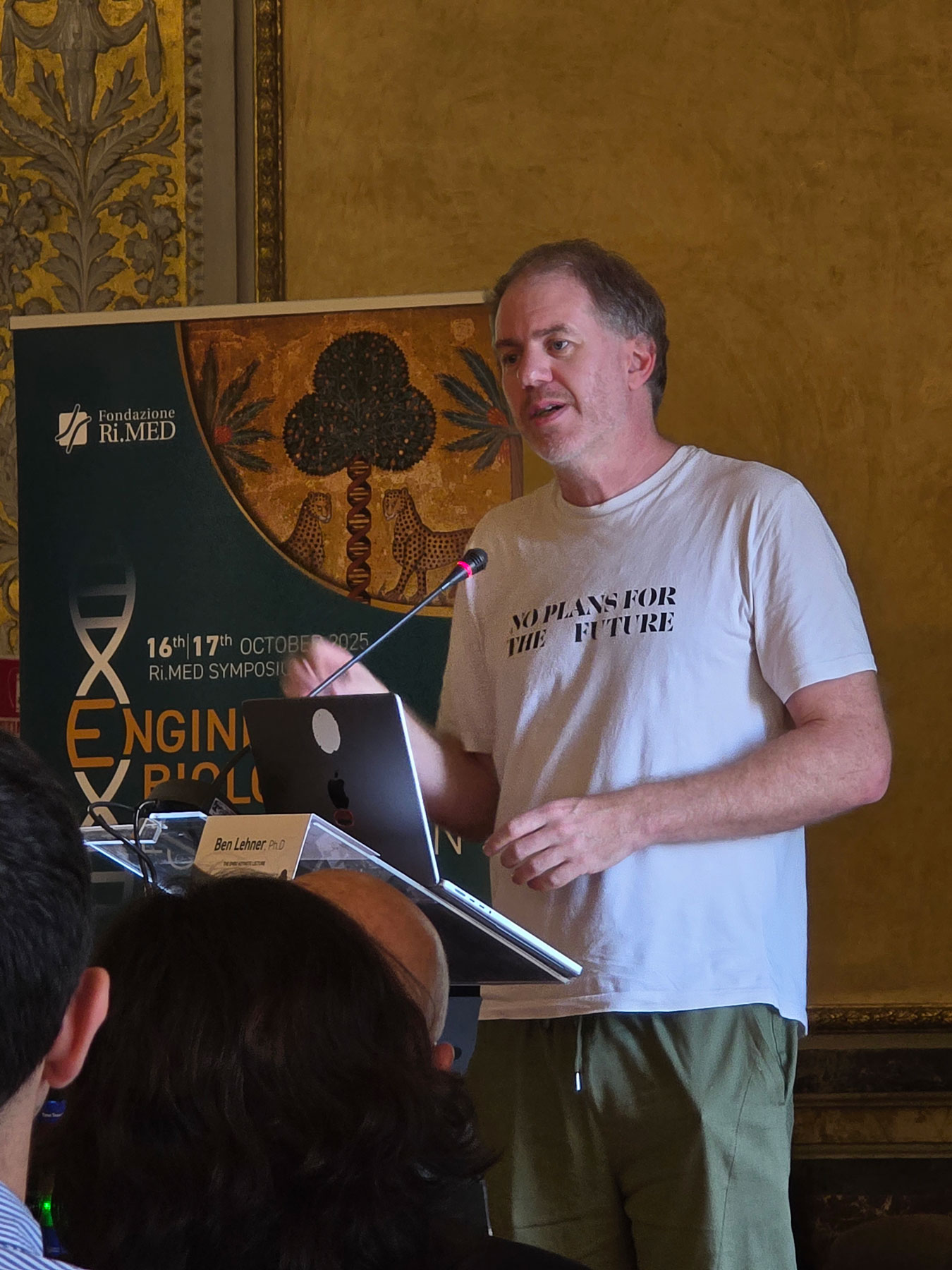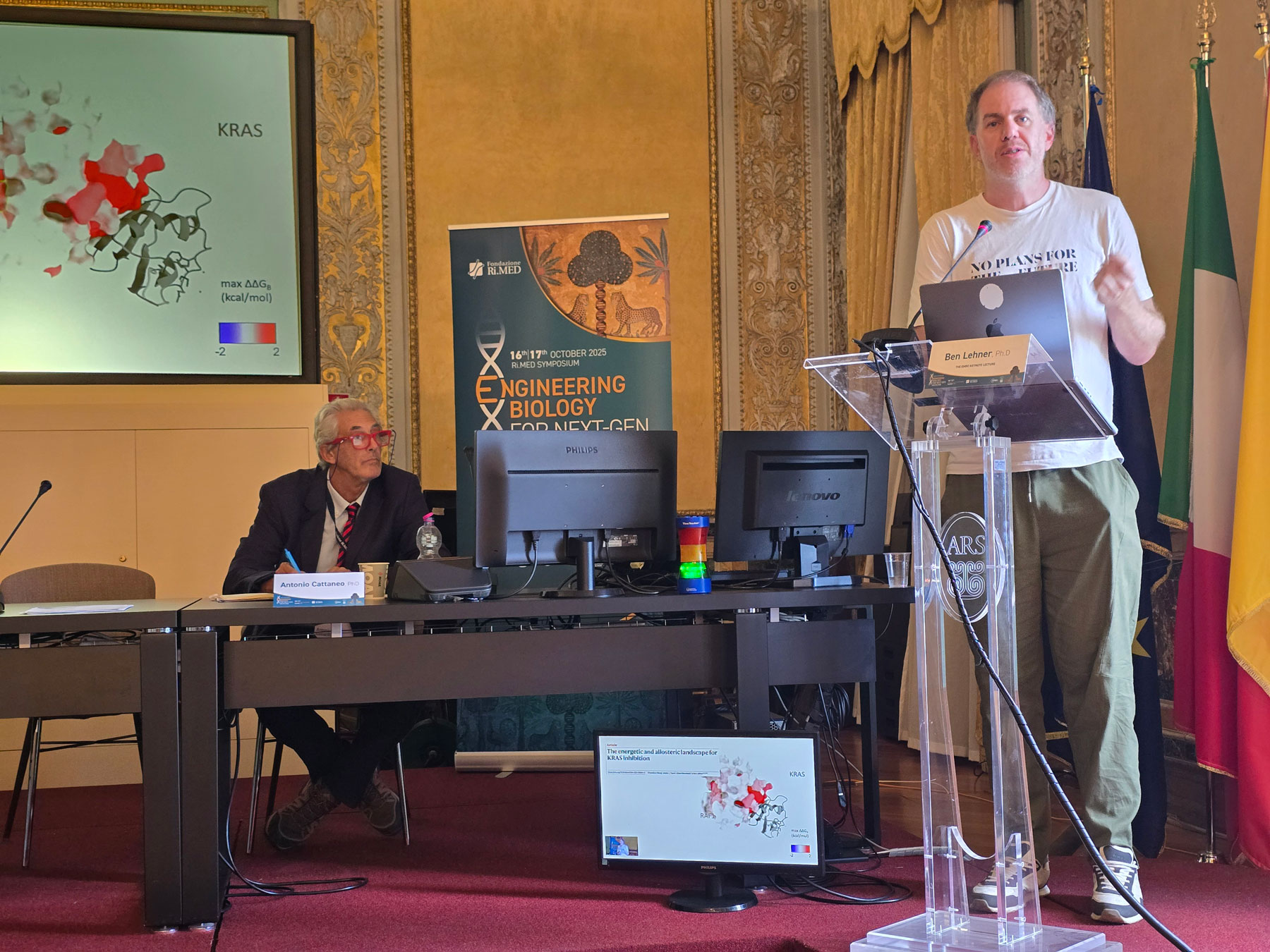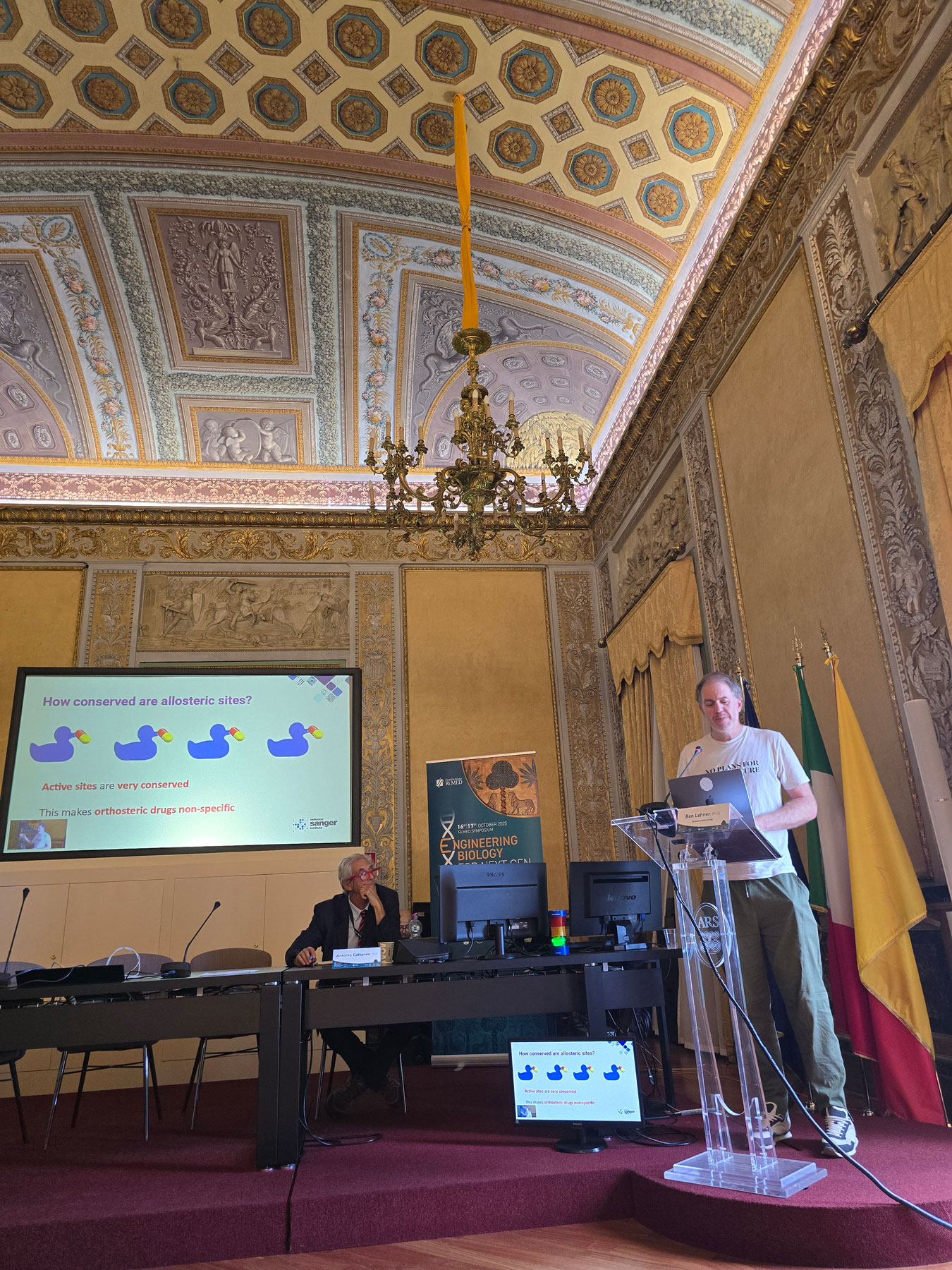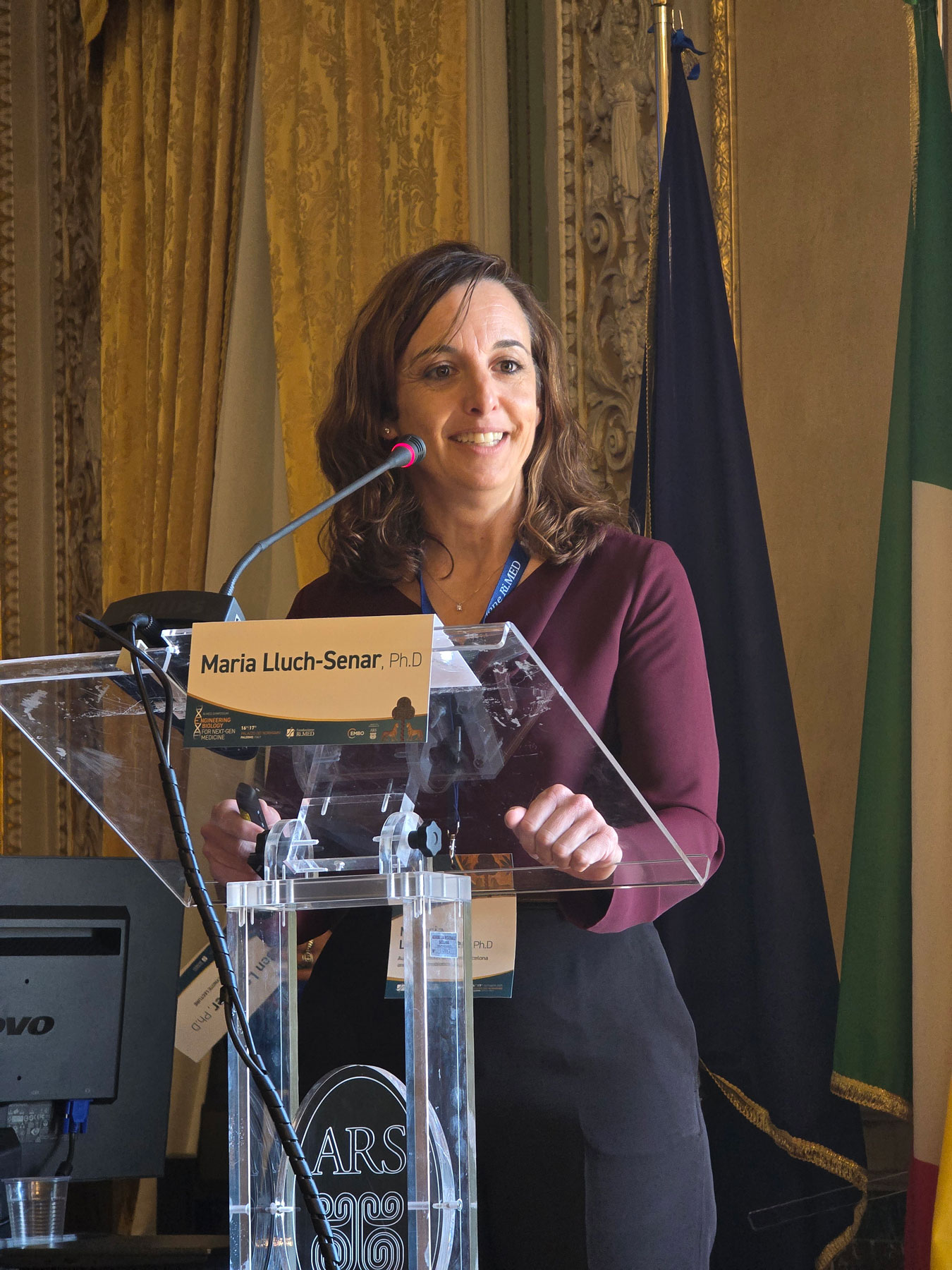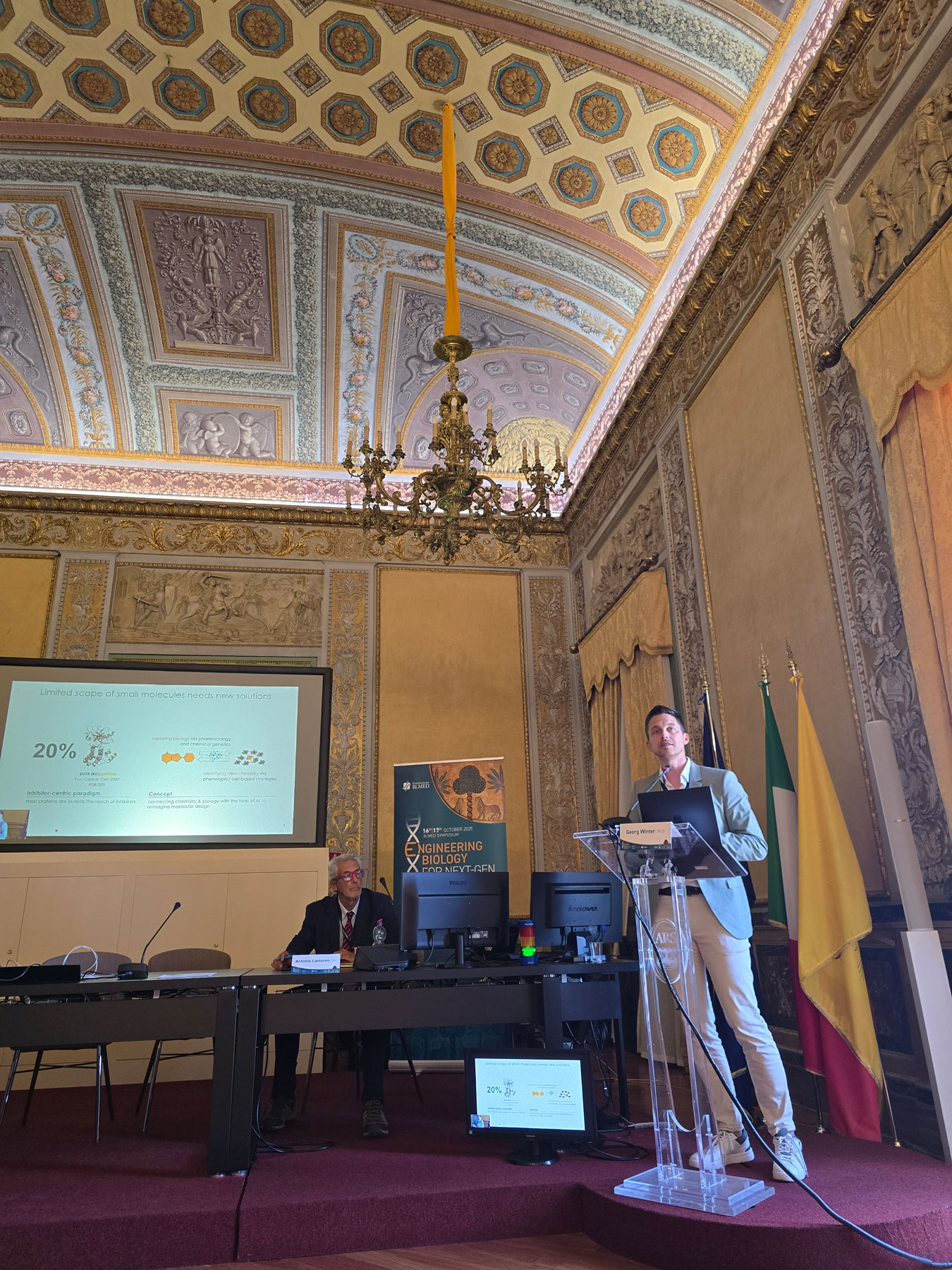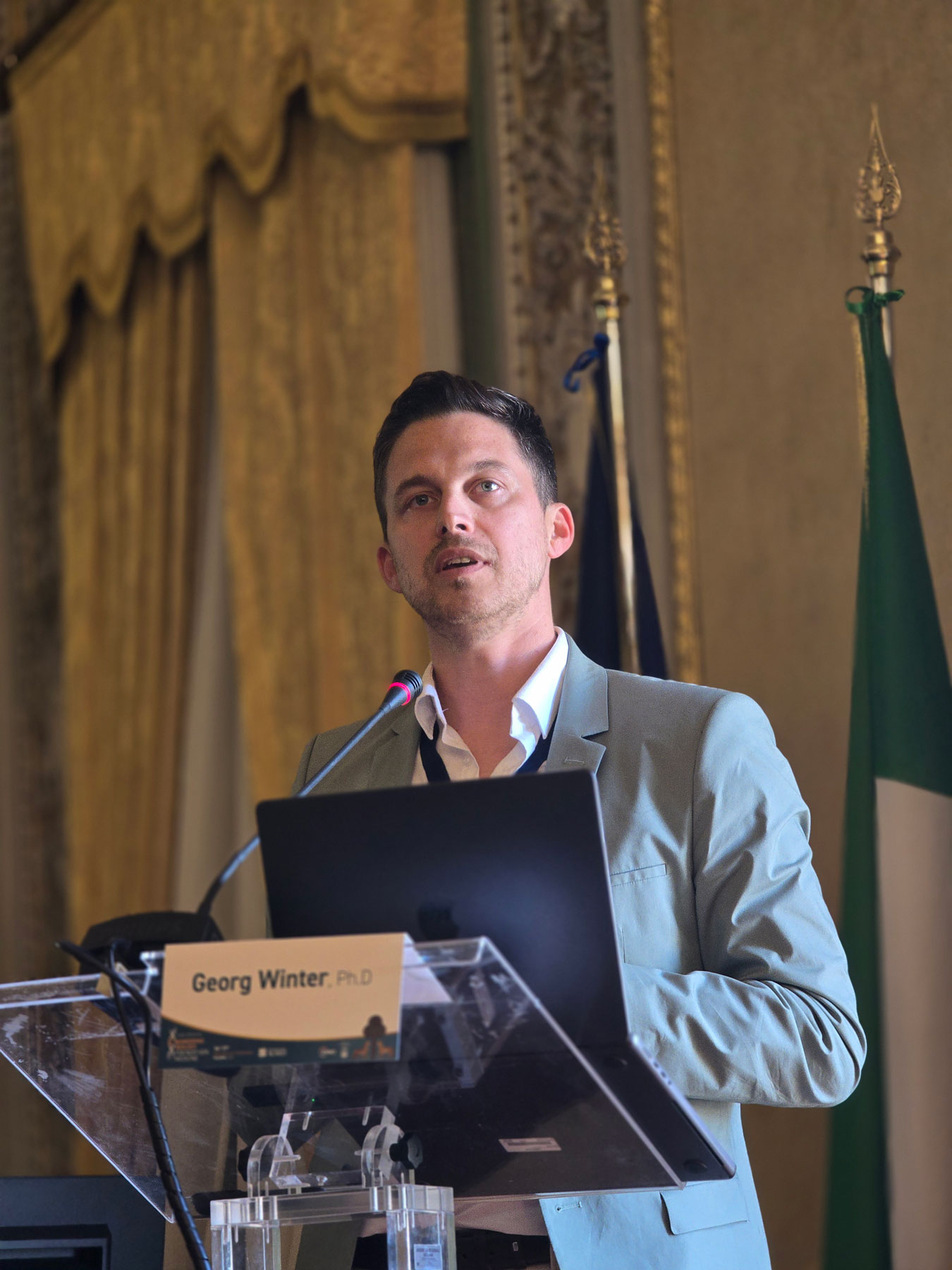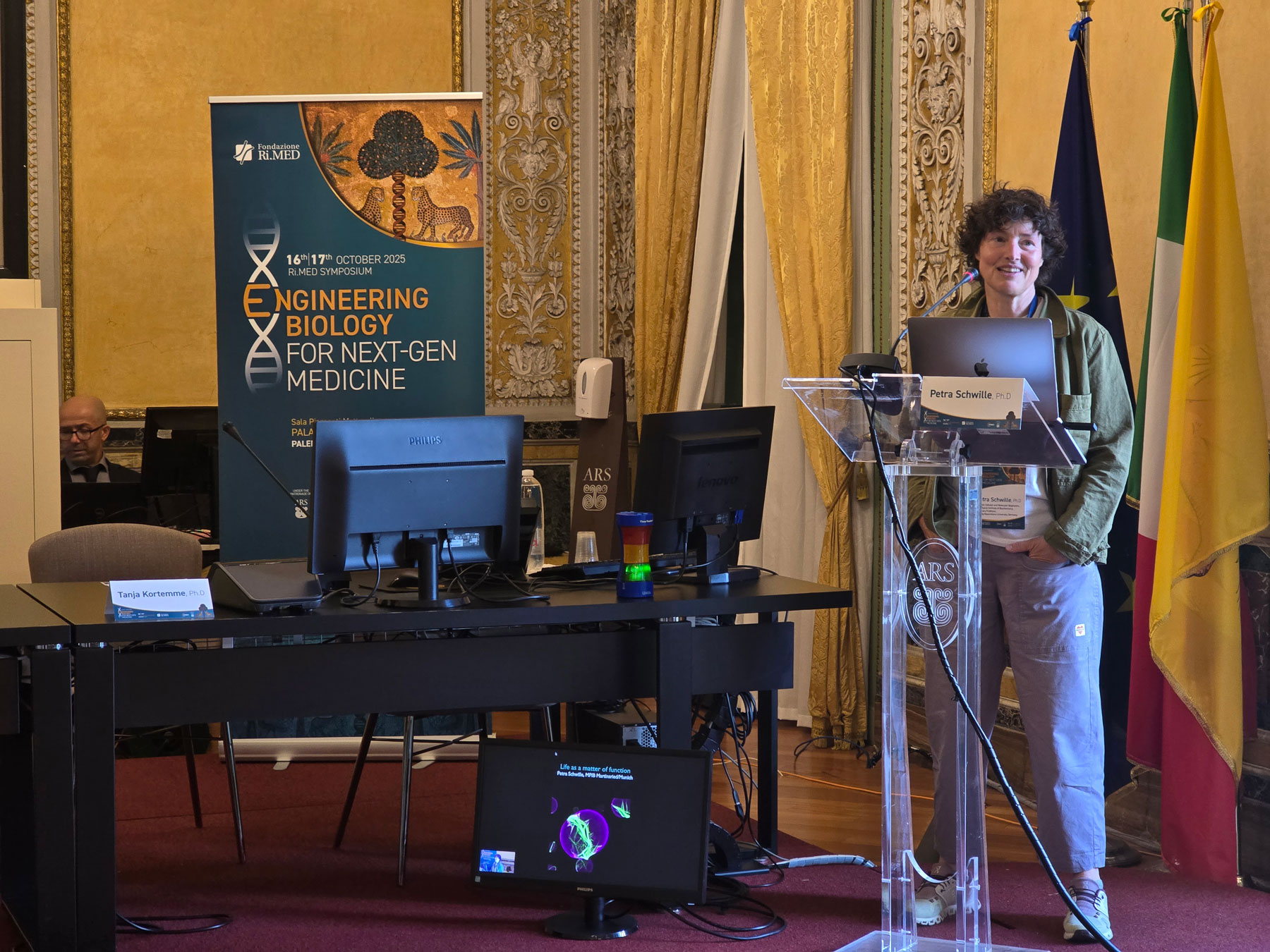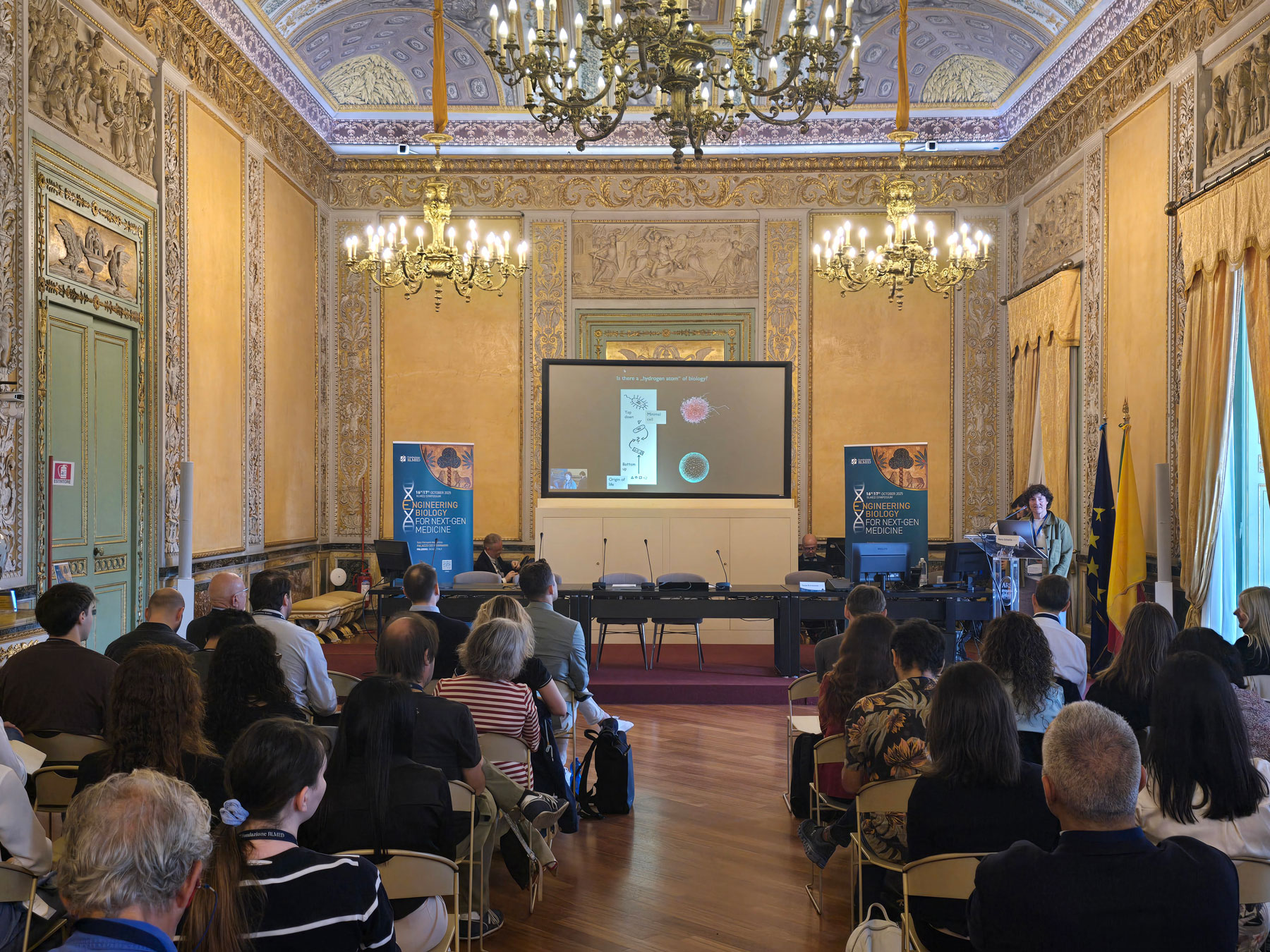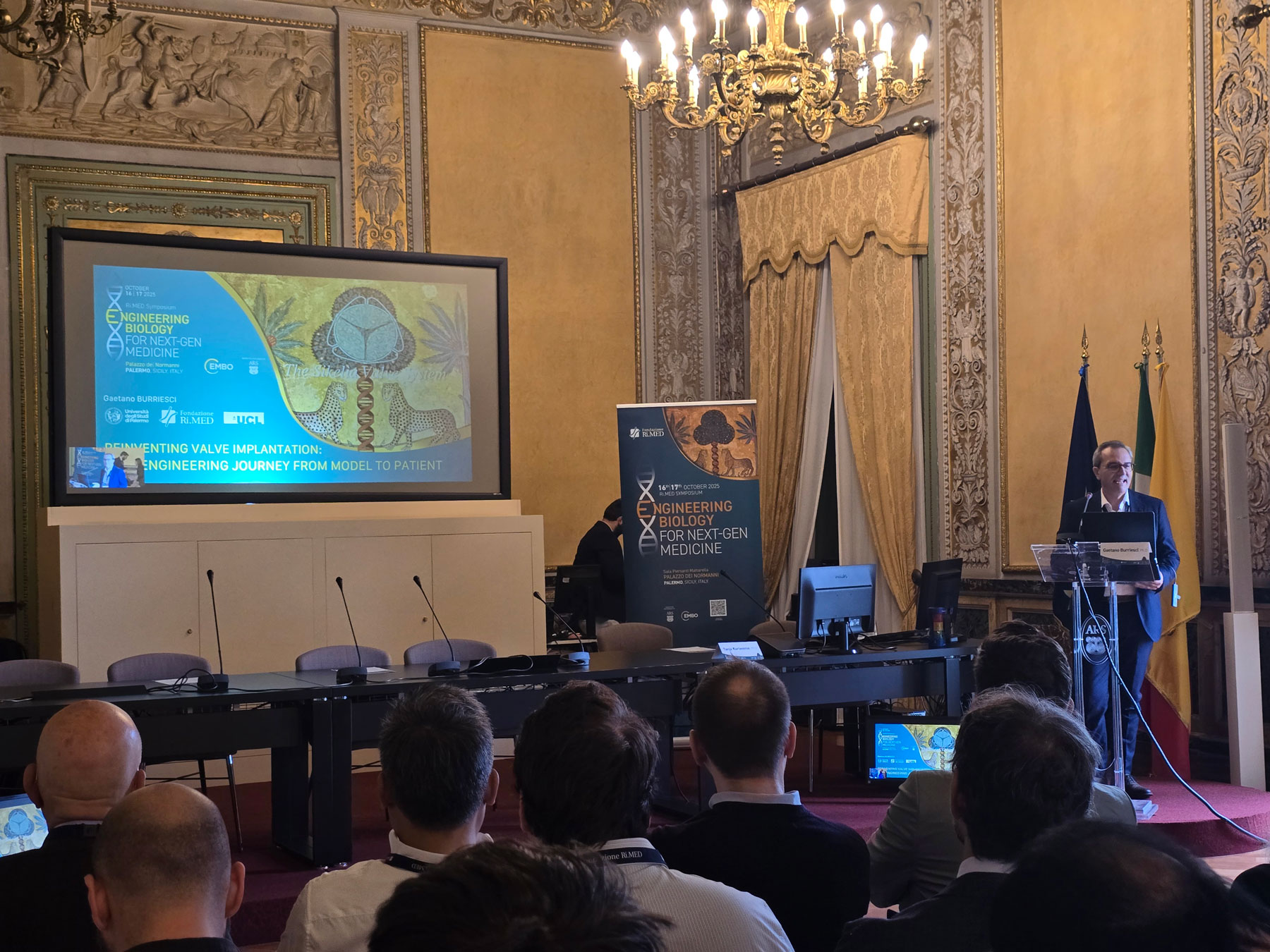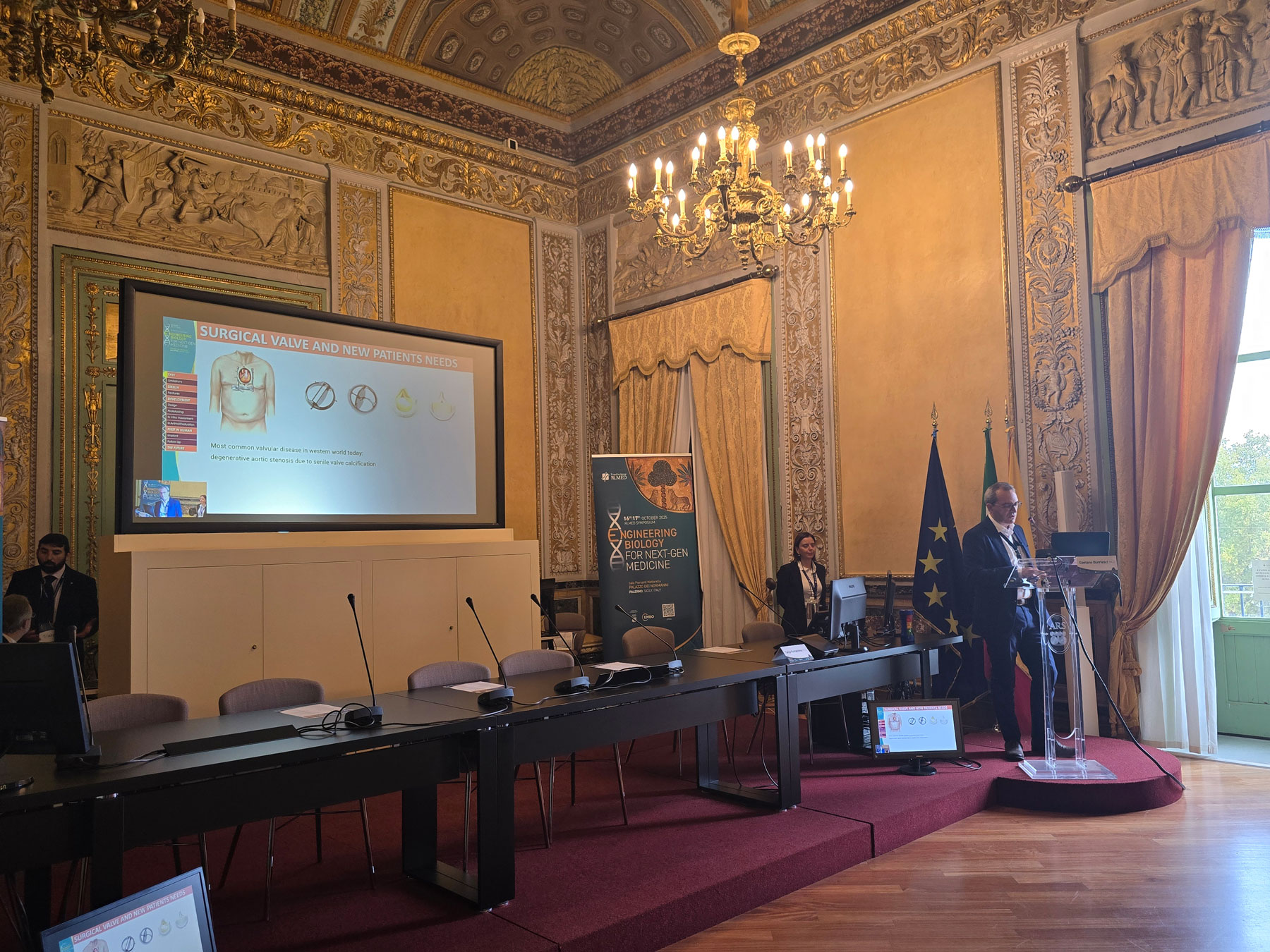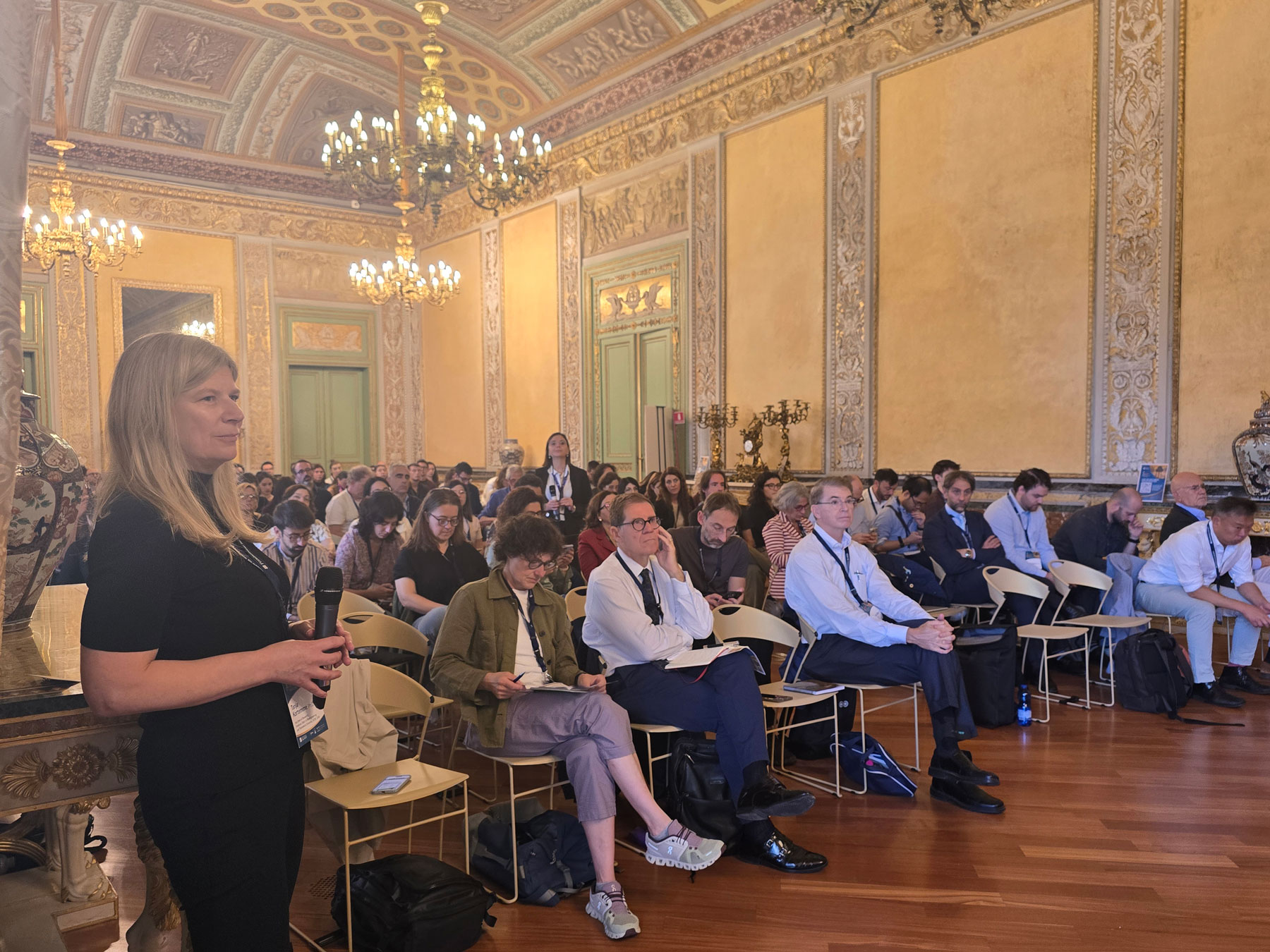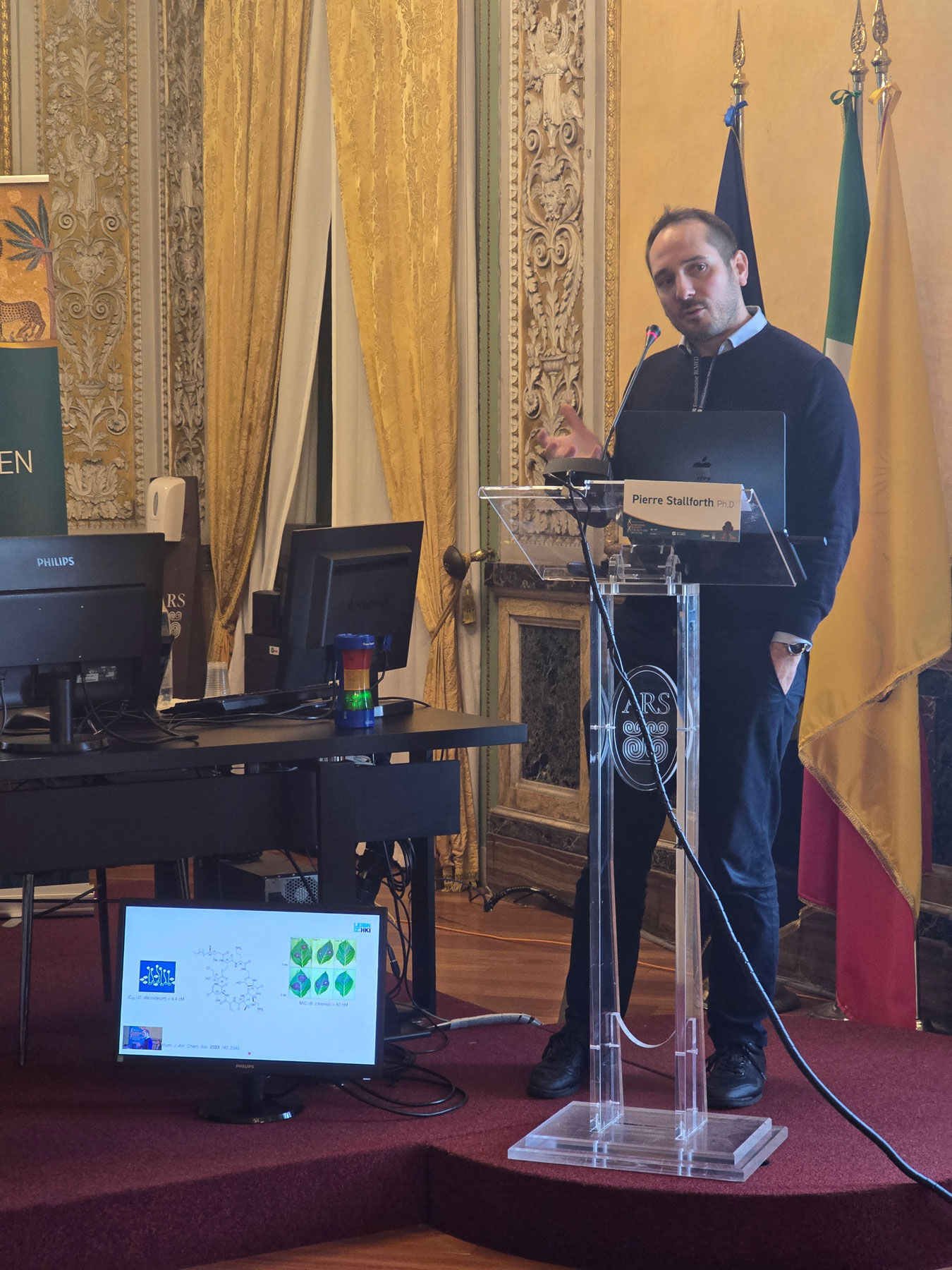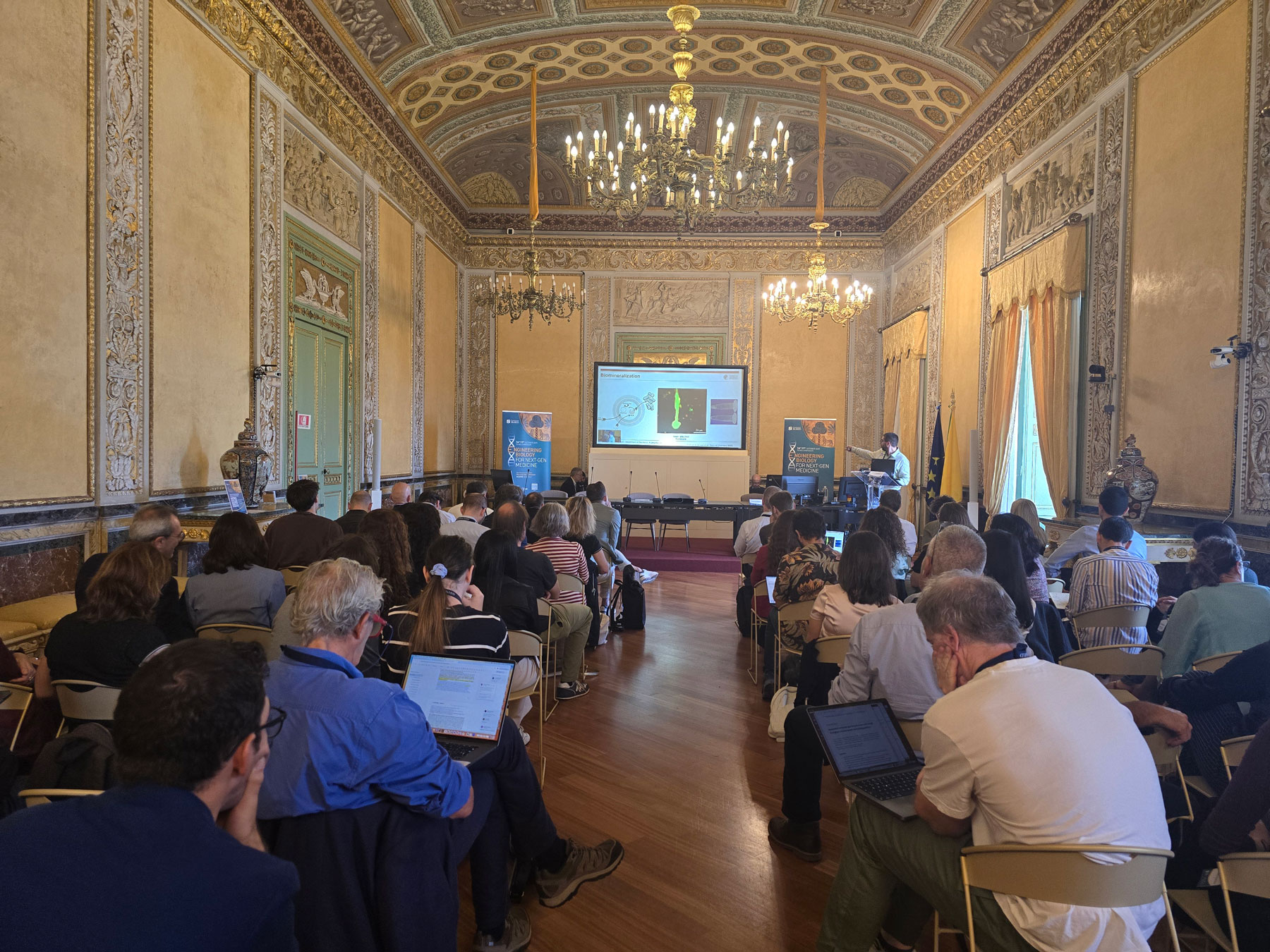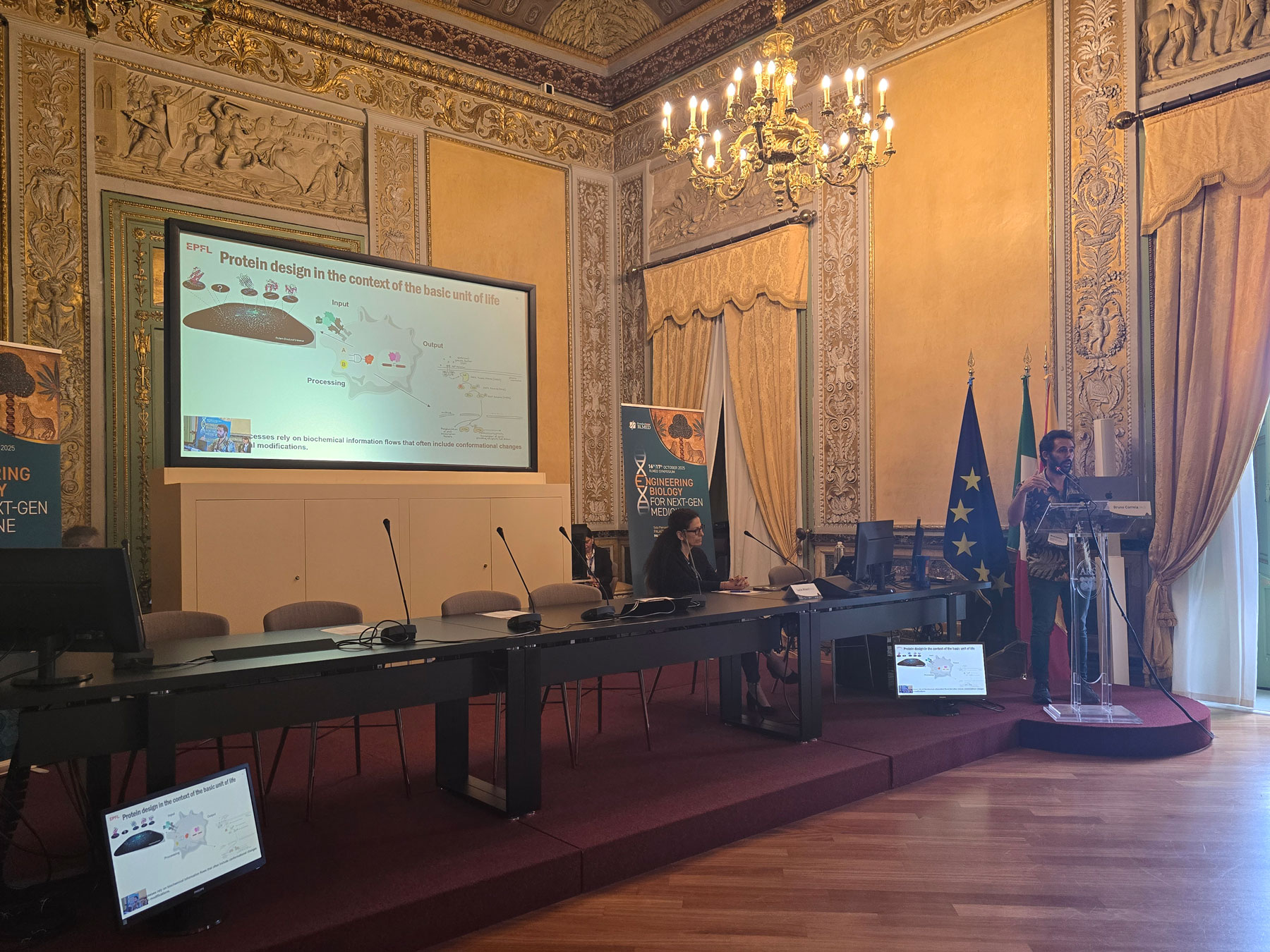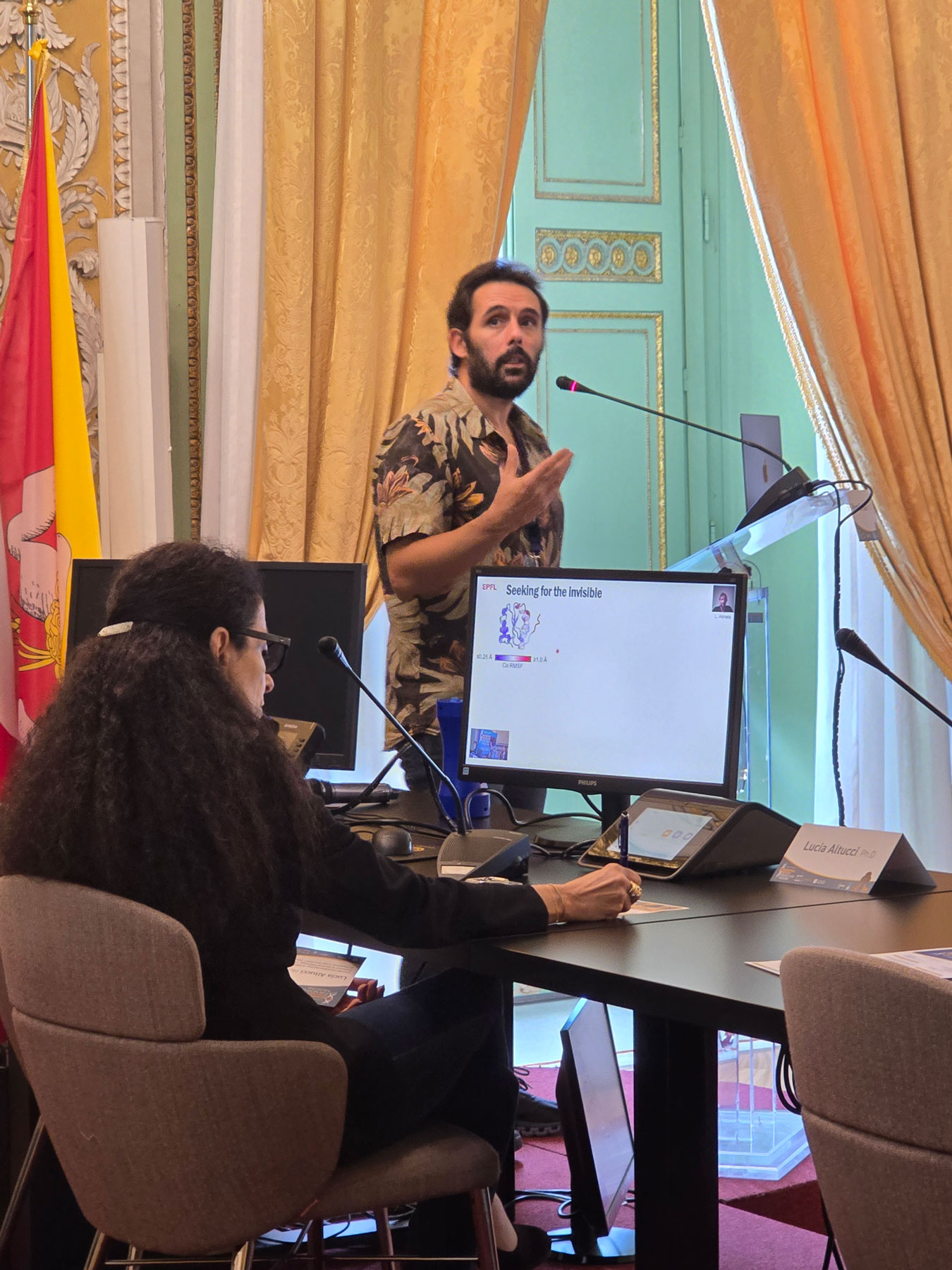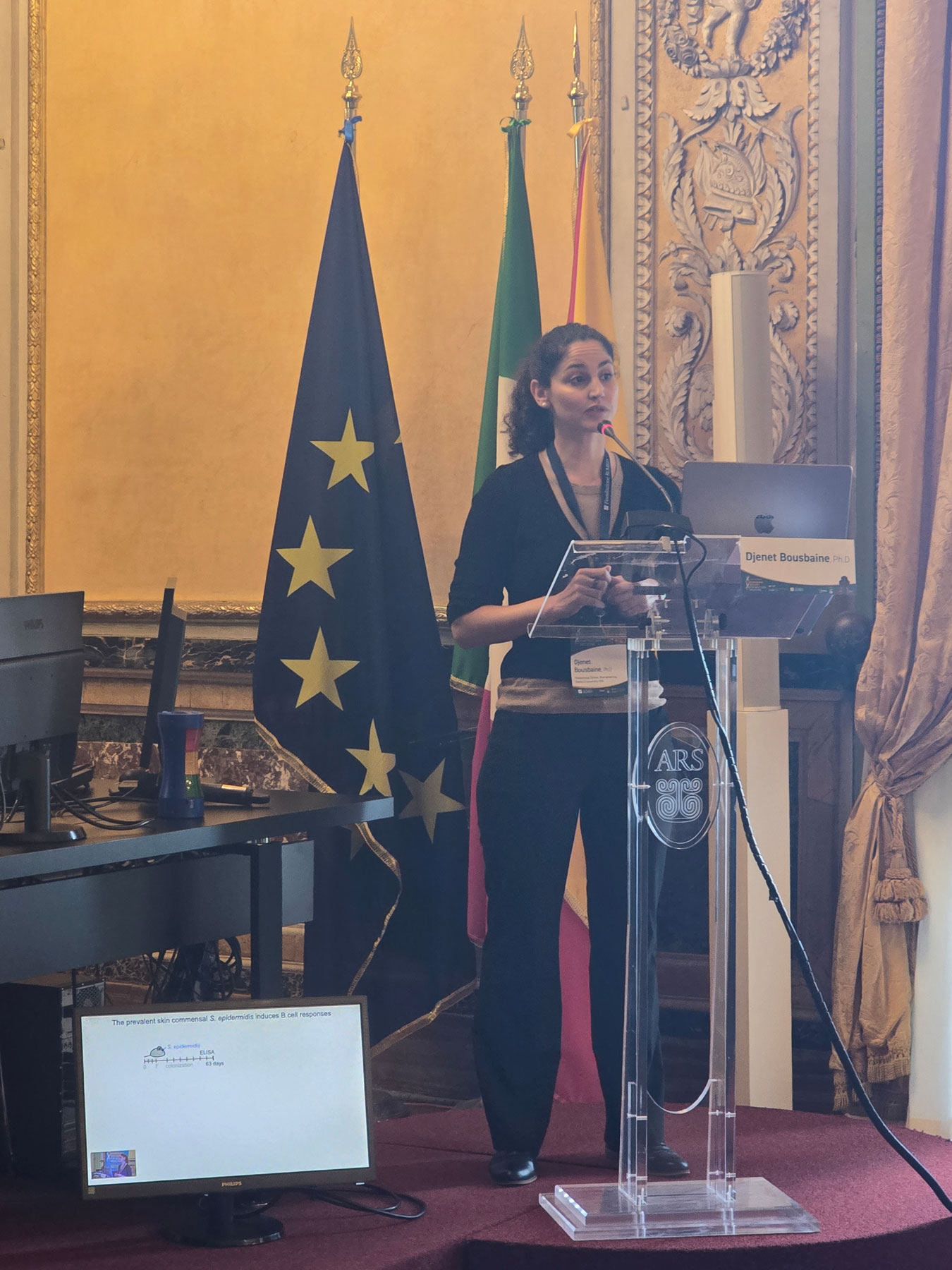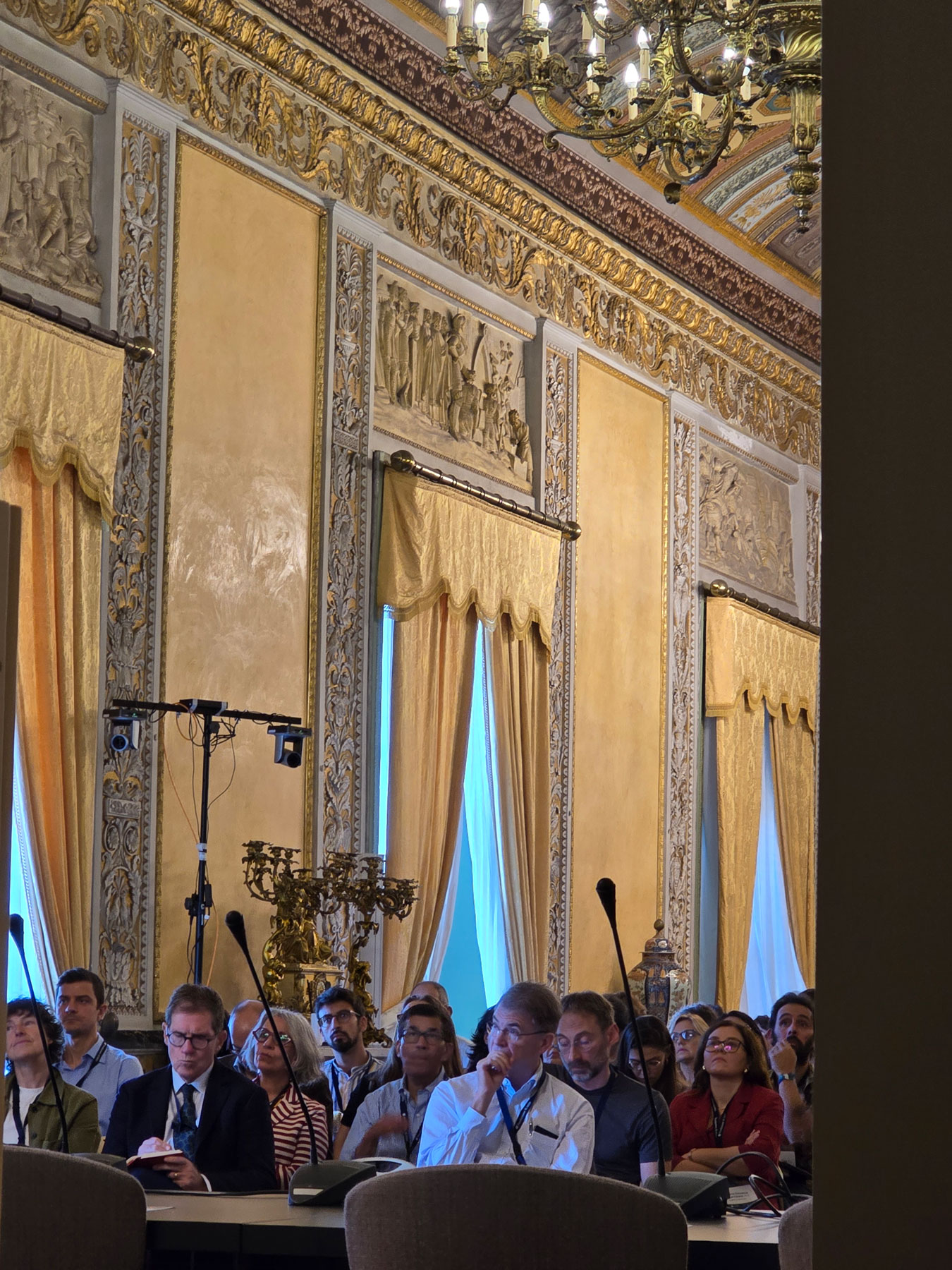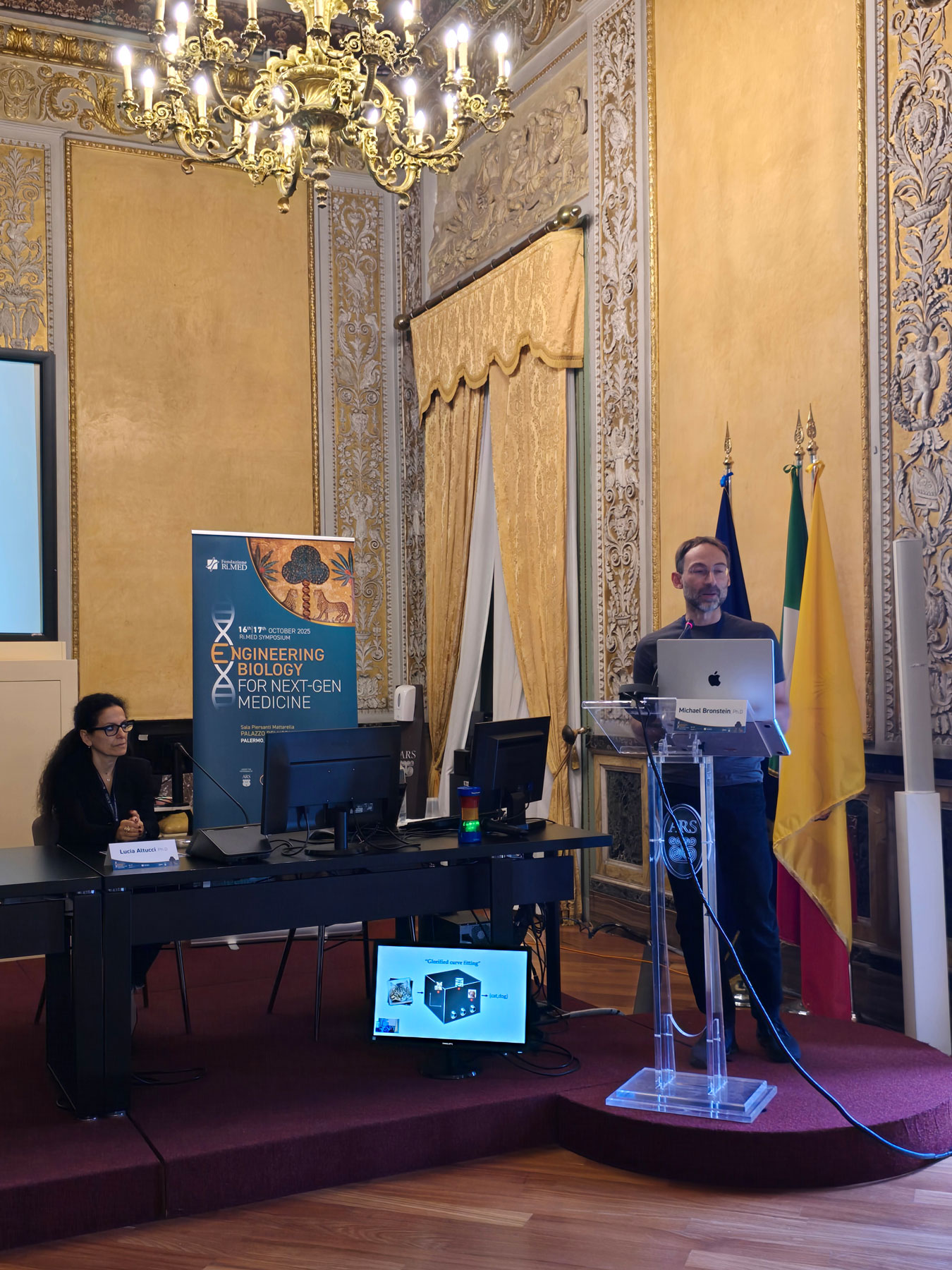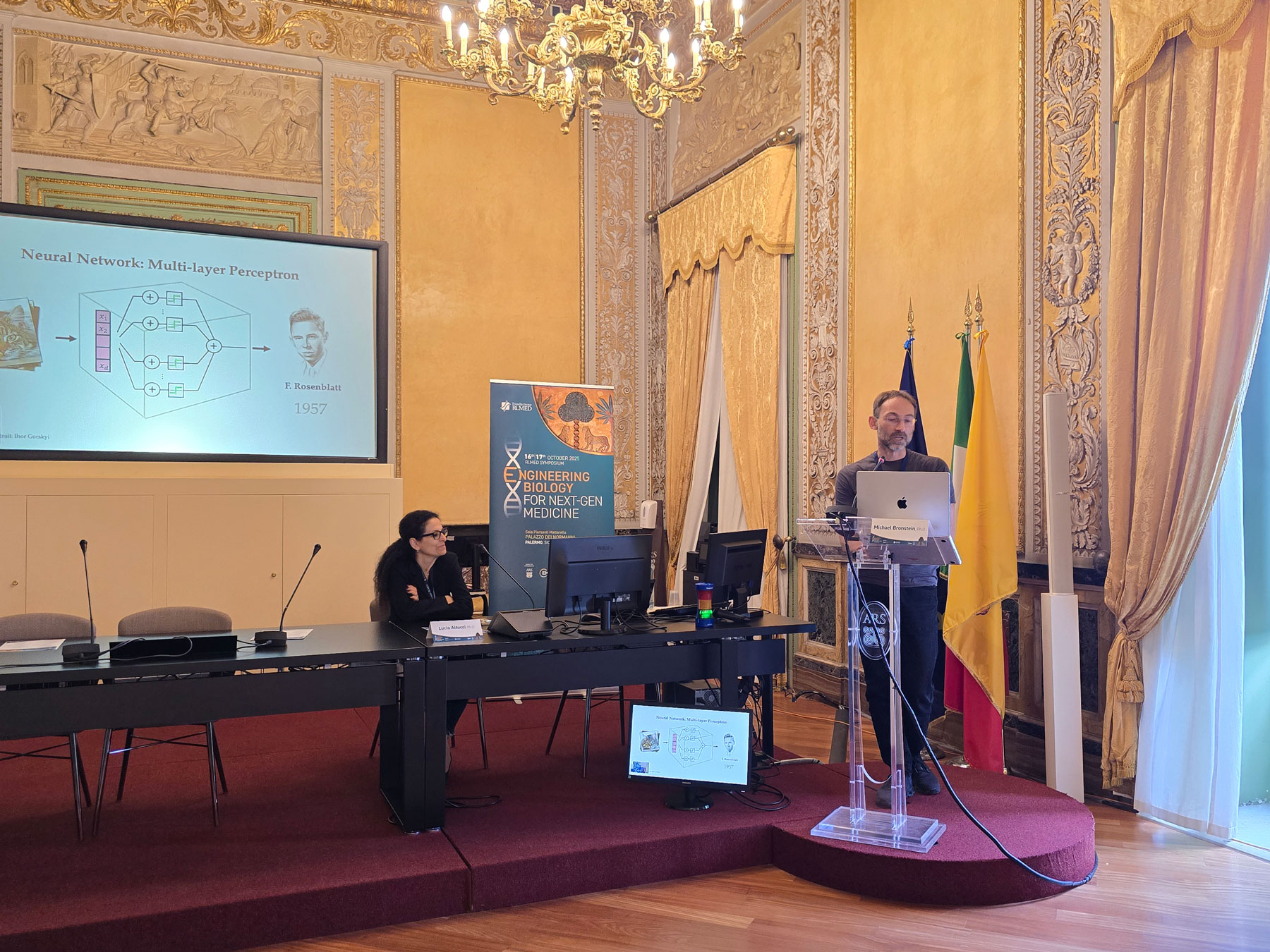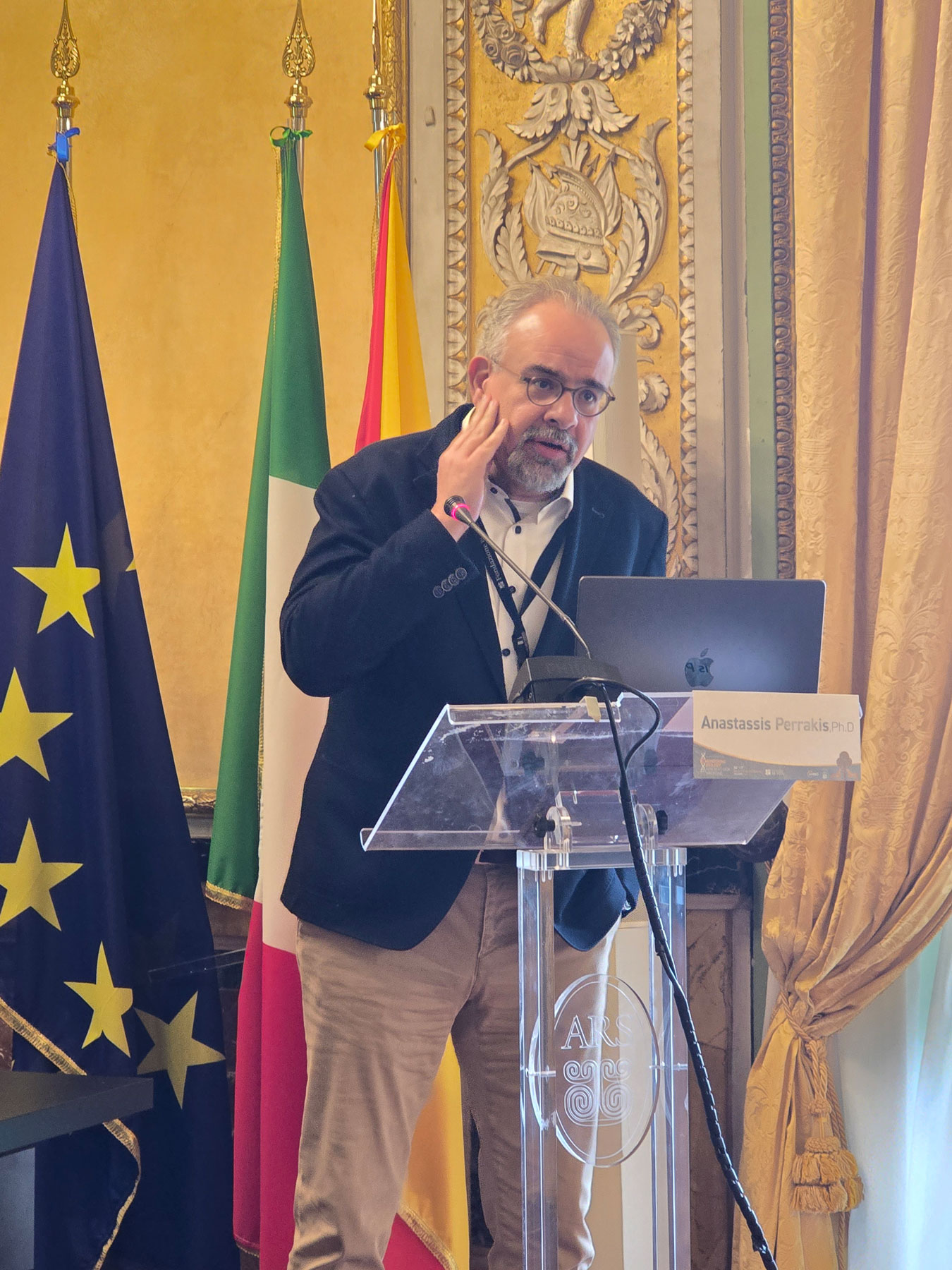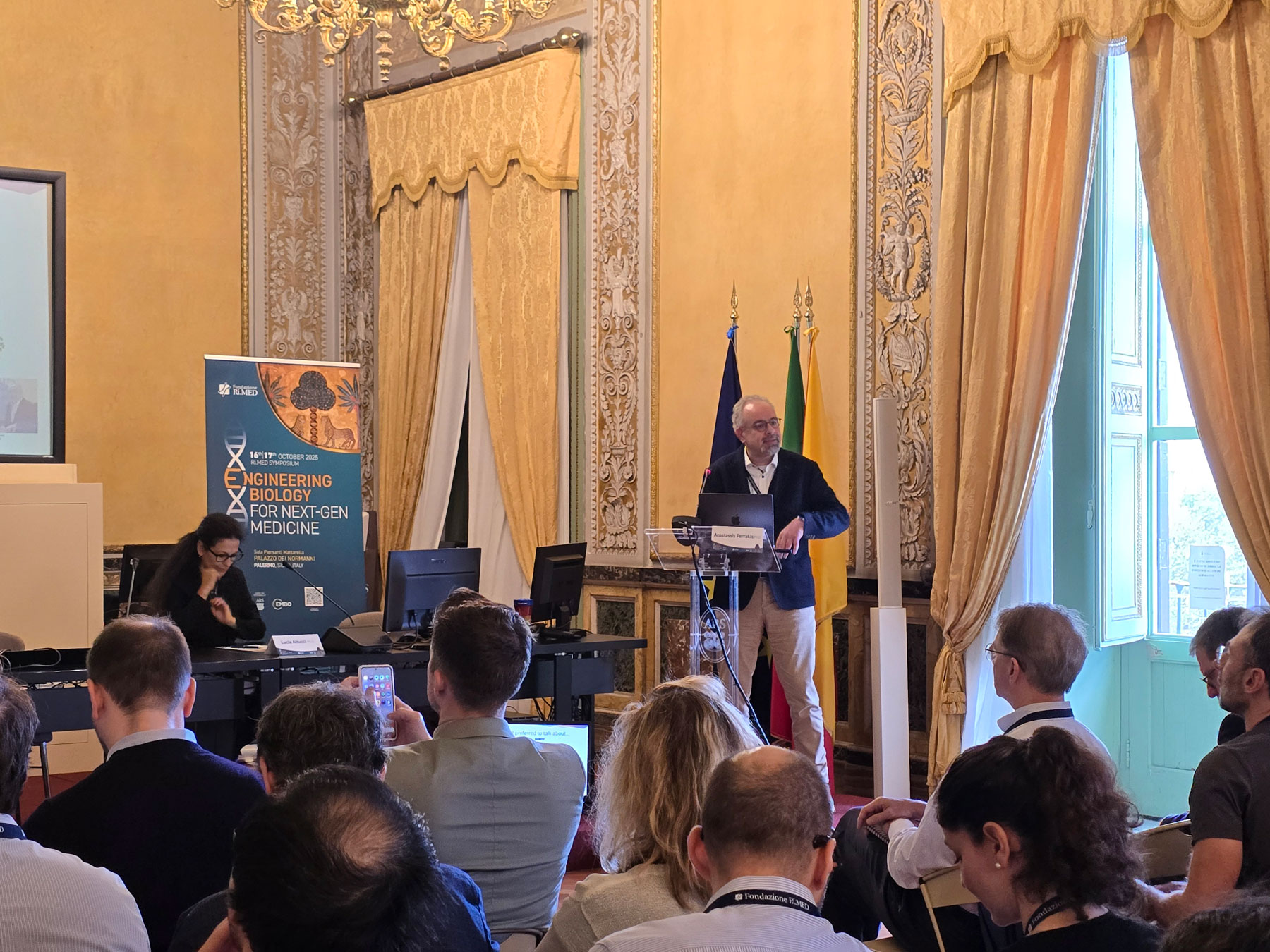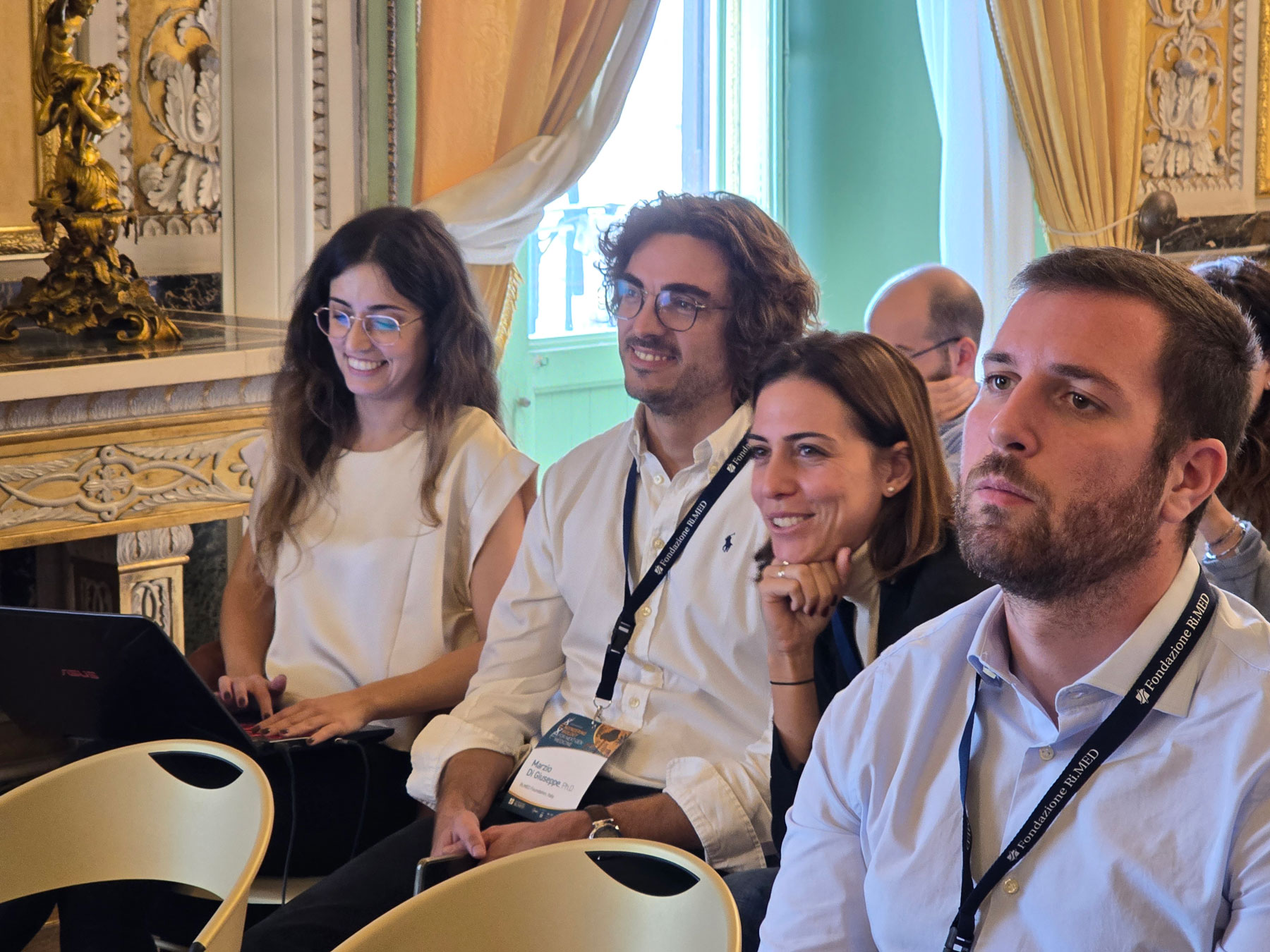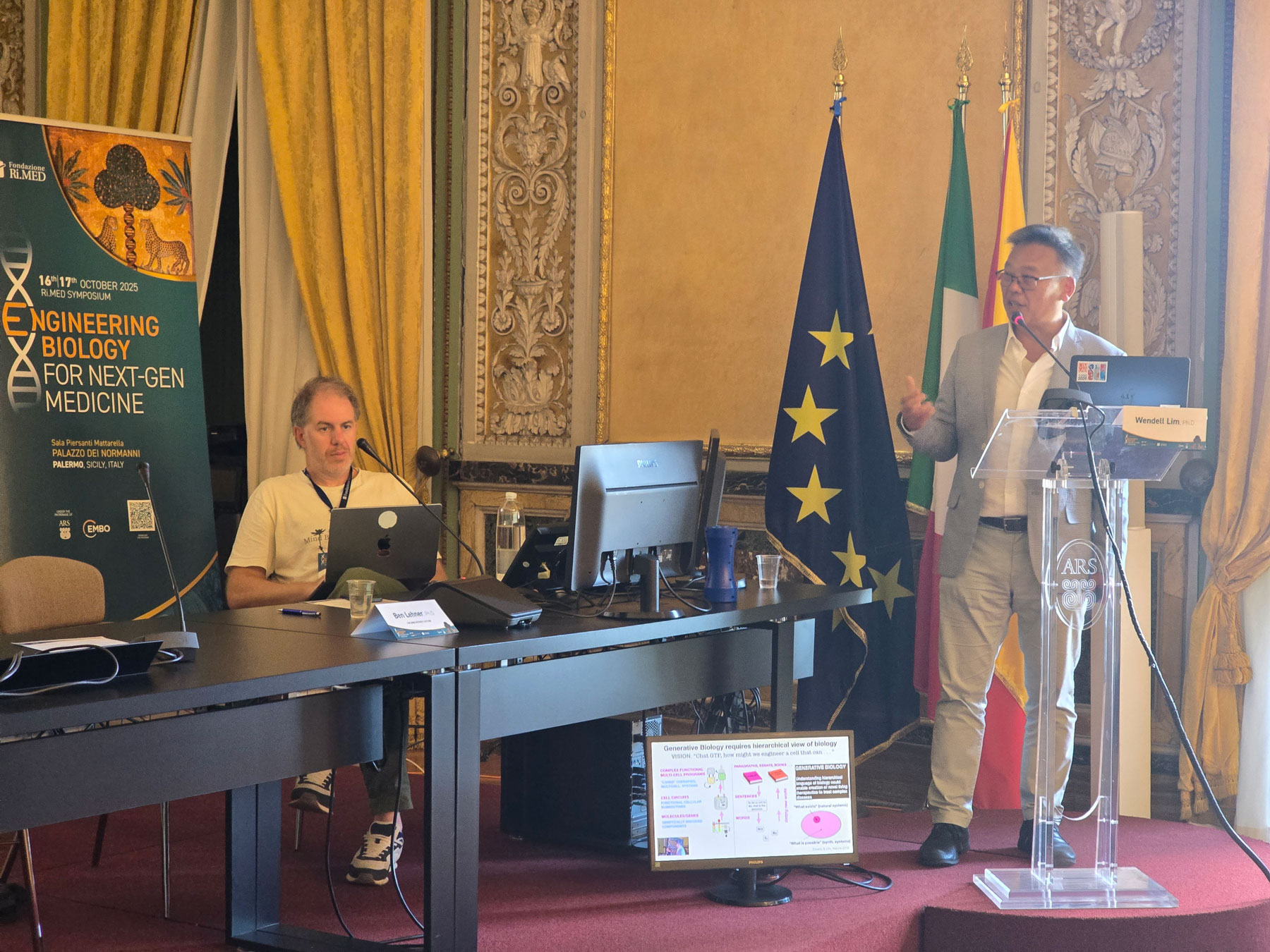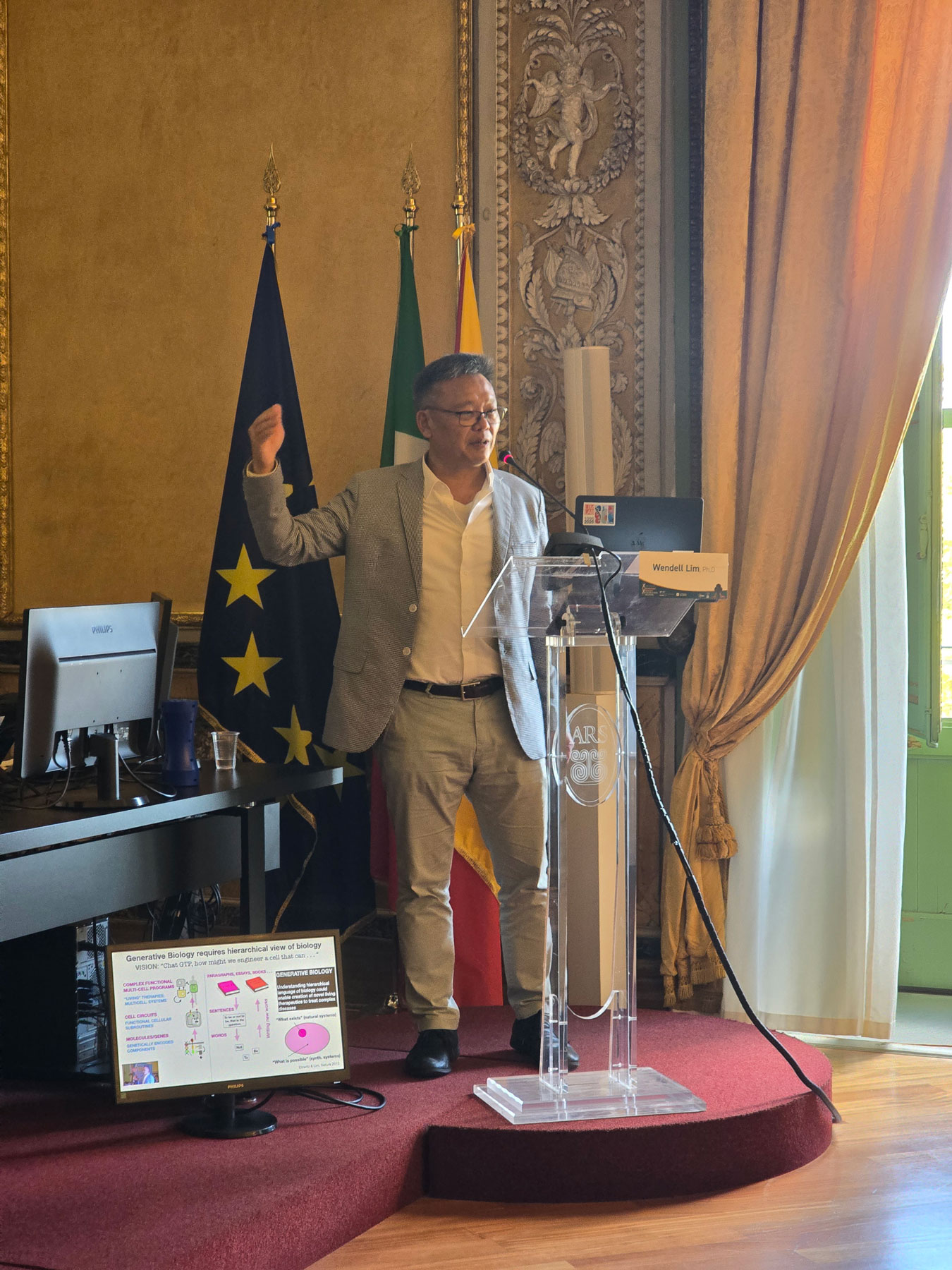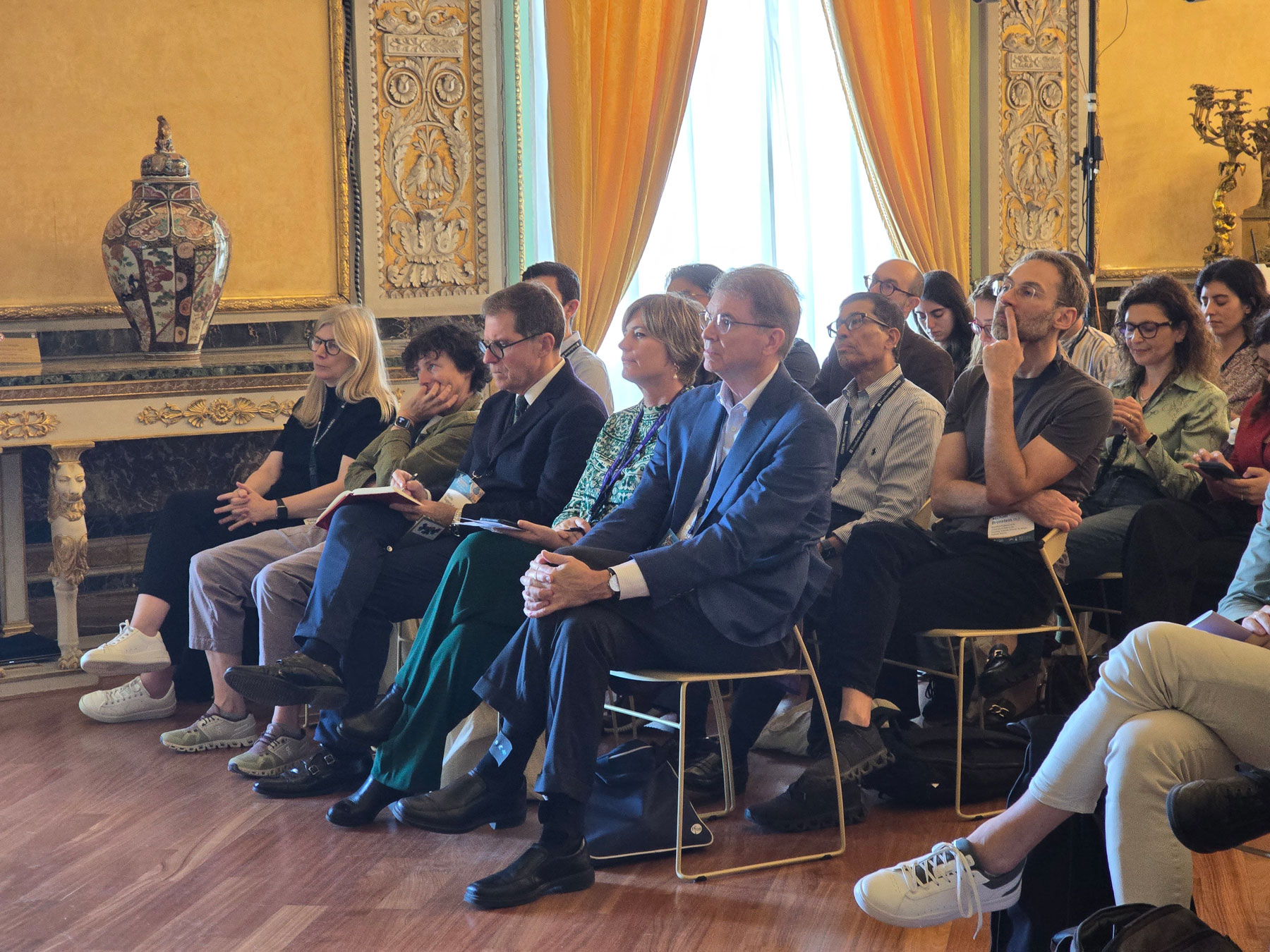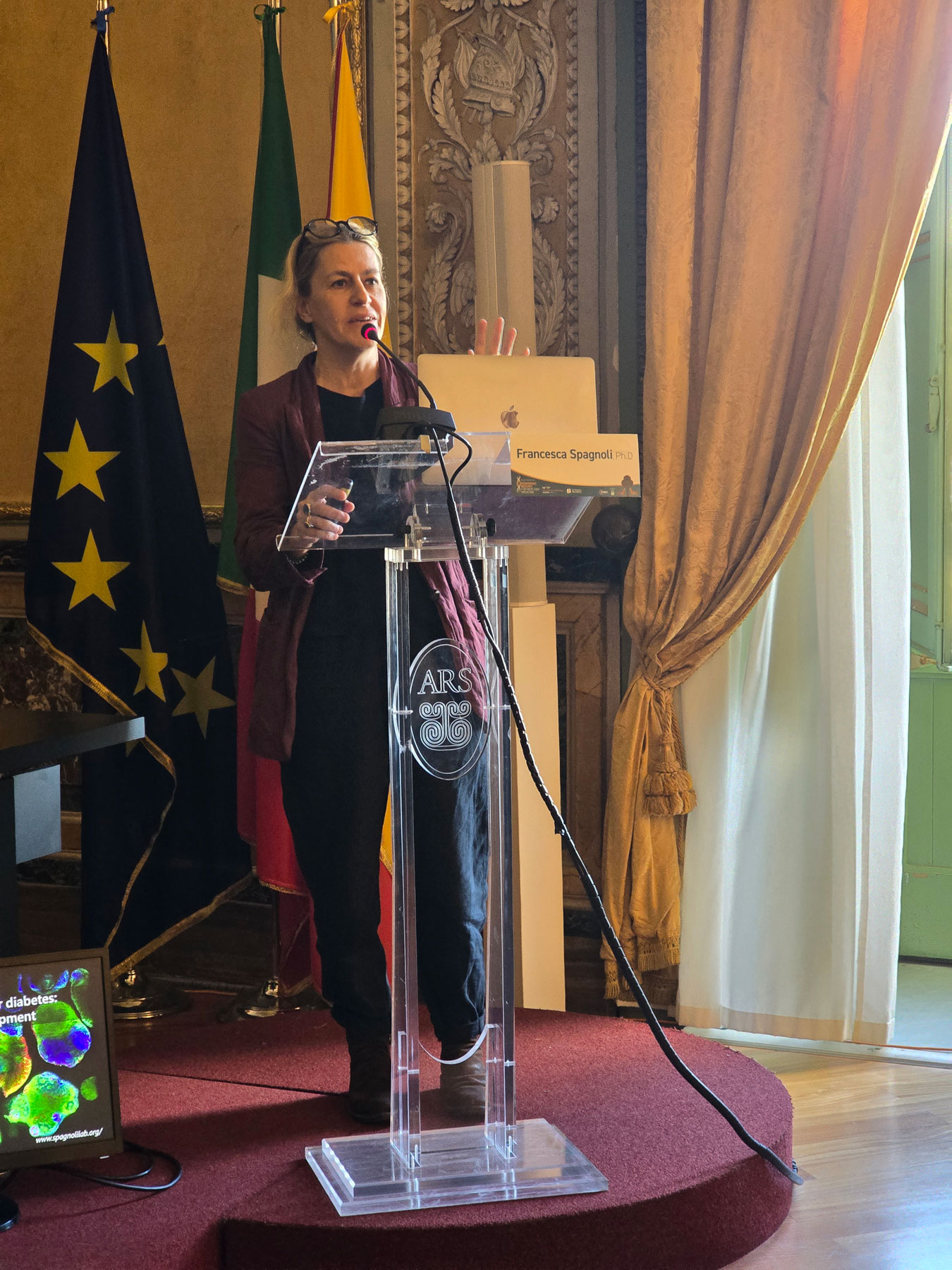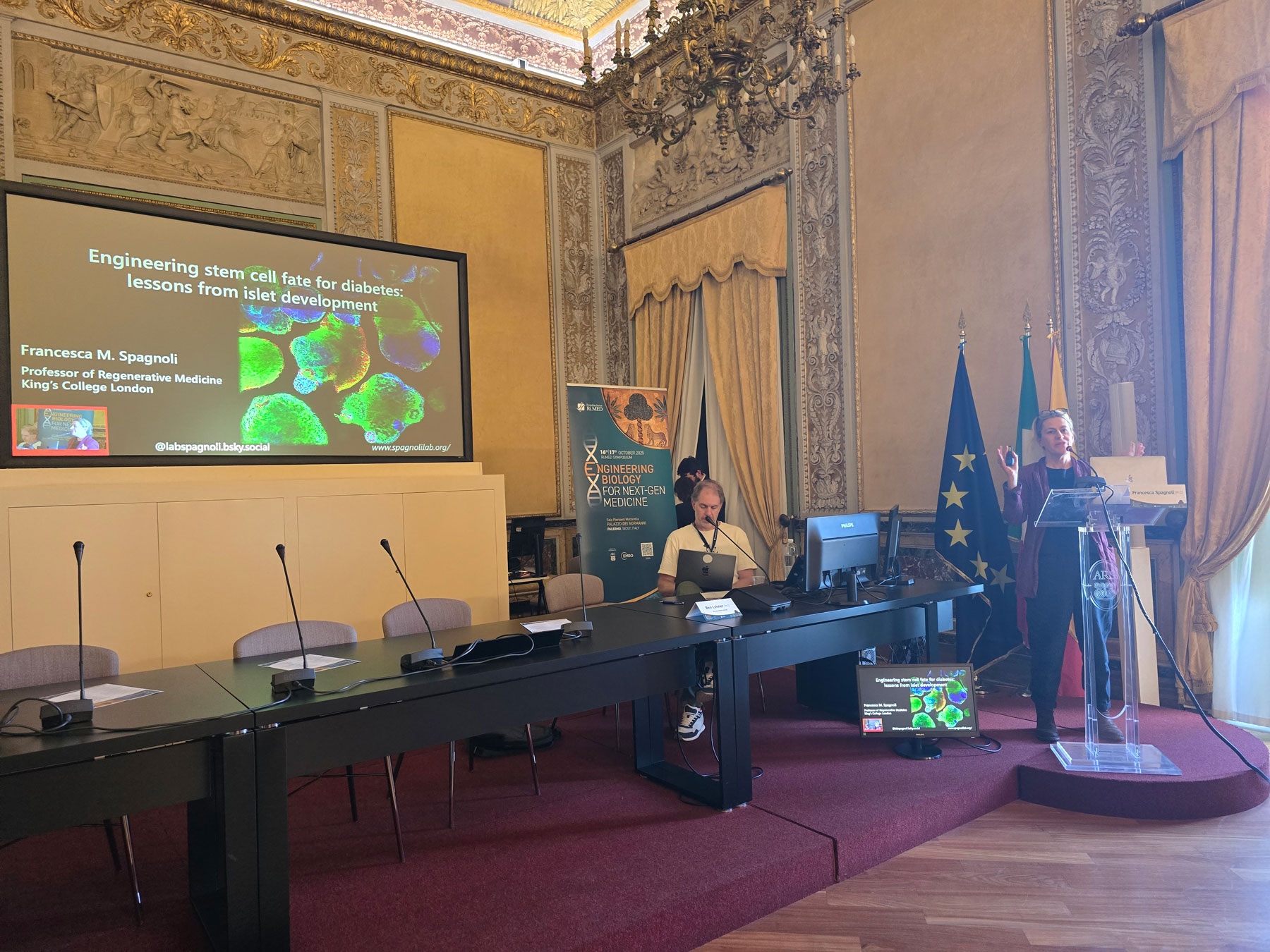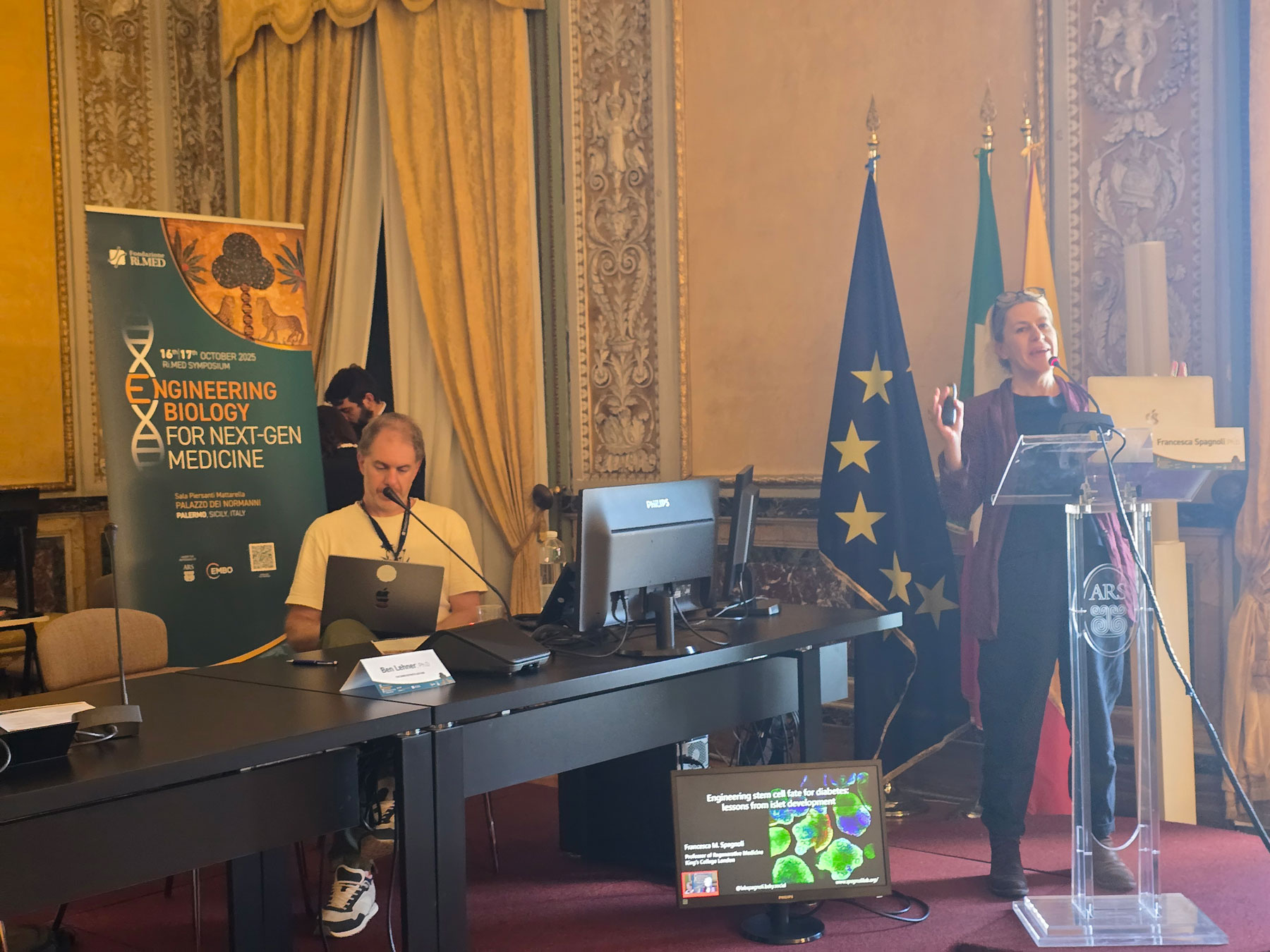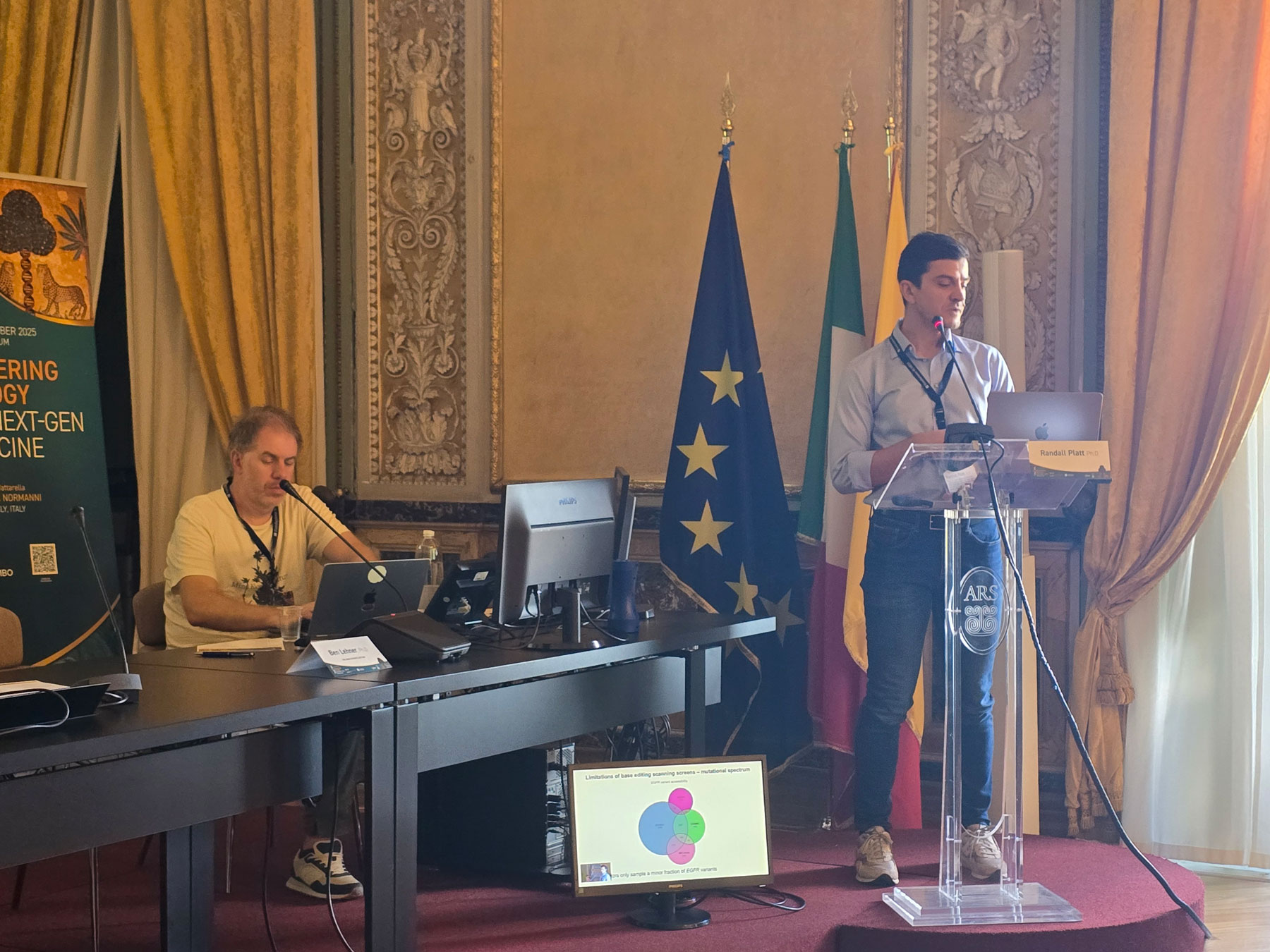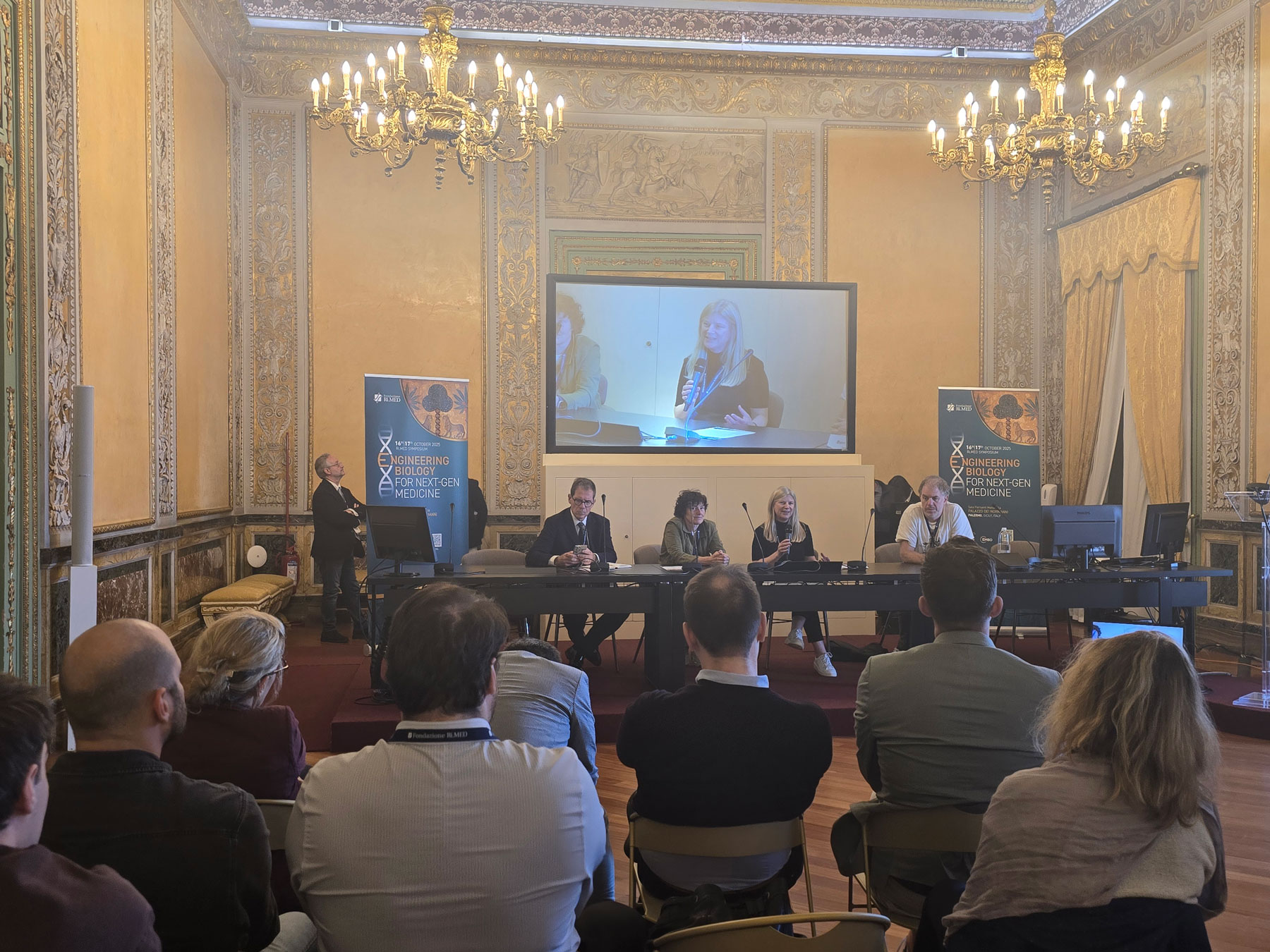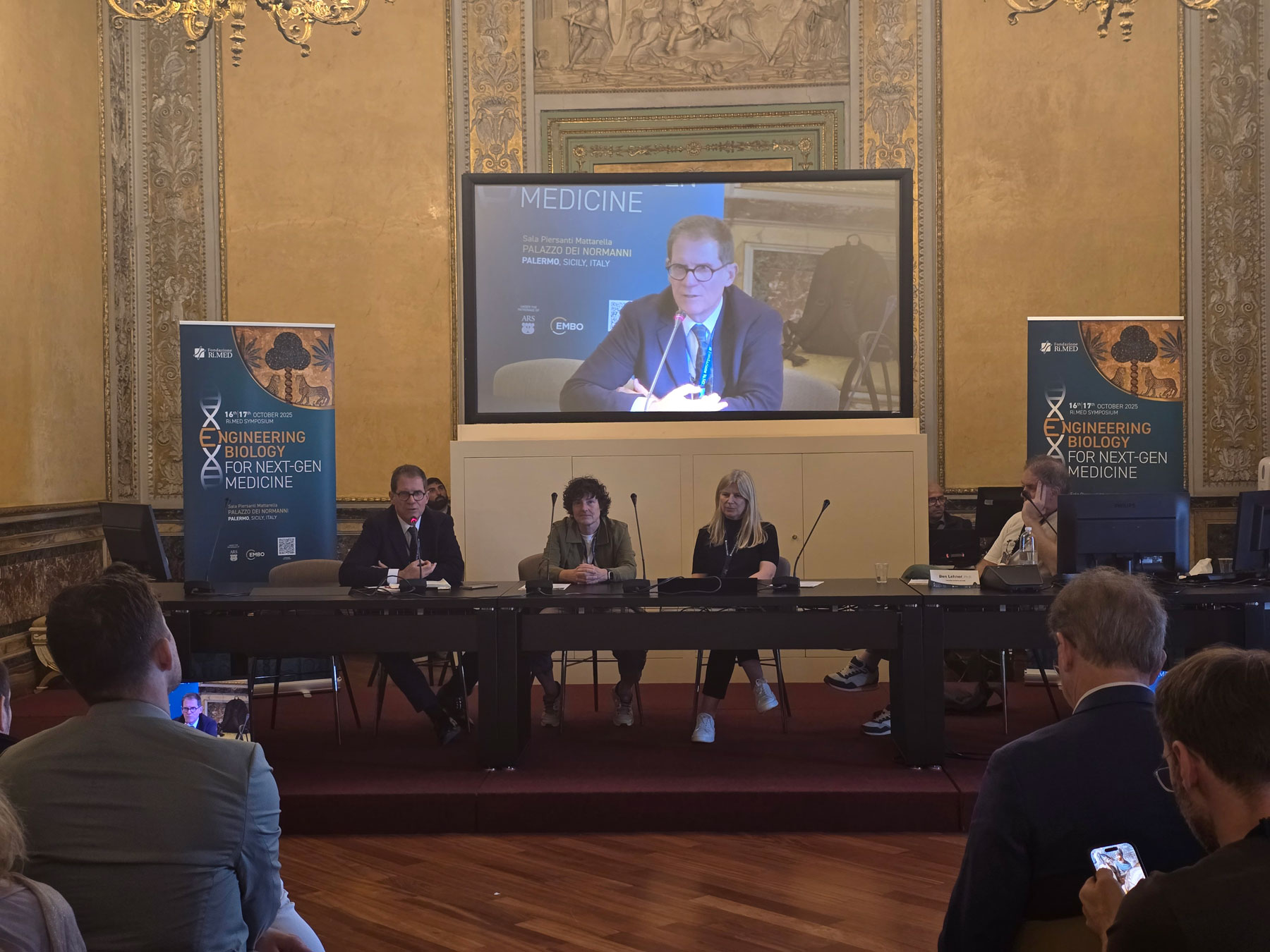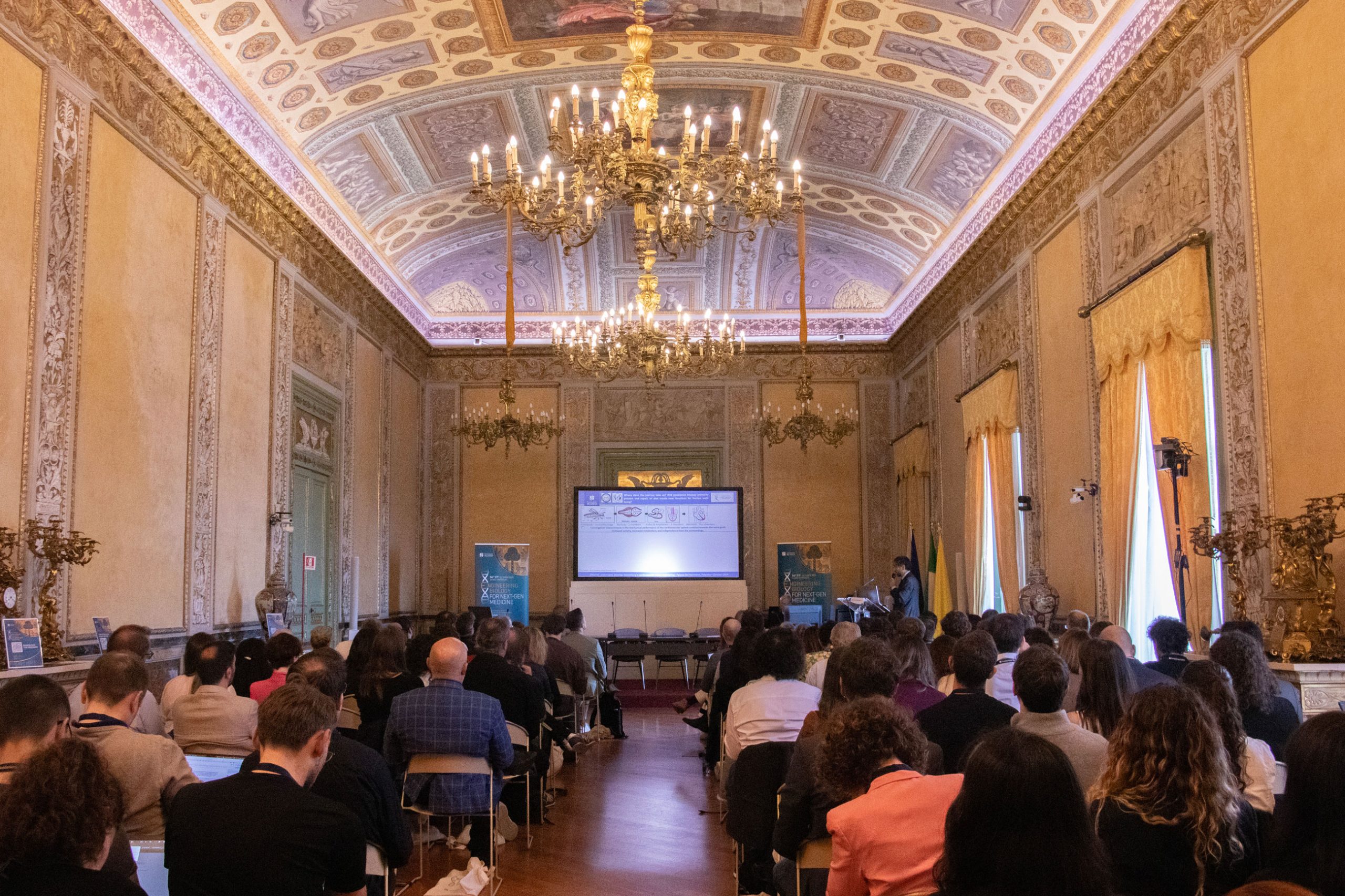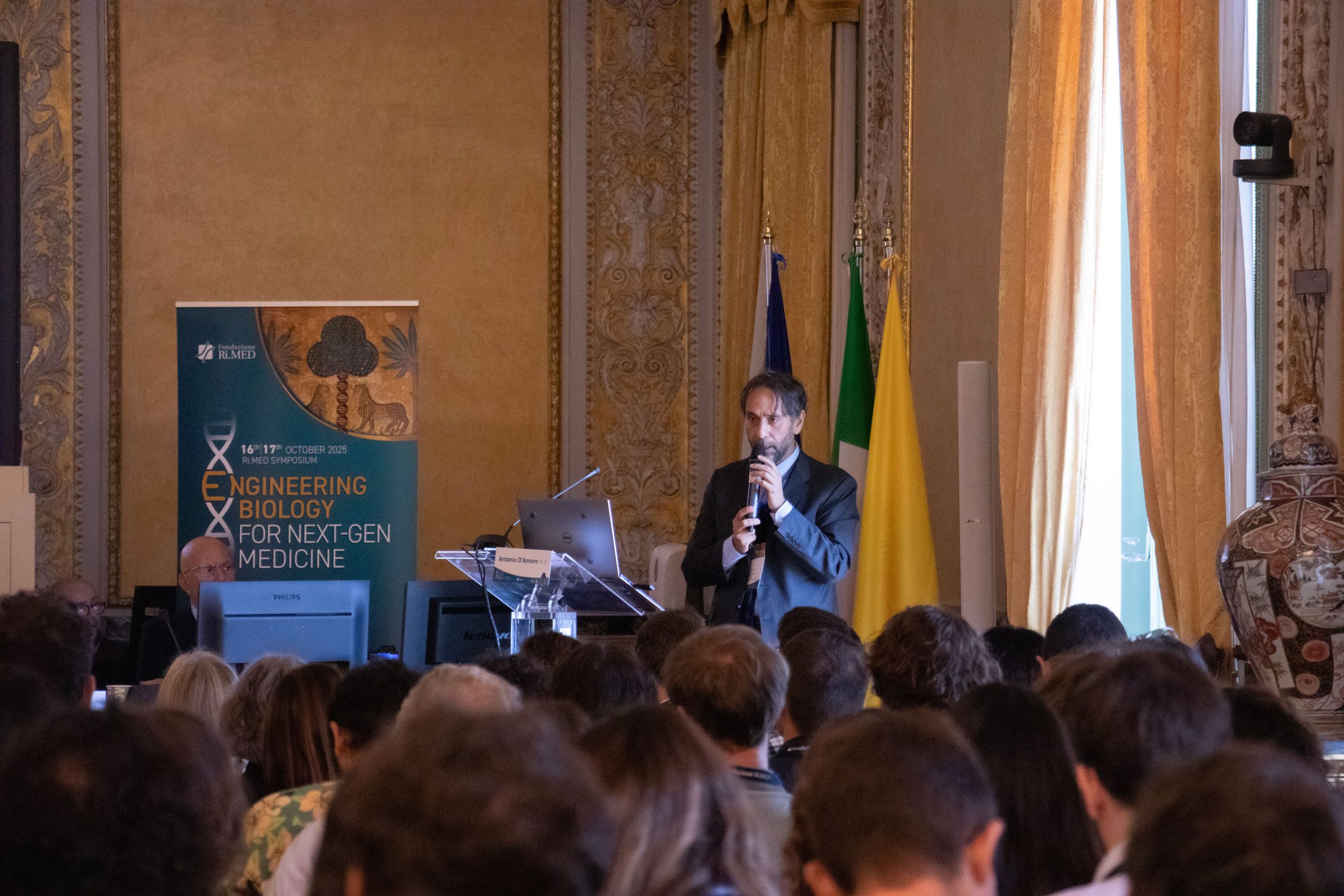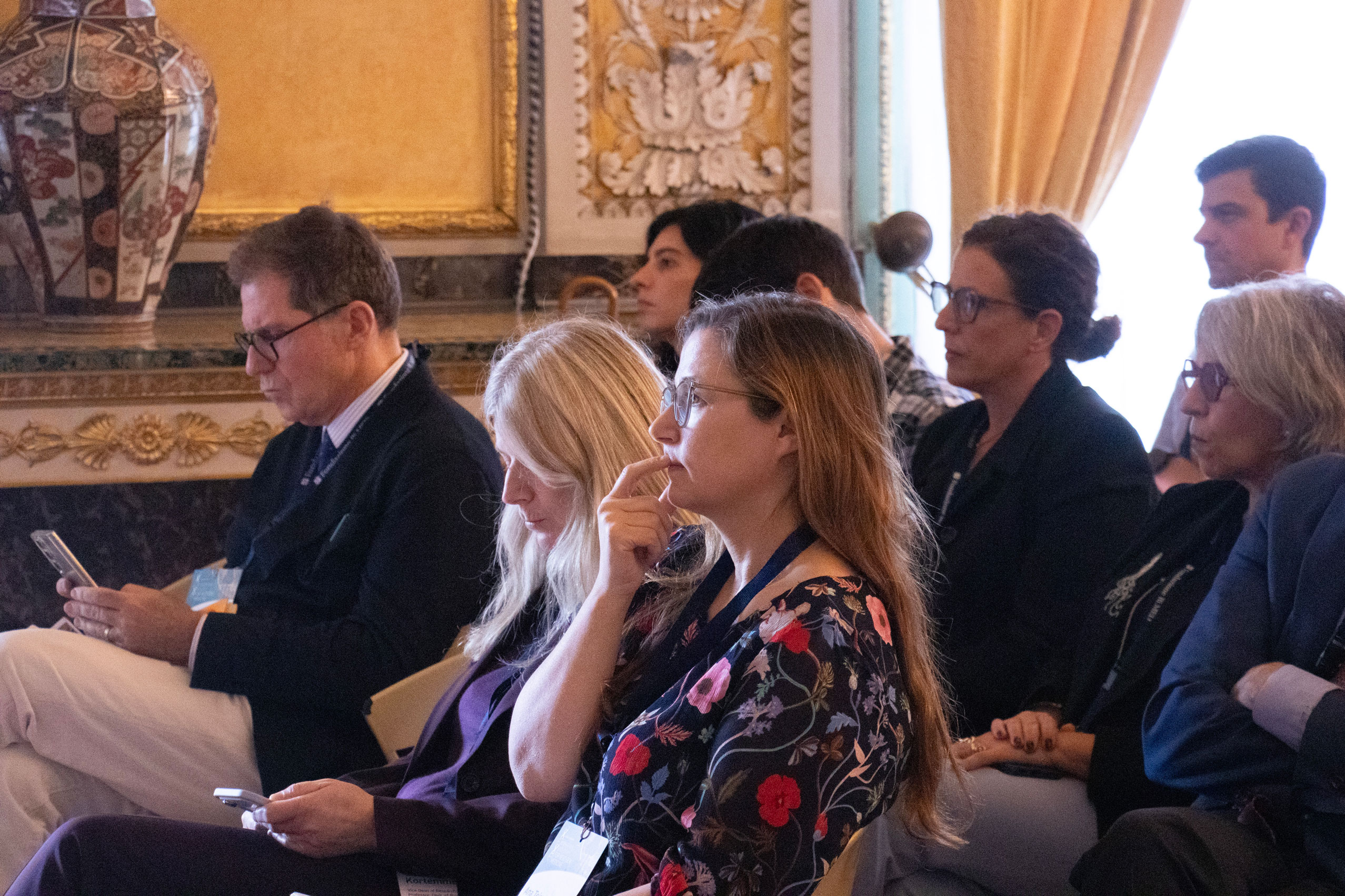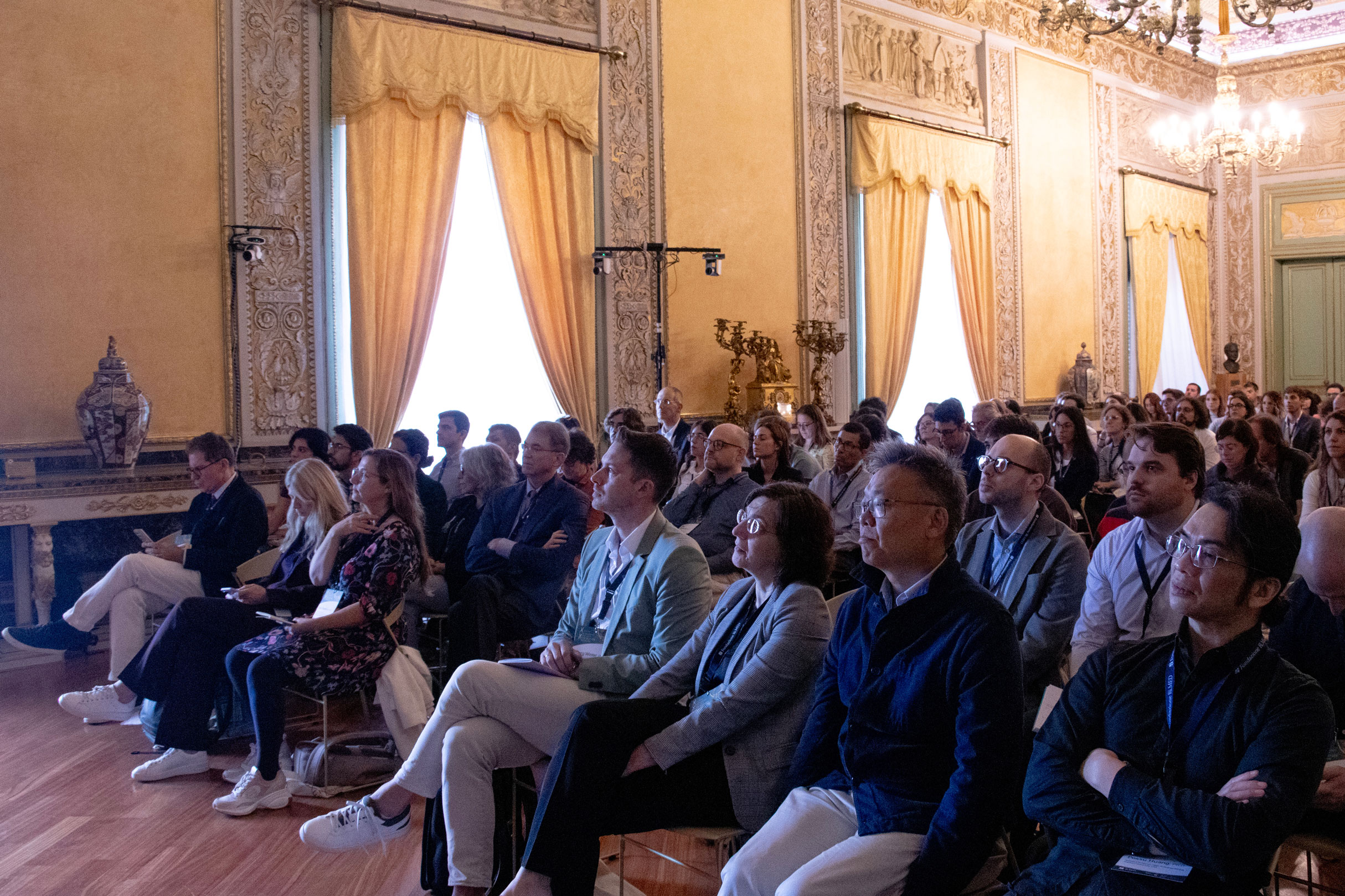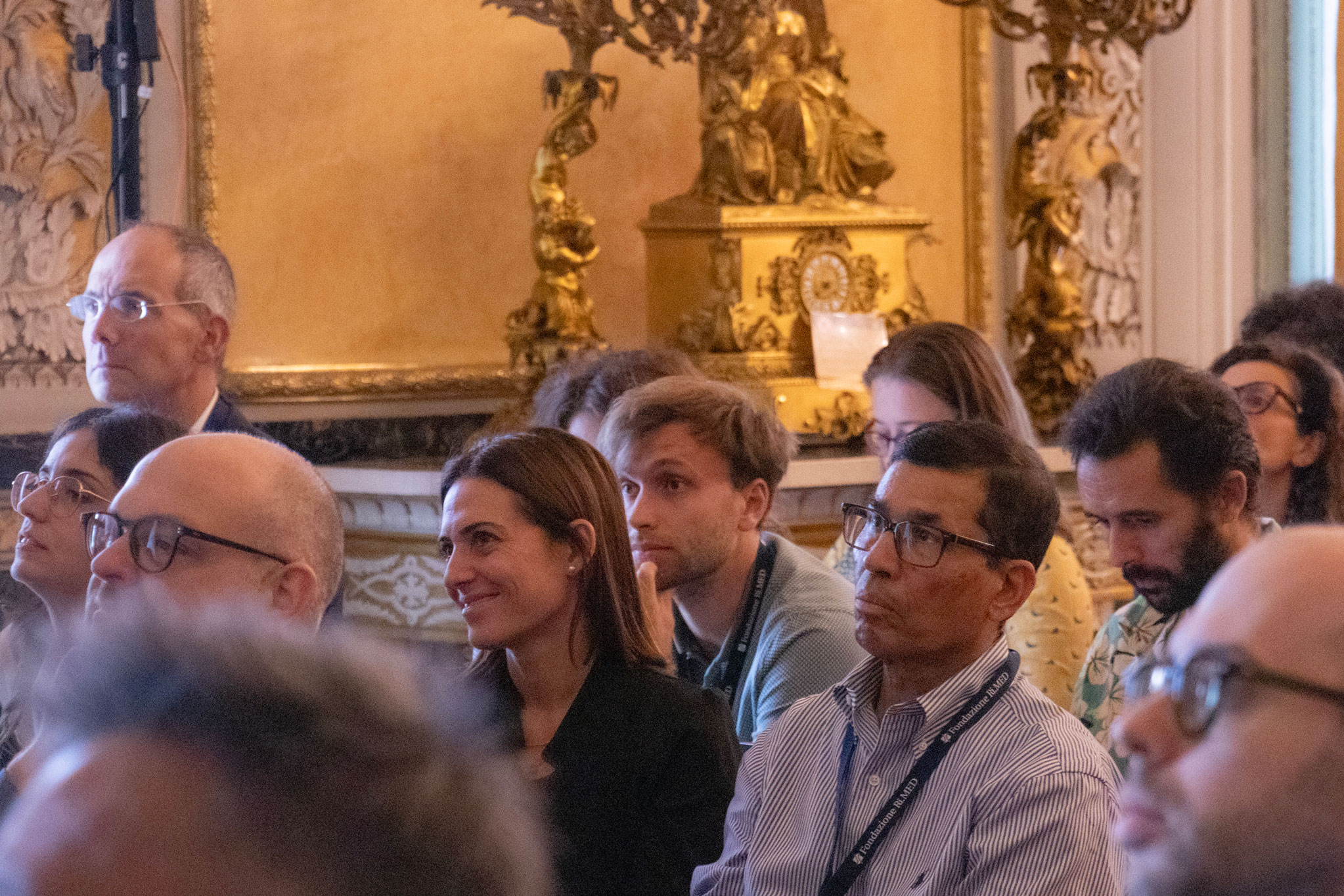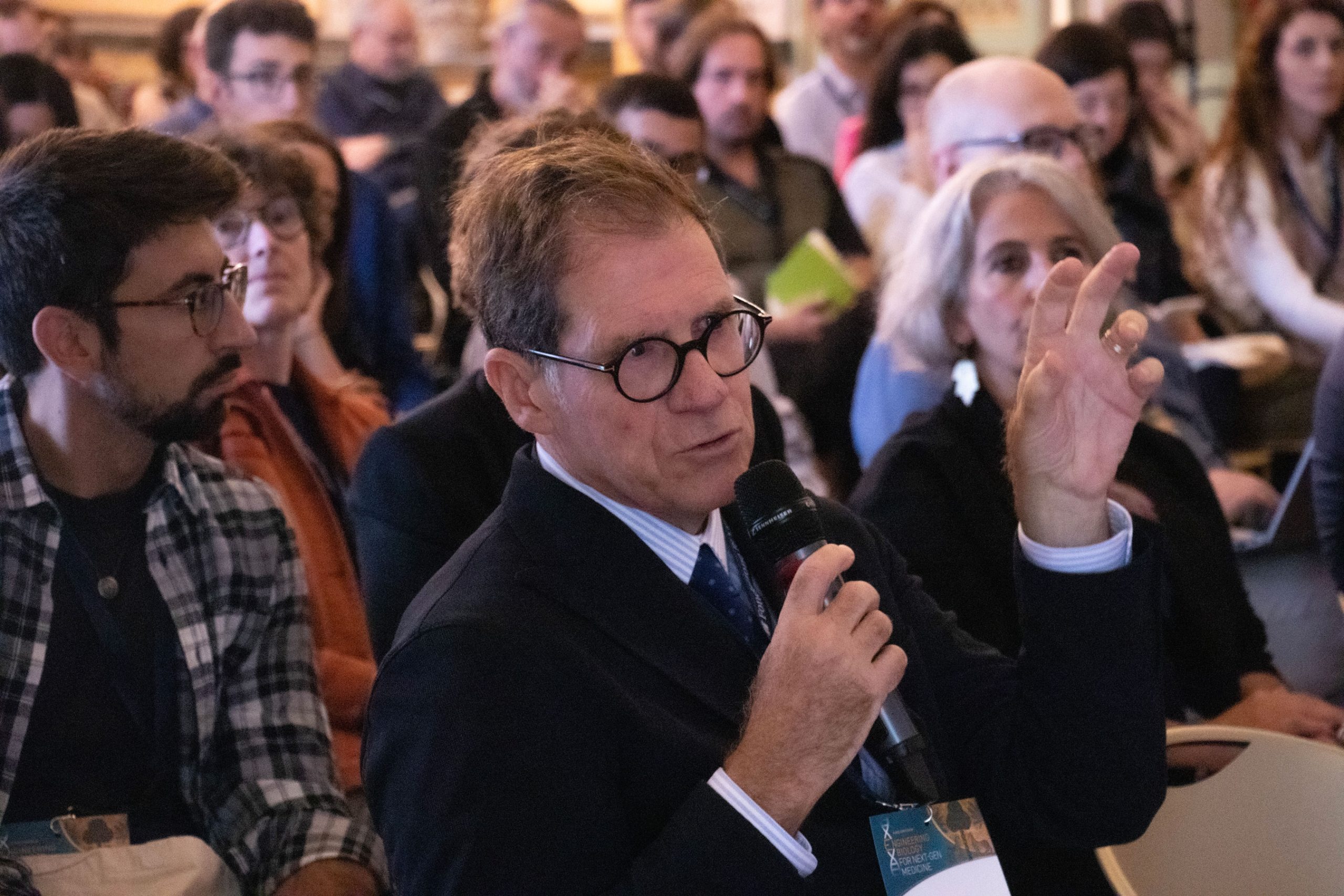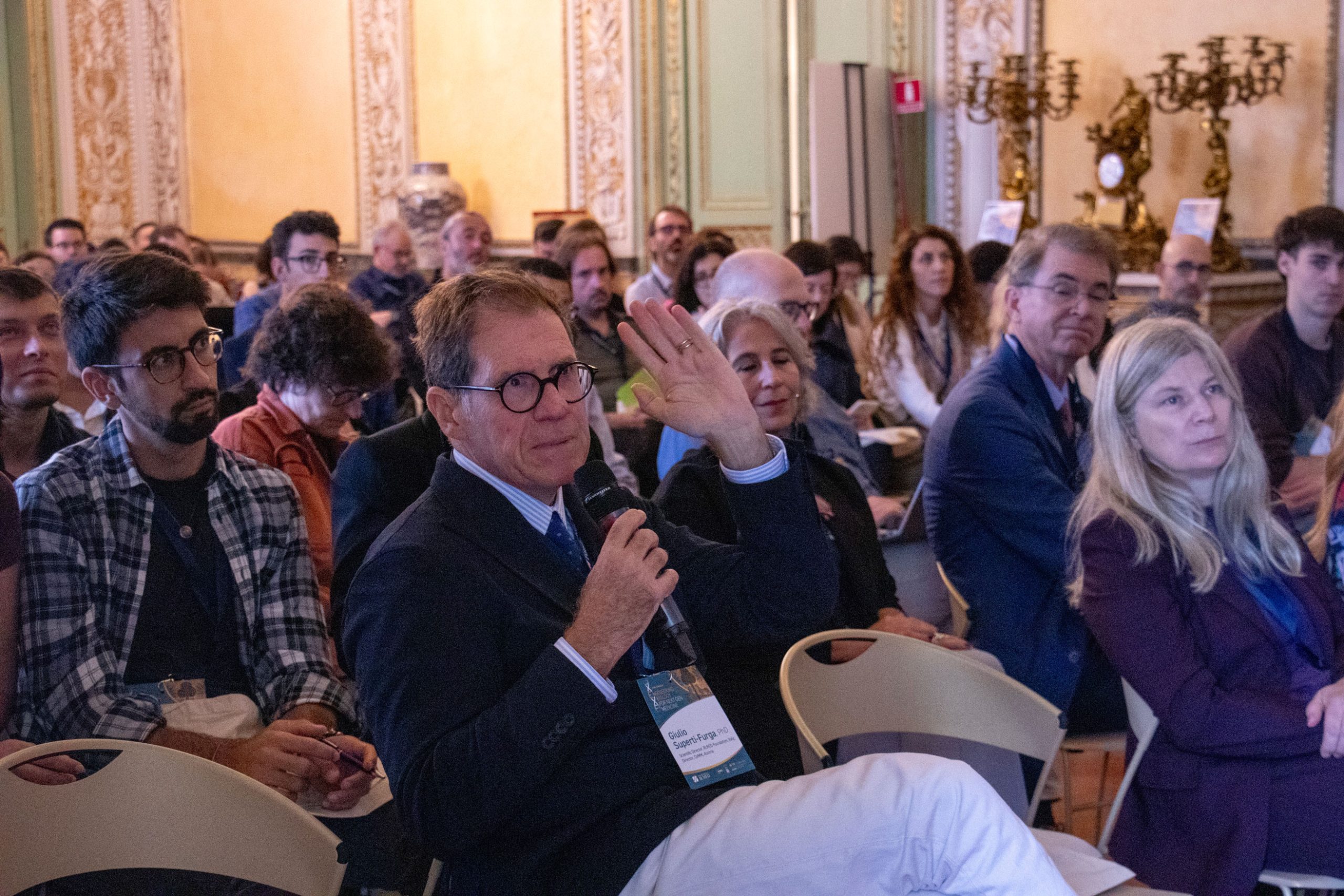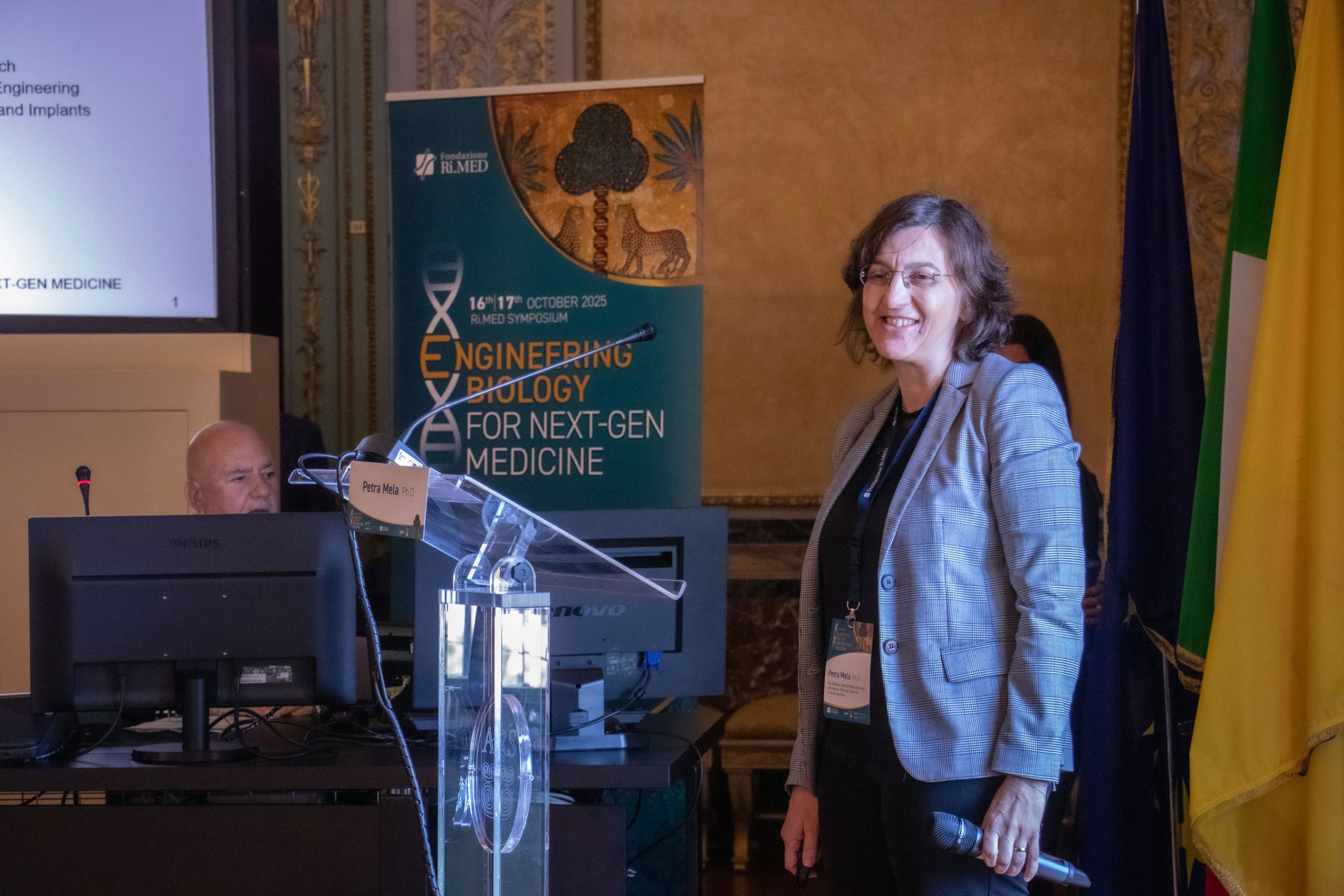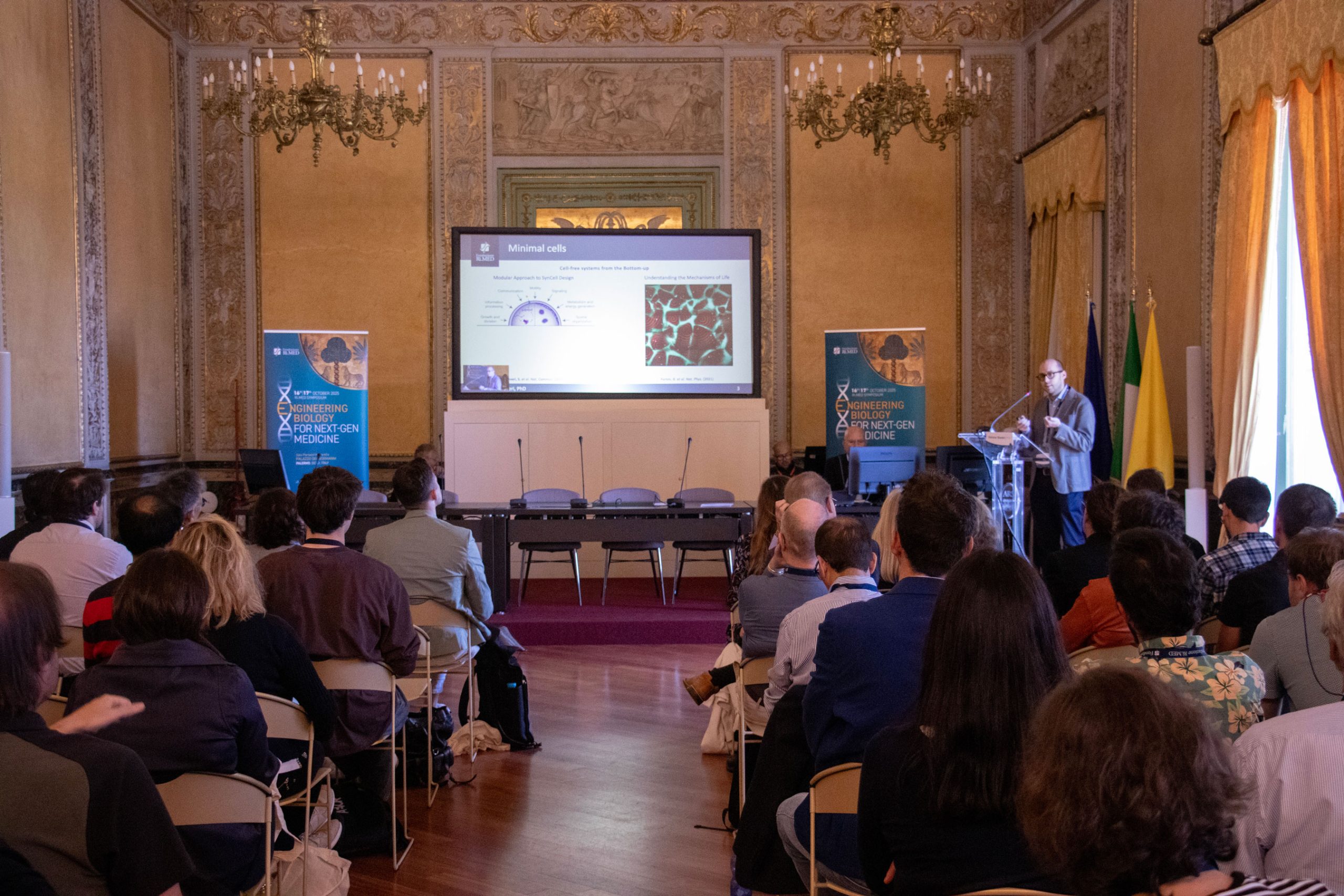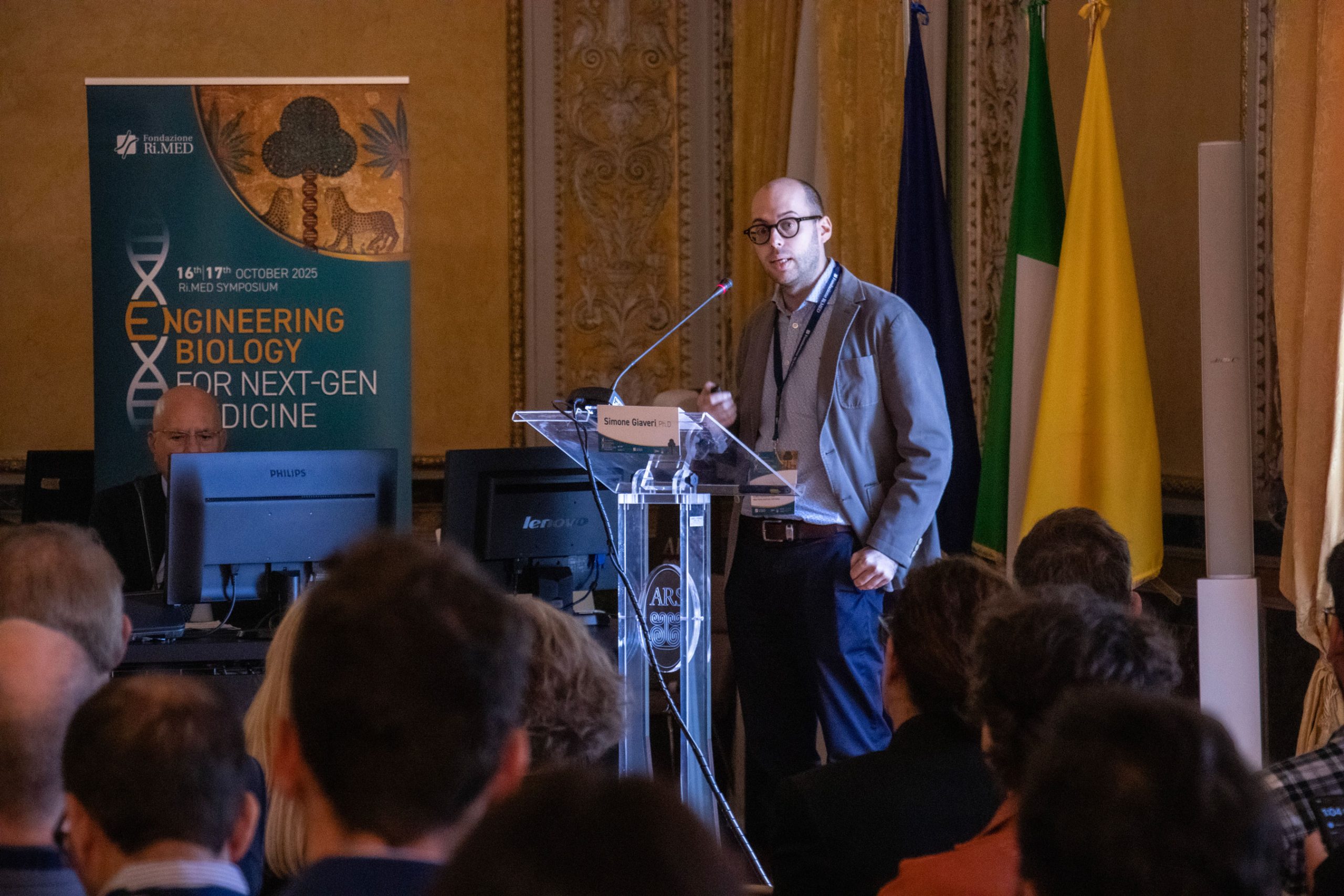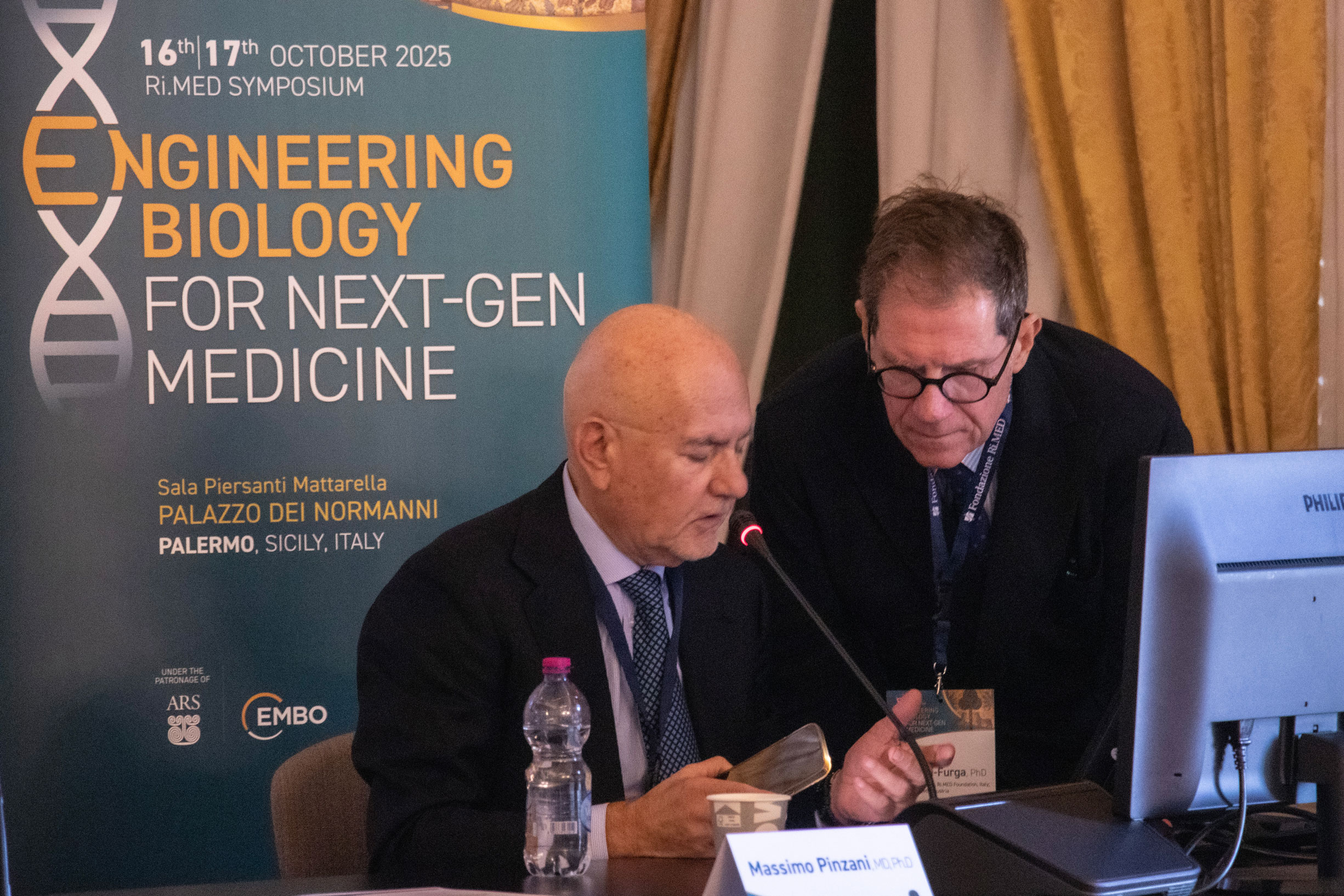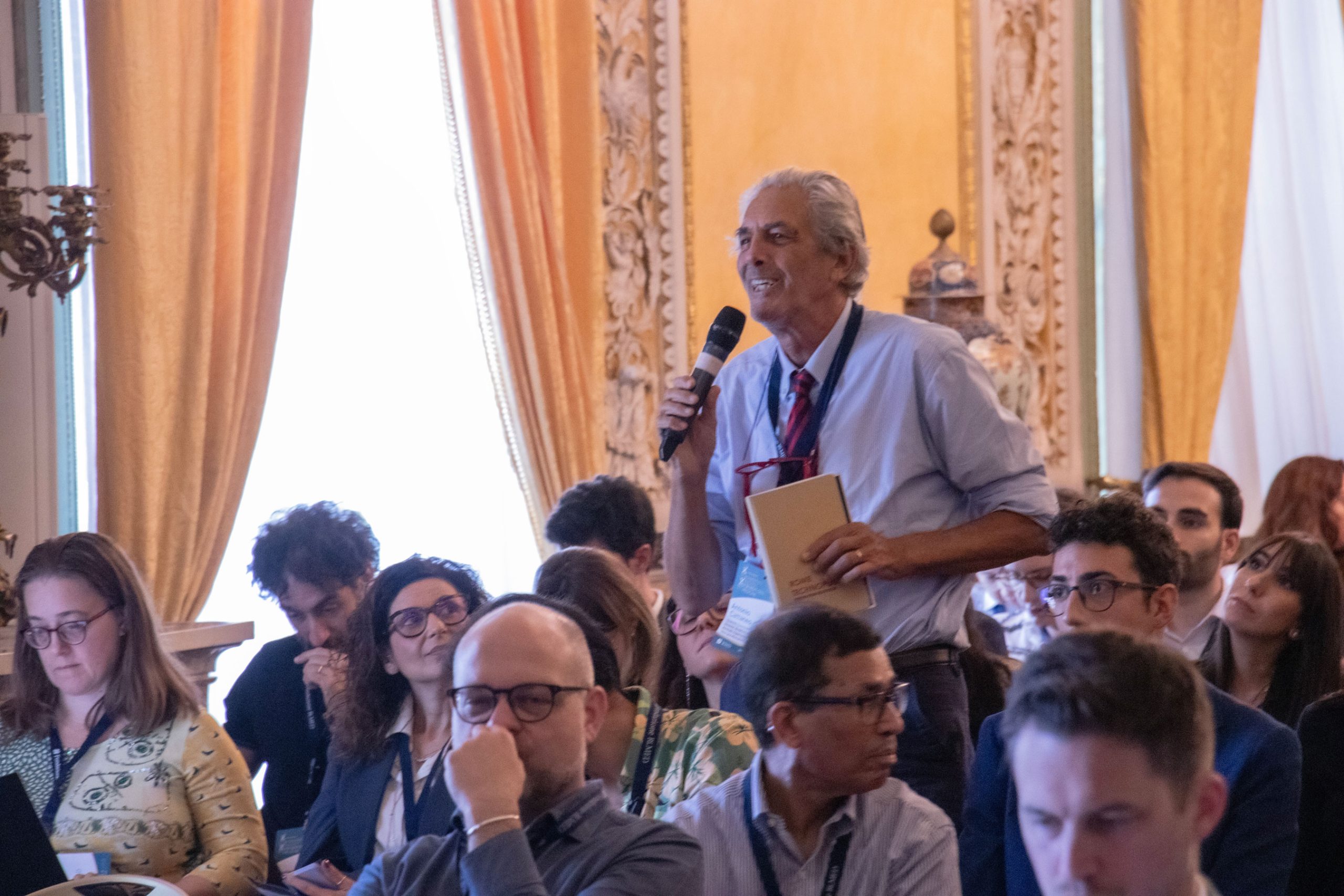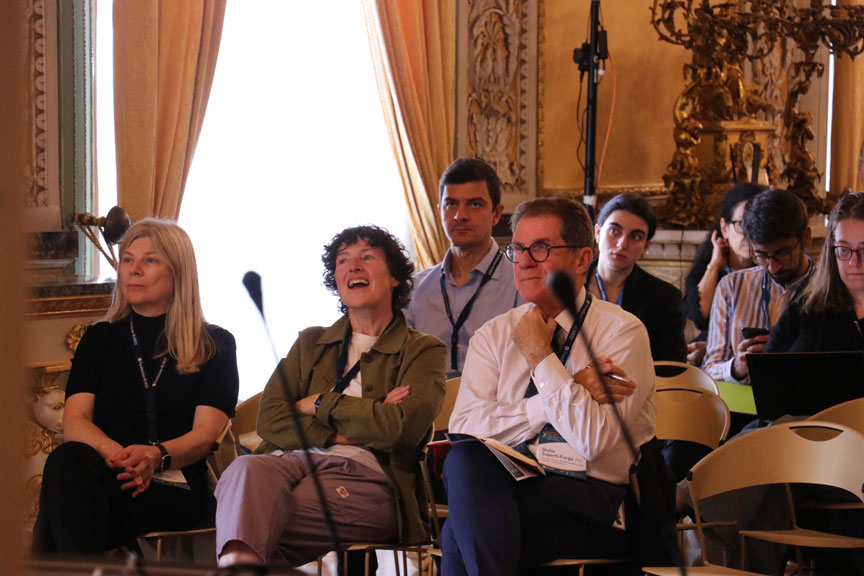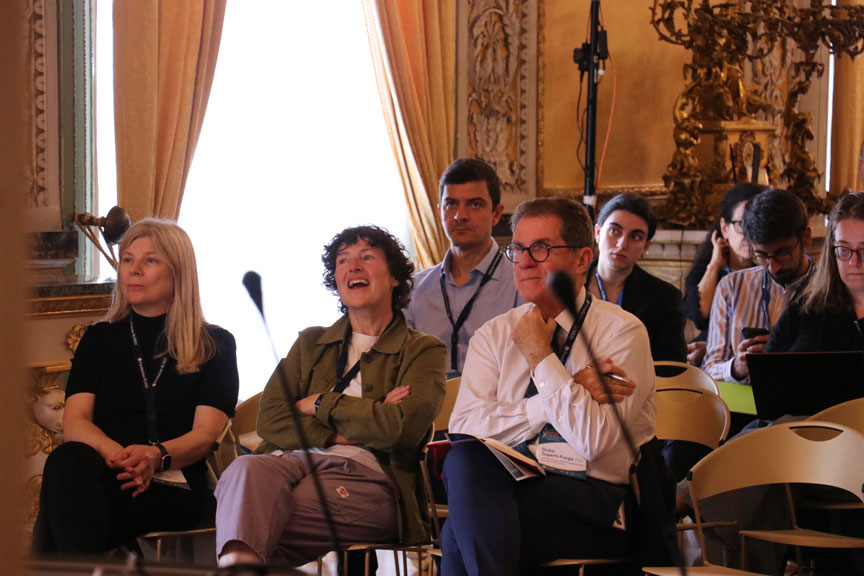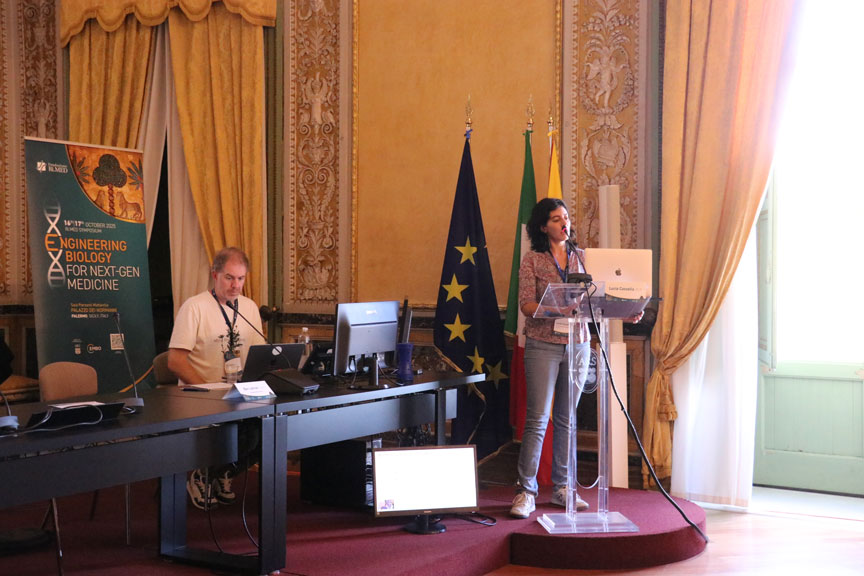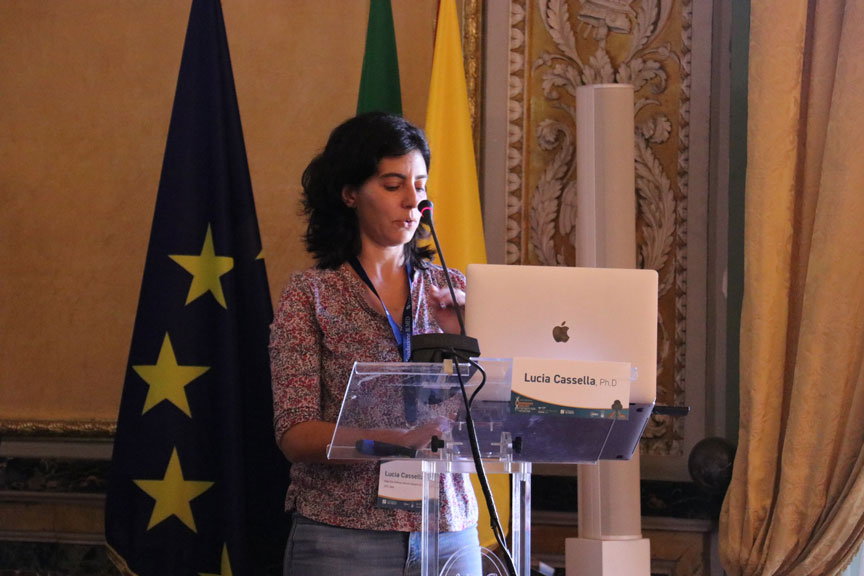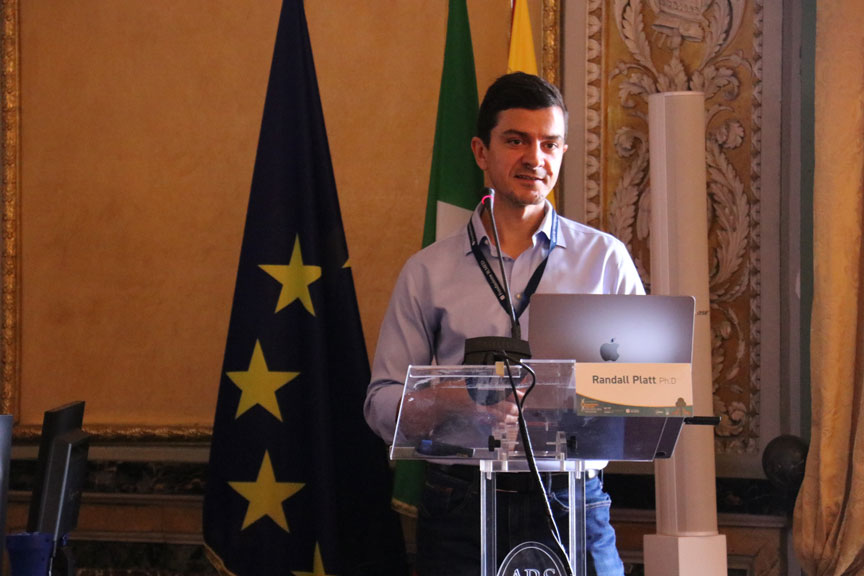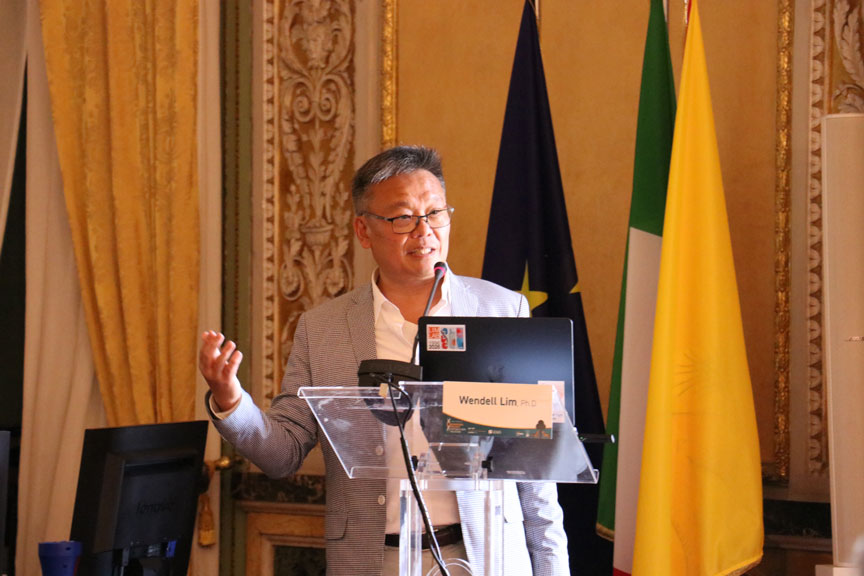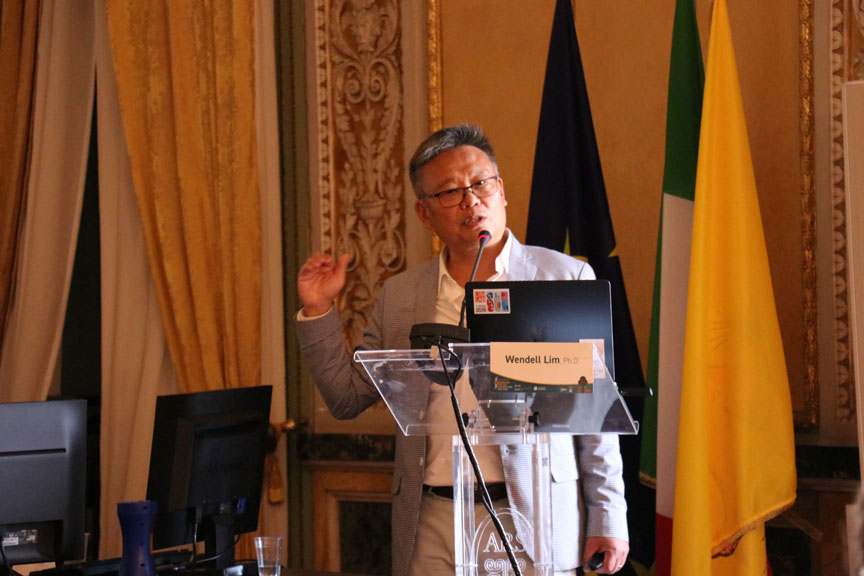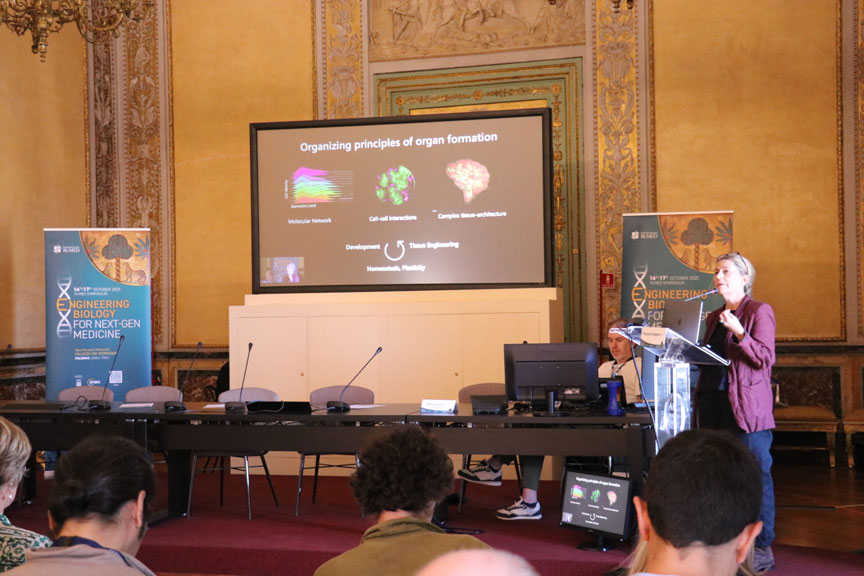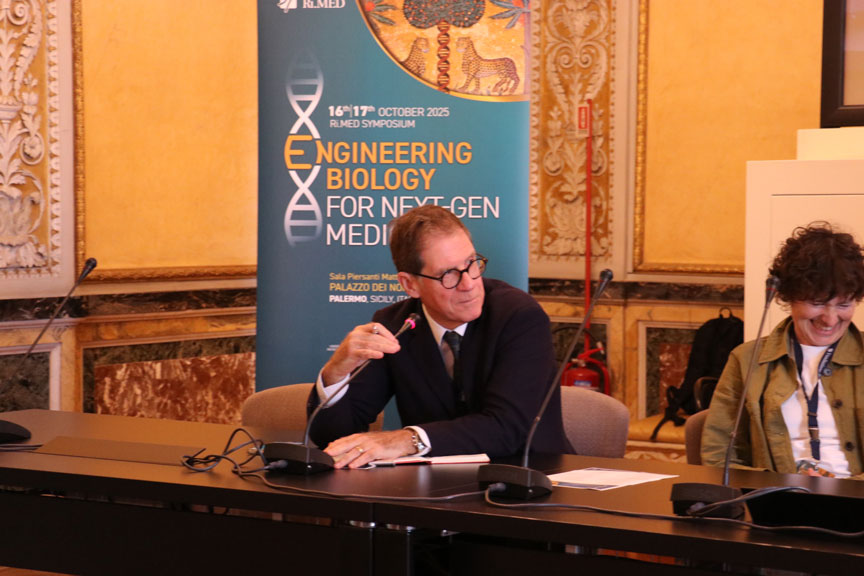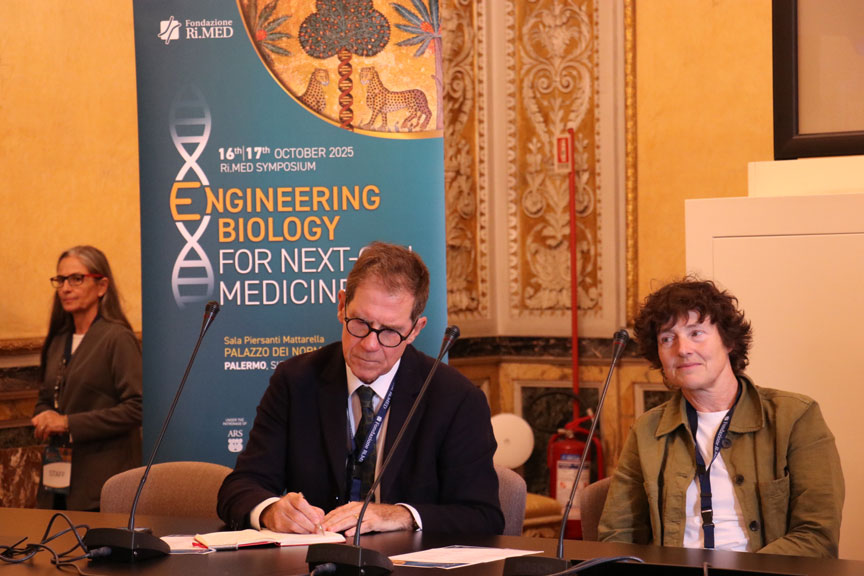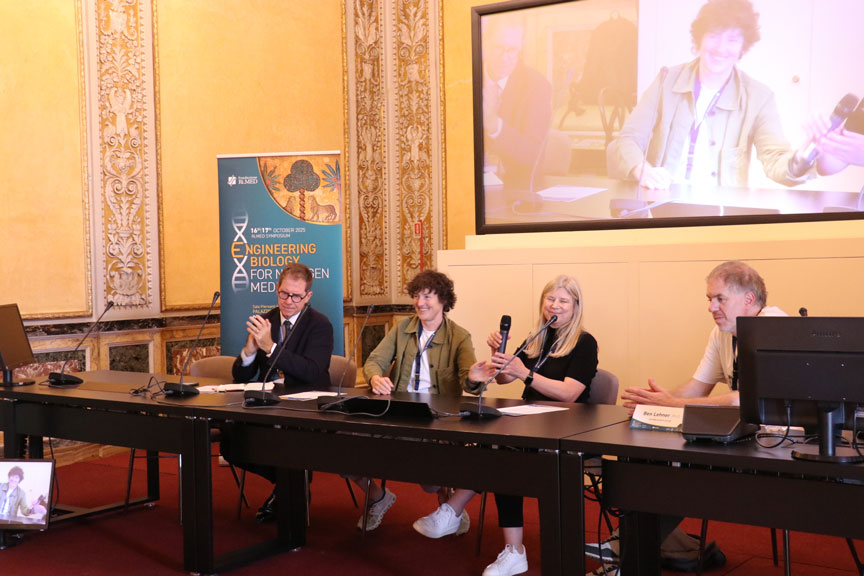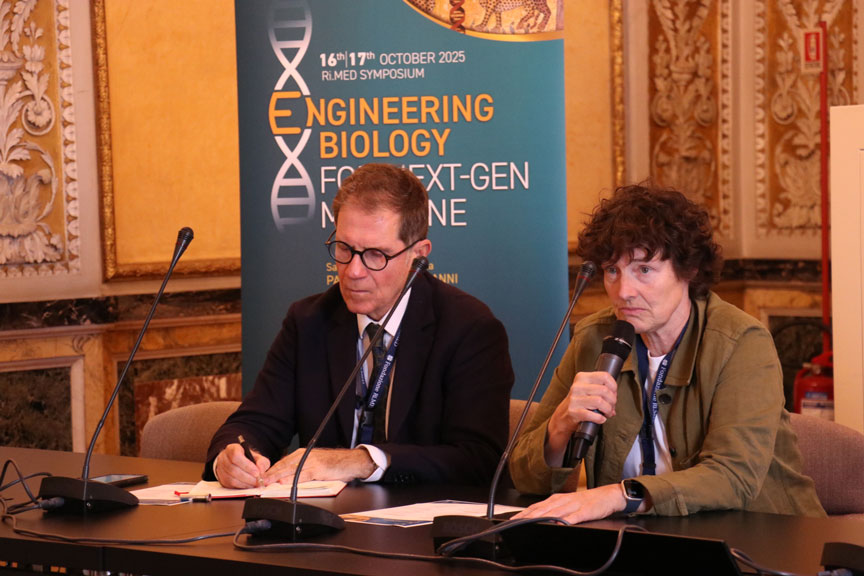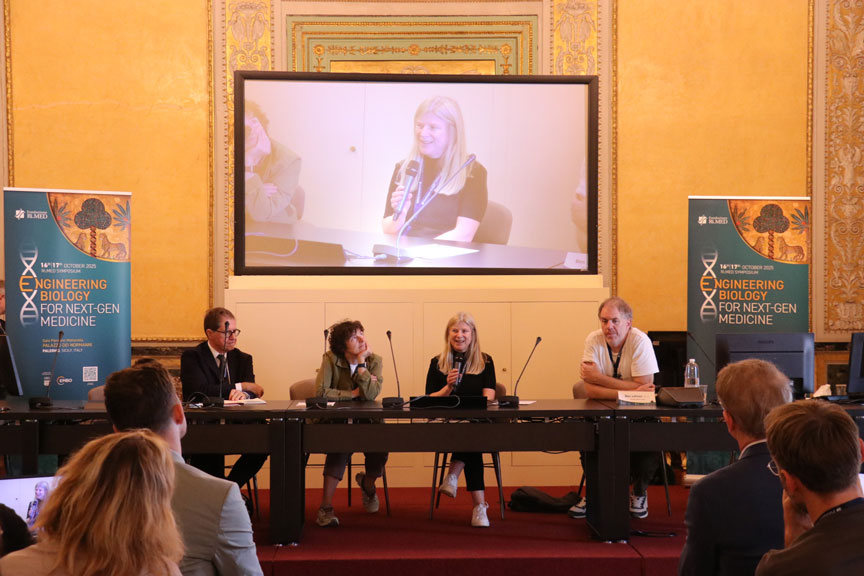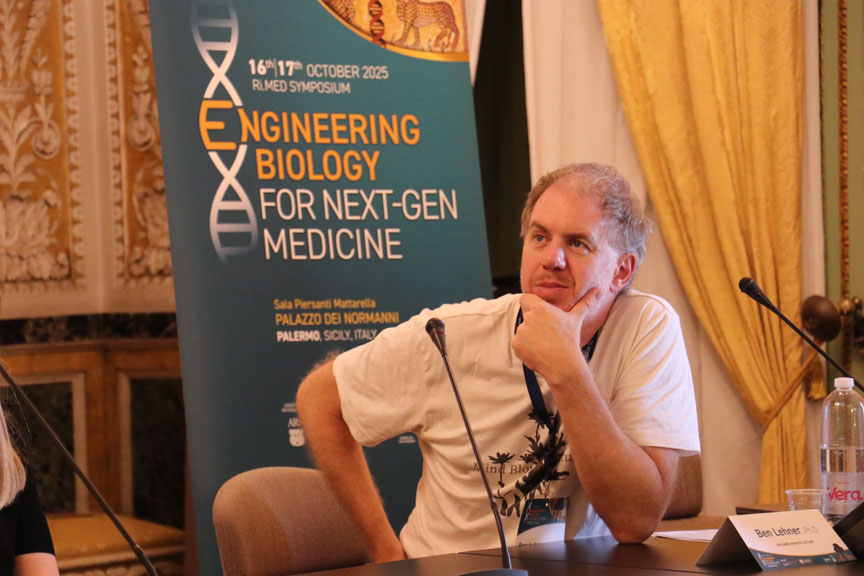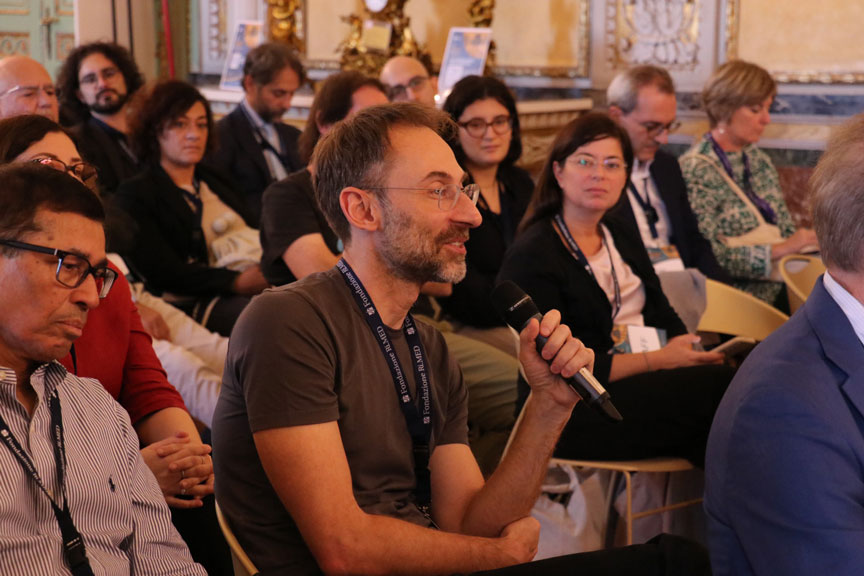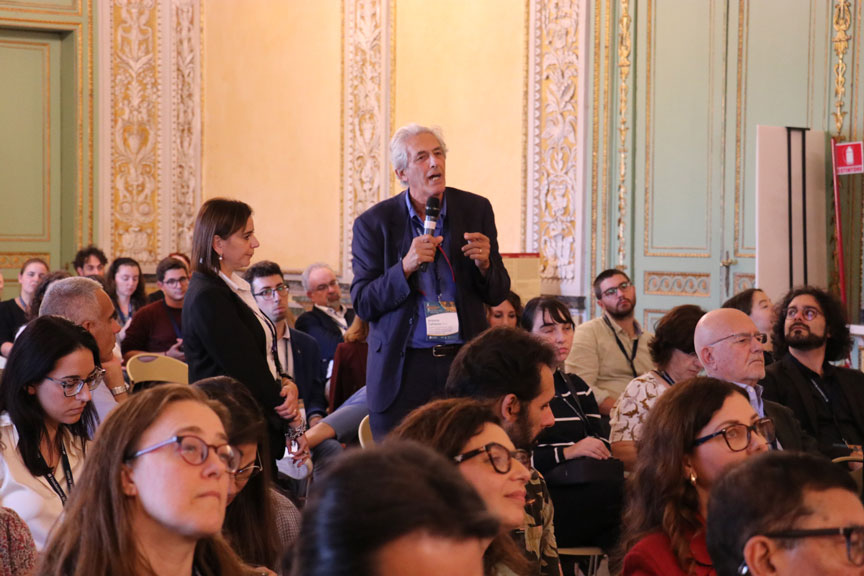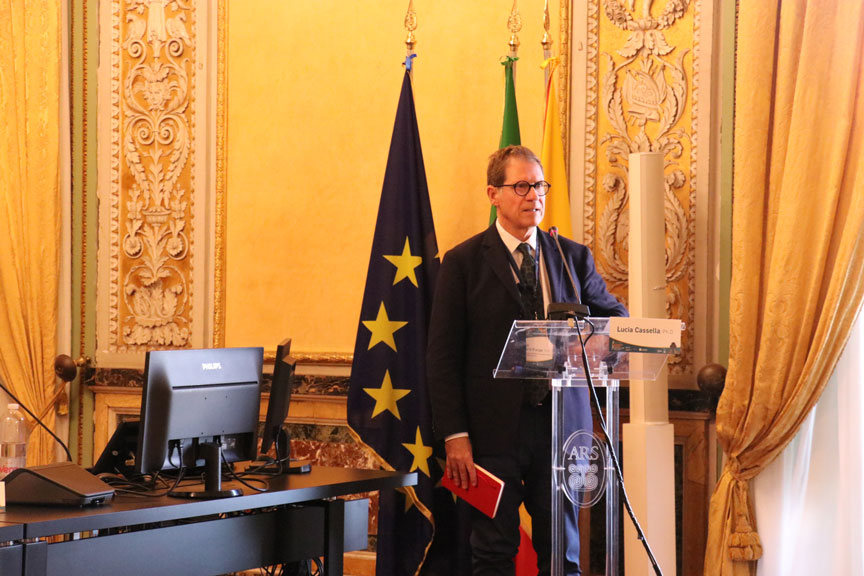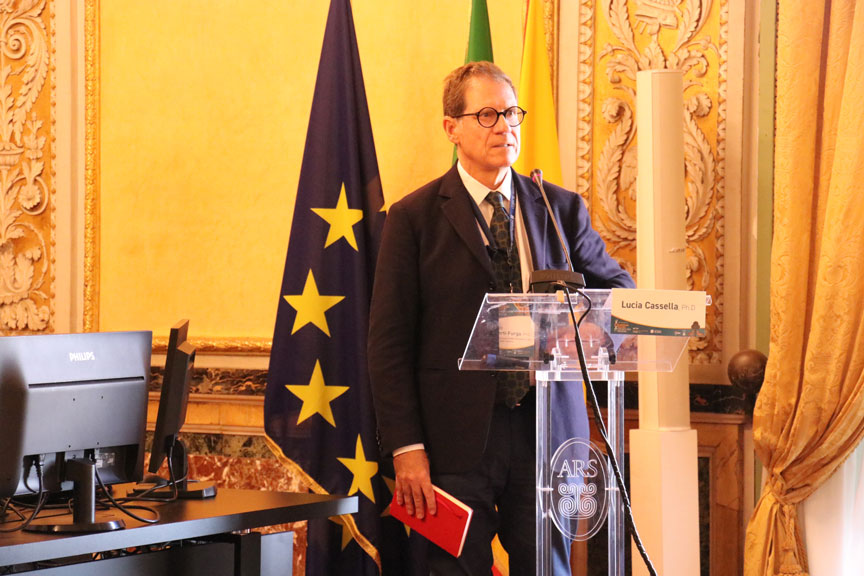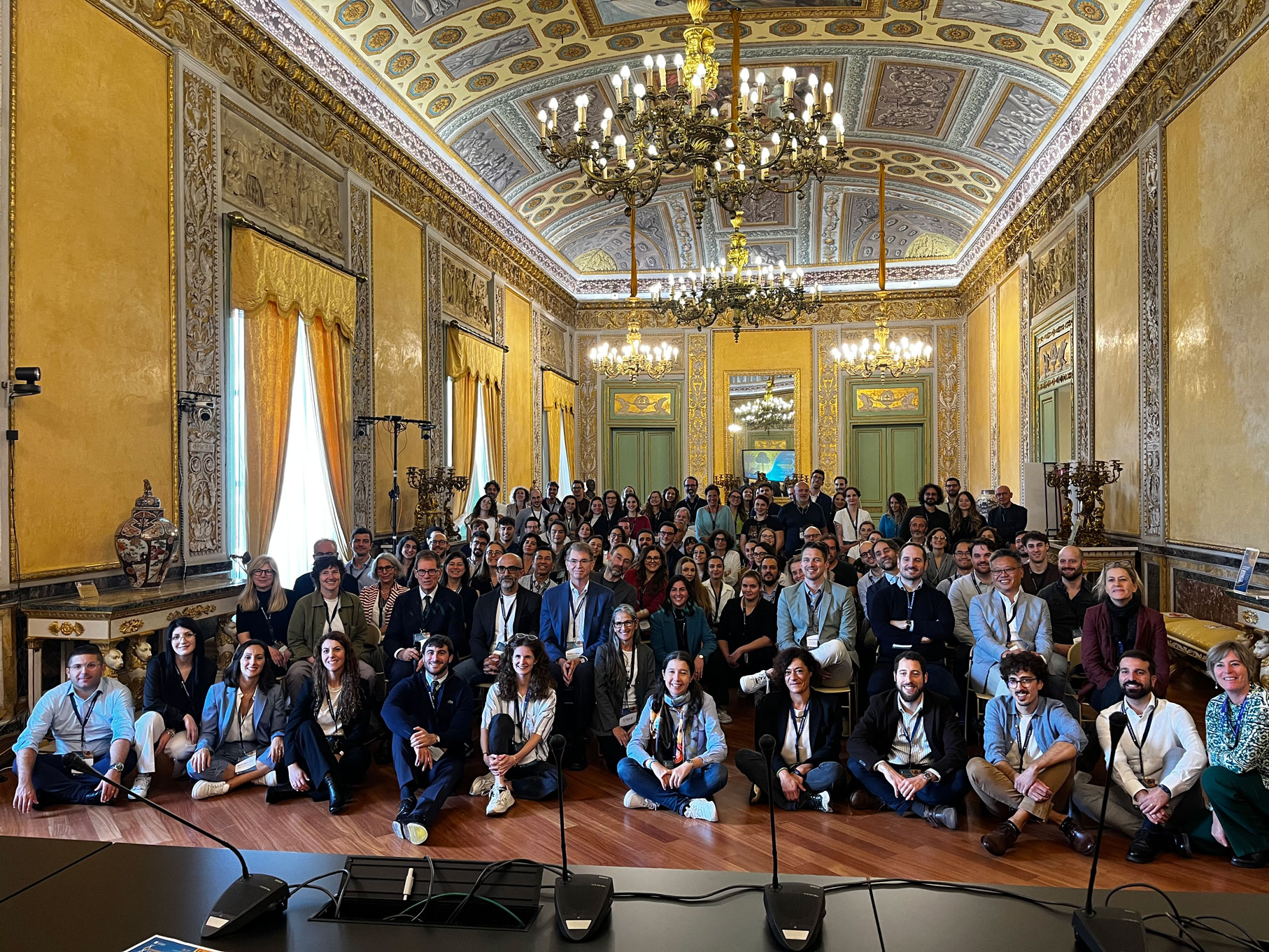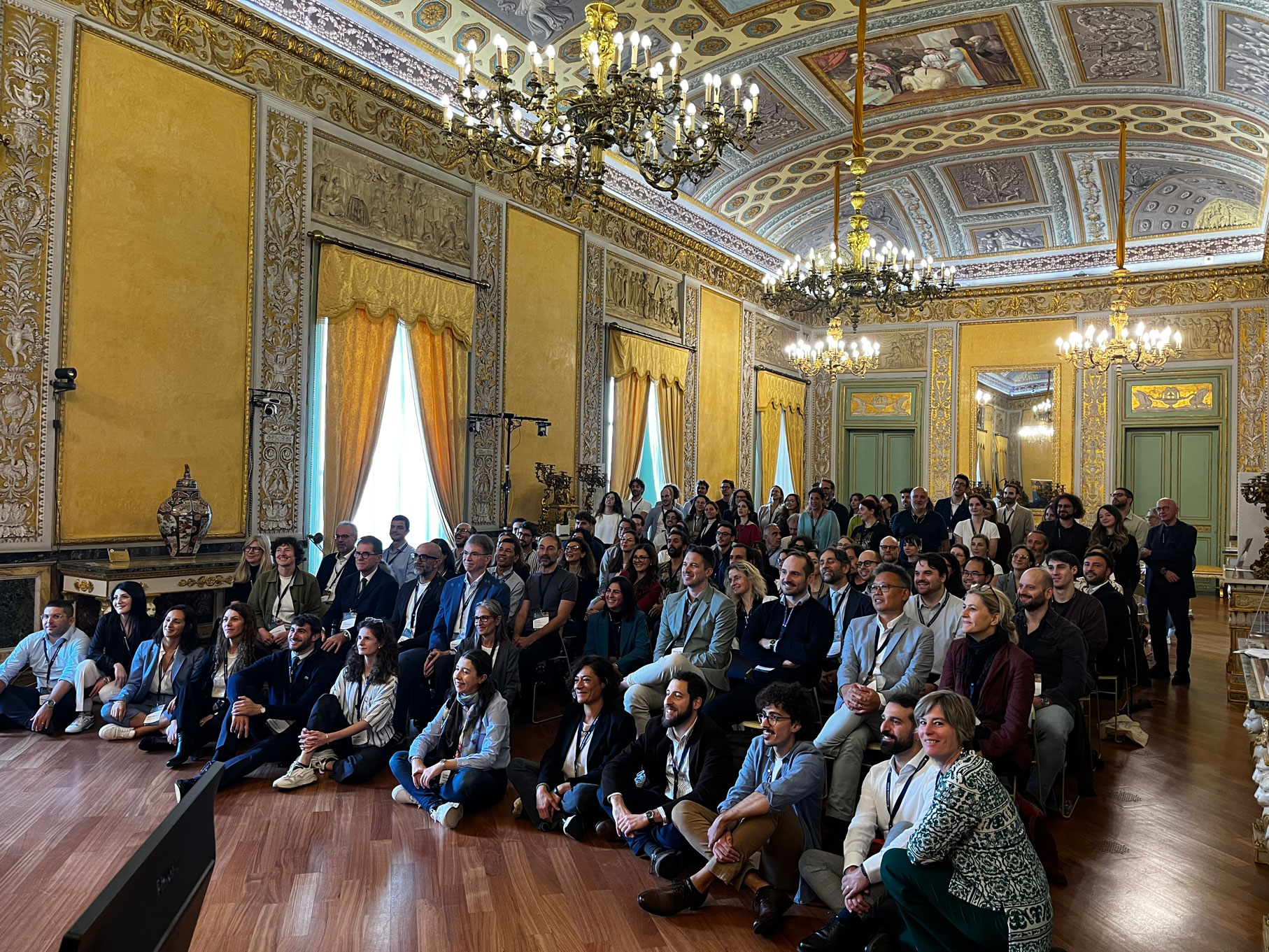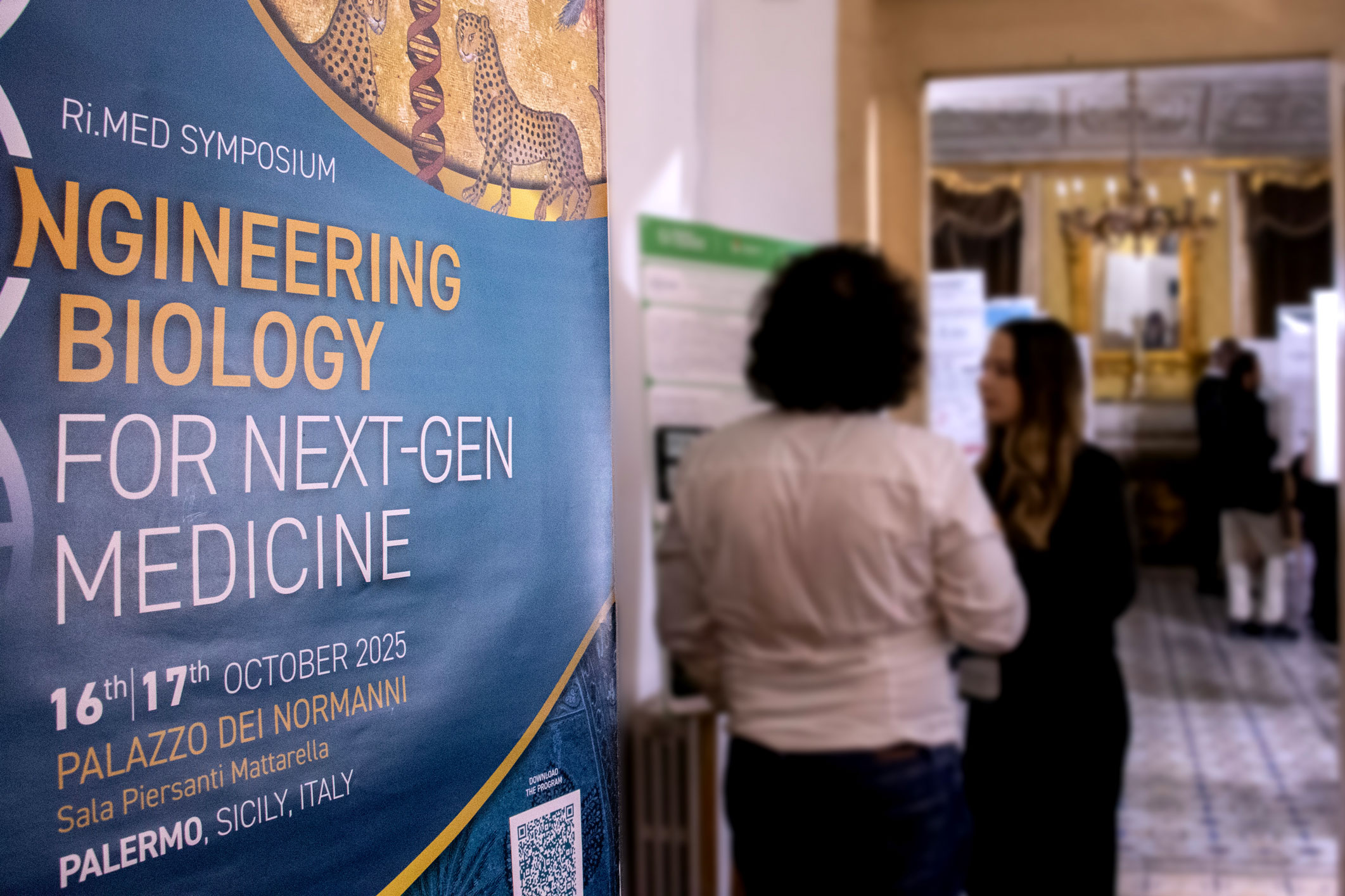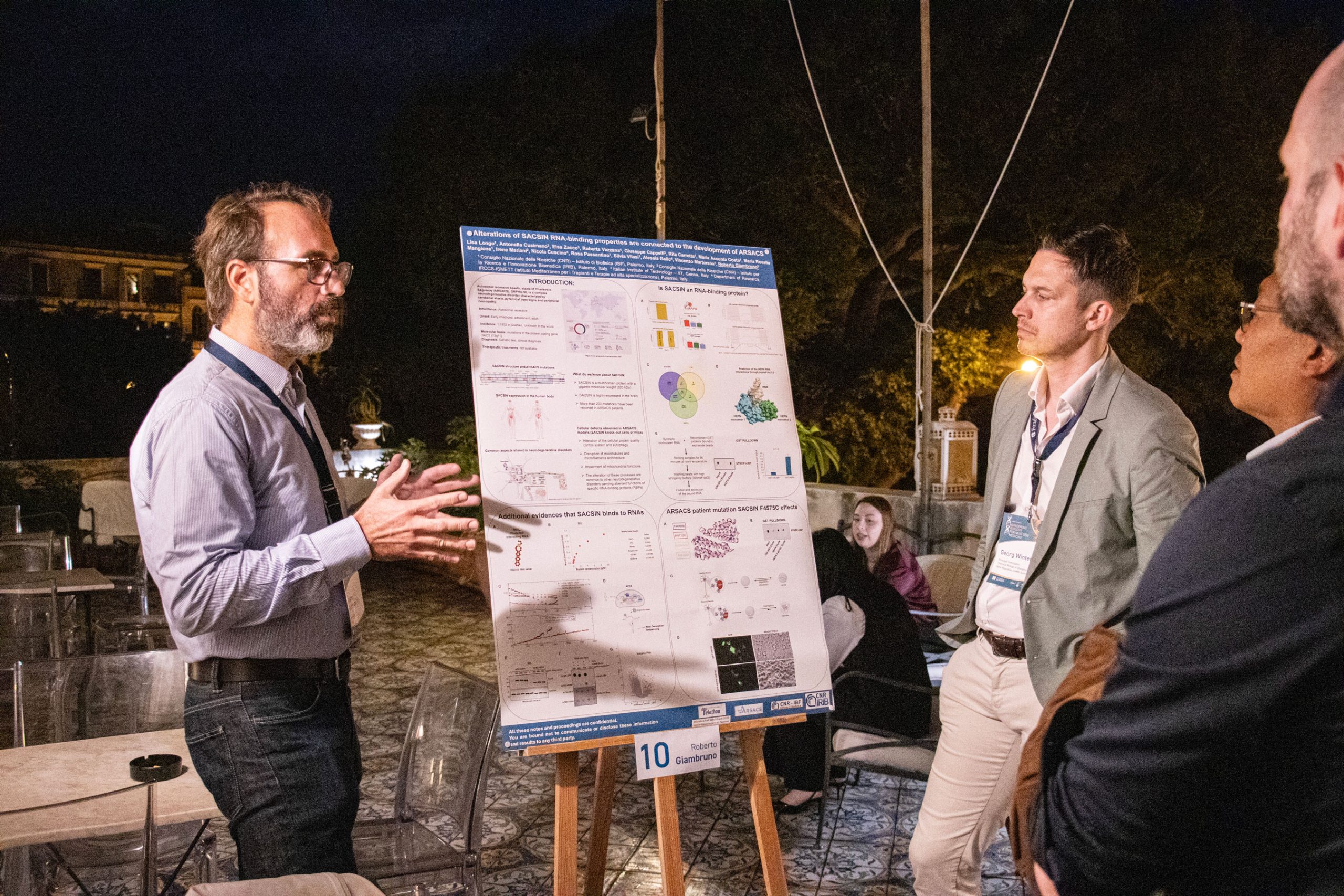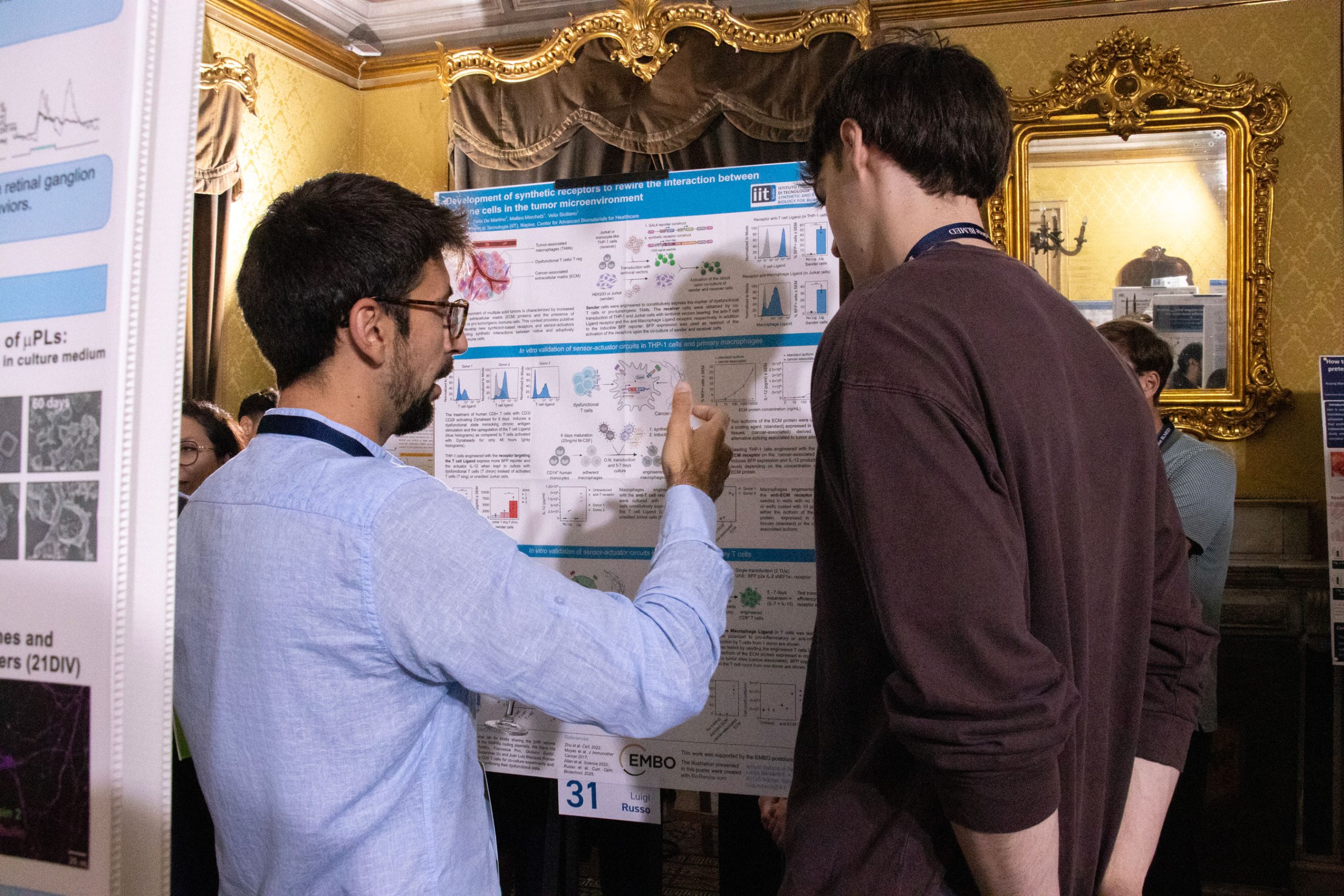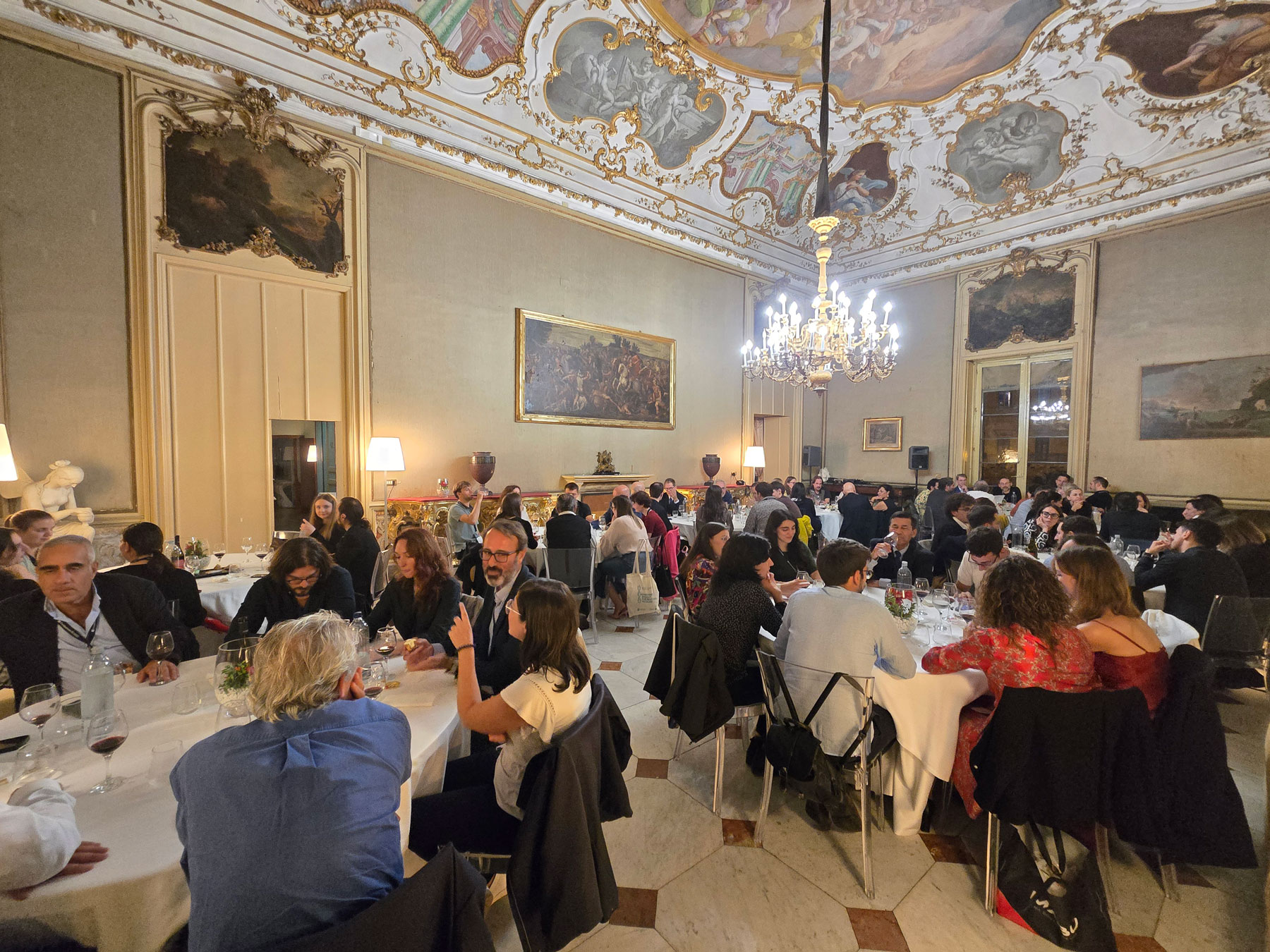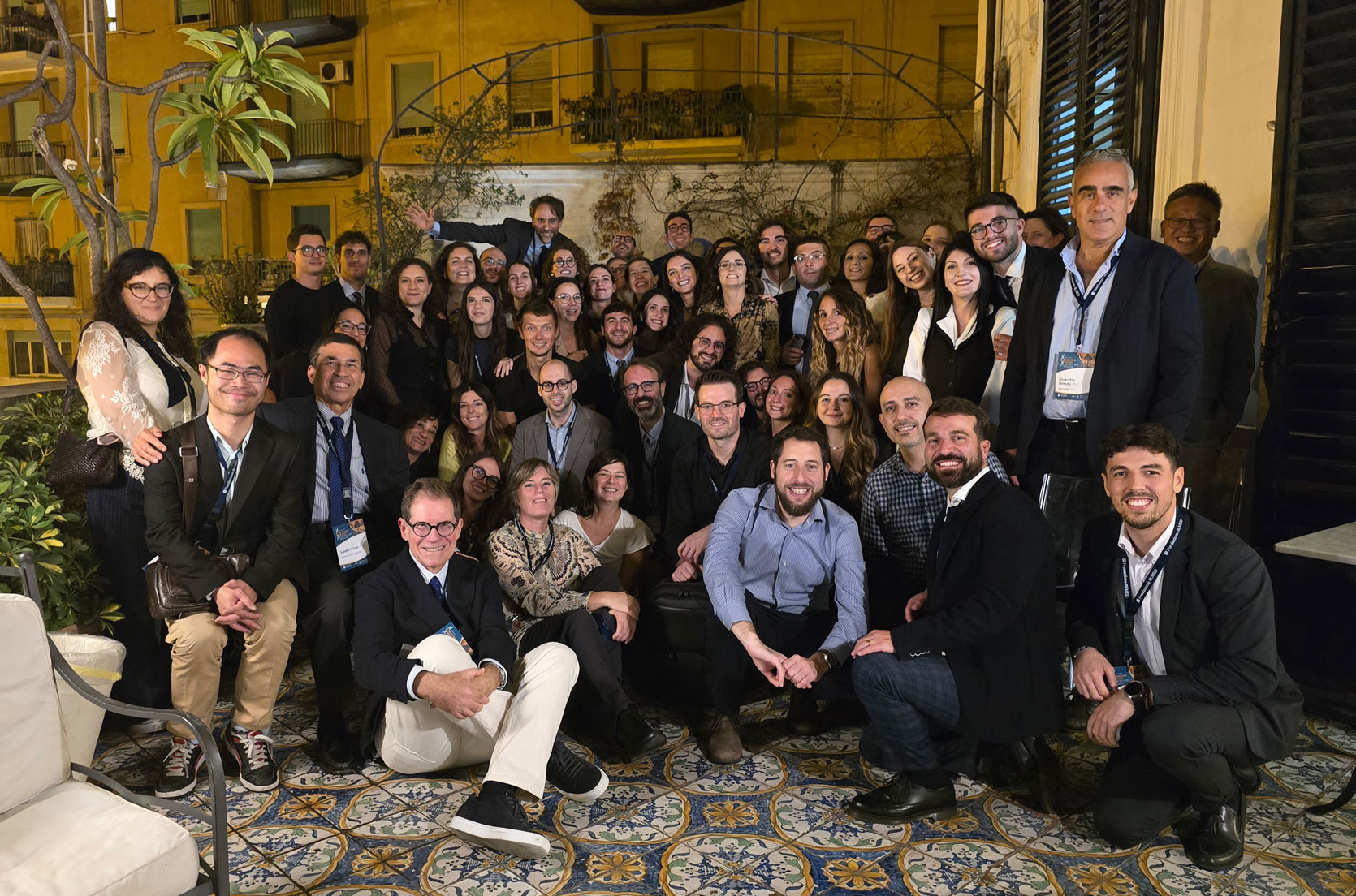
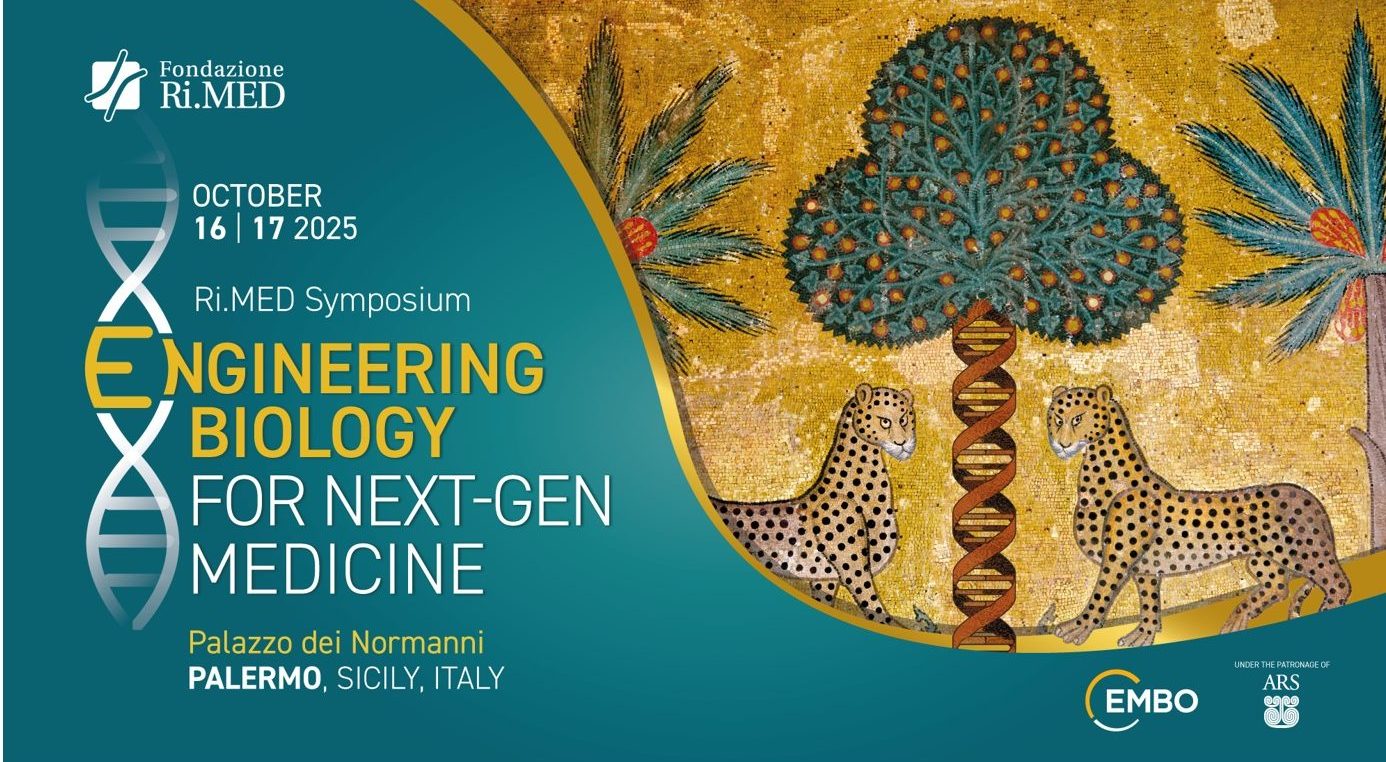
The Ri.MED 2025 Scientific Symposium, titled “Engineering Biology for Next-Gen Medicine”, took place on October 16–17, 2025 in Palermo, at the magnificent Palazzo dei Normanni, also known as the Royal Palace. Its historic halls – rich in history and emblematic of Sicily’s cultural heritage – welcomed internationally renowned researchers who engaged in discussions on the new opportunities offered by engineered biology and how these are transforming the way we conceive medicine for the future.
Technological advancements have made gene editing increasingly precise and cost-effective. The integration of computational models and artificial intelligence now allows scientists to predict the effects of genetic modifications and optimize the design of biological circuits. This opens extraordinary perspectives for creating synthetic organisms with specific functions and medical applications.
The symposium served as a meeting point for multiple disciplines – molecular biology, engineering, computer science, chemistry, and bioinformatics – with the common goal of understanding and utilizing biological systems in new and innovative ways.
During the scientific sessions, speakers were also invited to reflect on the future, addressing questions such as: “How are recent technological advances and the rise of artificial intelligence reshaping our ability to design and manipulate biological systems for biomedical purposes? What new possibilities are emerging? And how might these innovations influence medical practice, both in the short and long term?” Over the two days, the discussions were further enriched not only by the presentation of scientific results but also by speculative visions of the future of generative biology: how human capacity to prevent, repair, and even create new biological functions for human well-being might evolve.
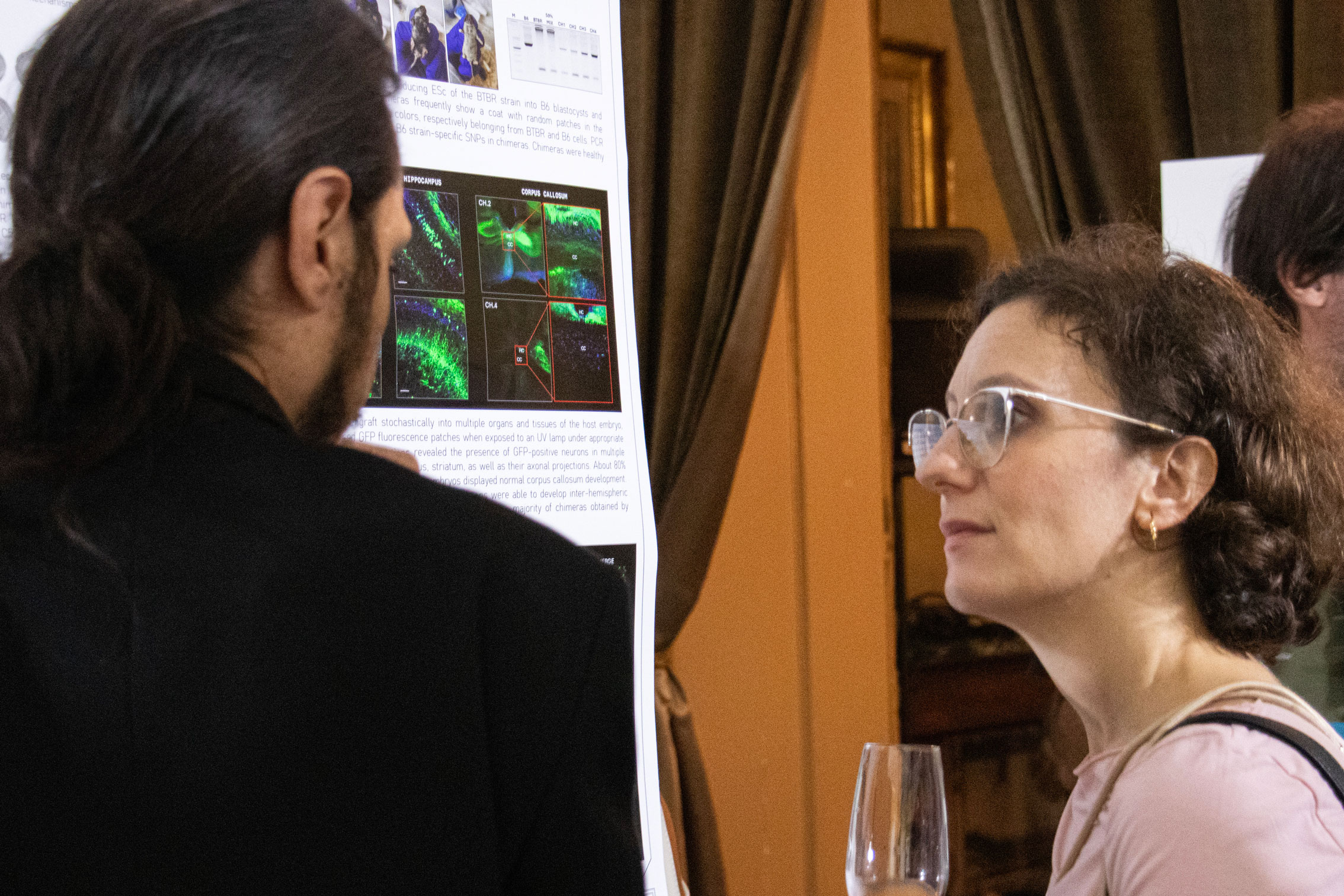
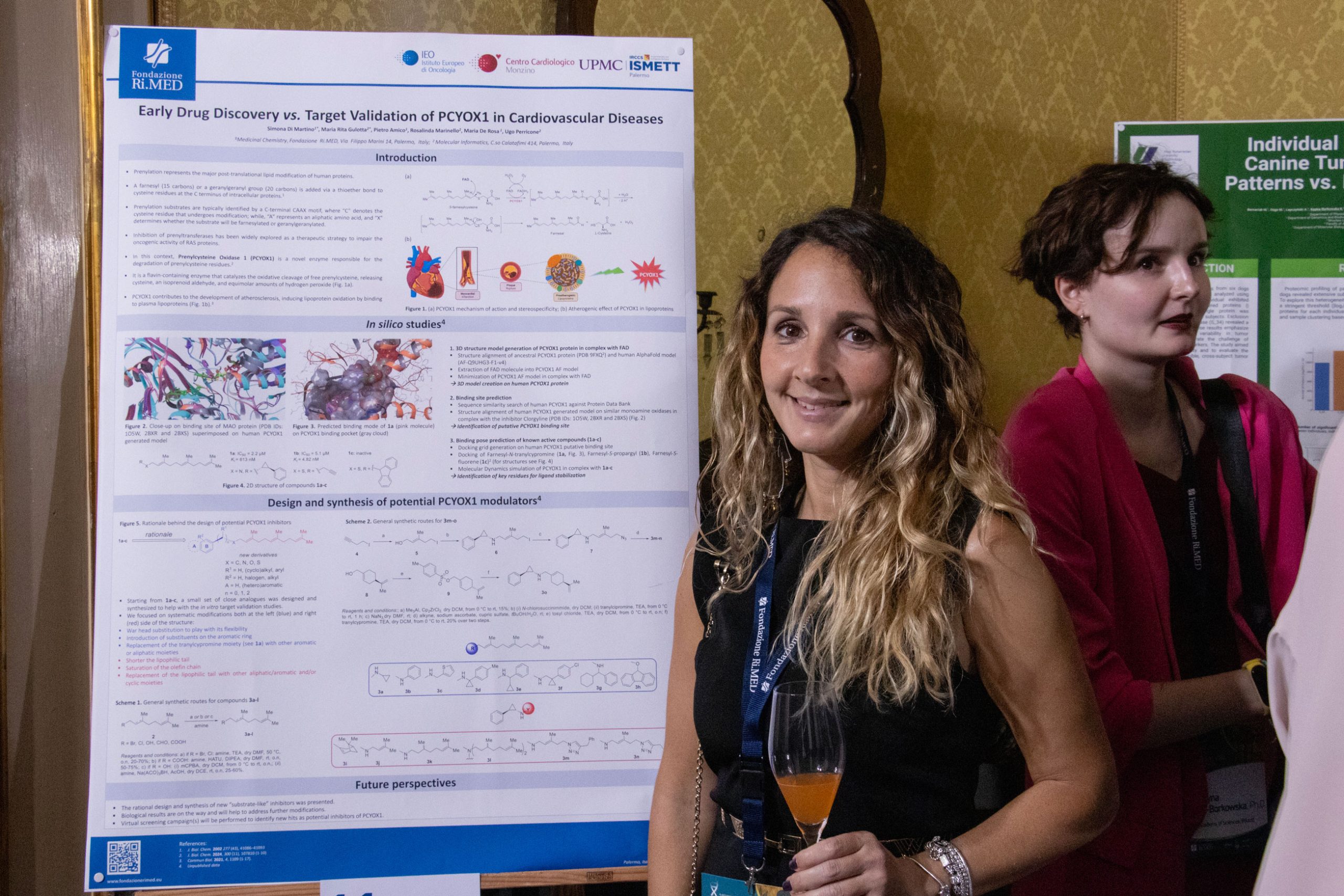
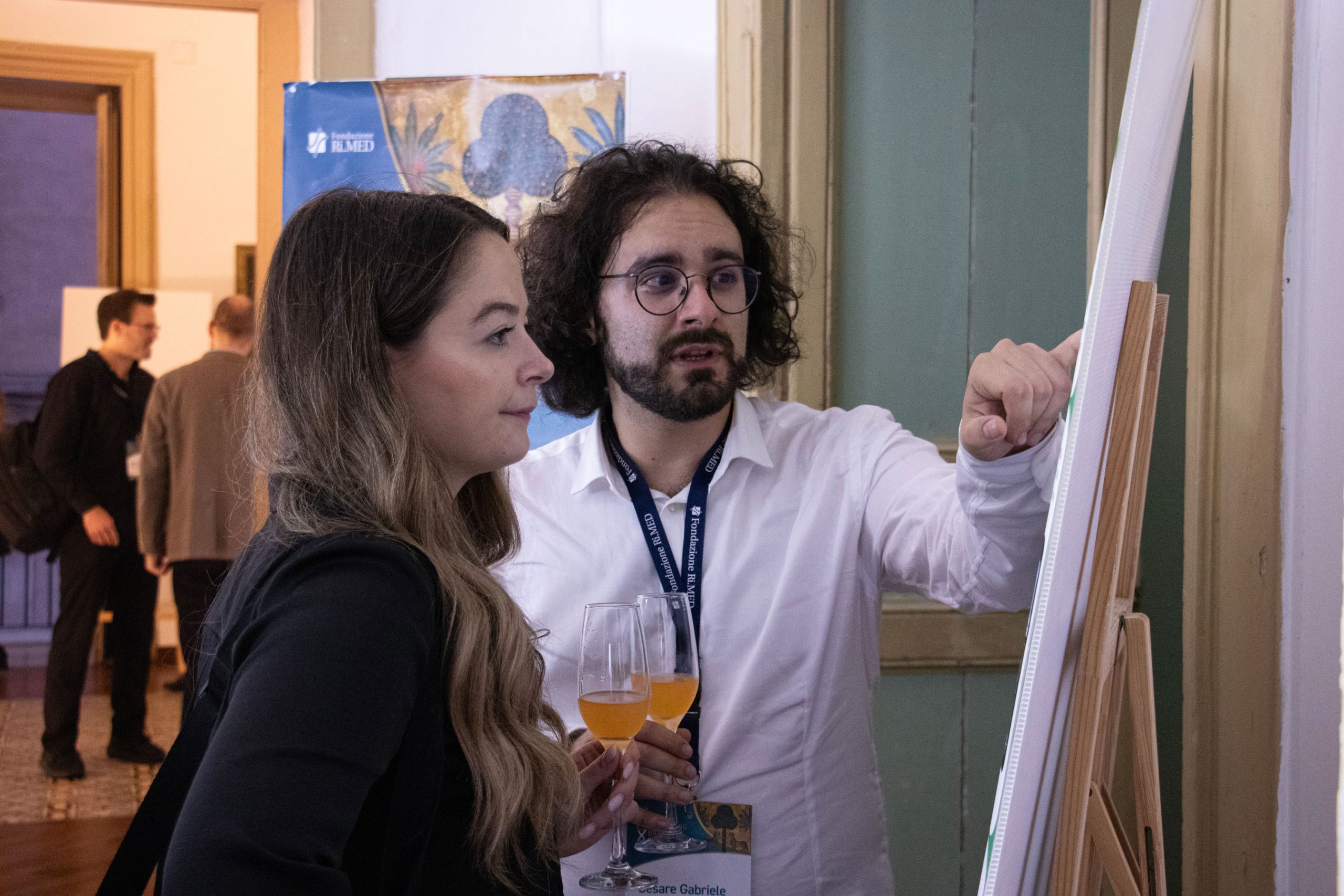
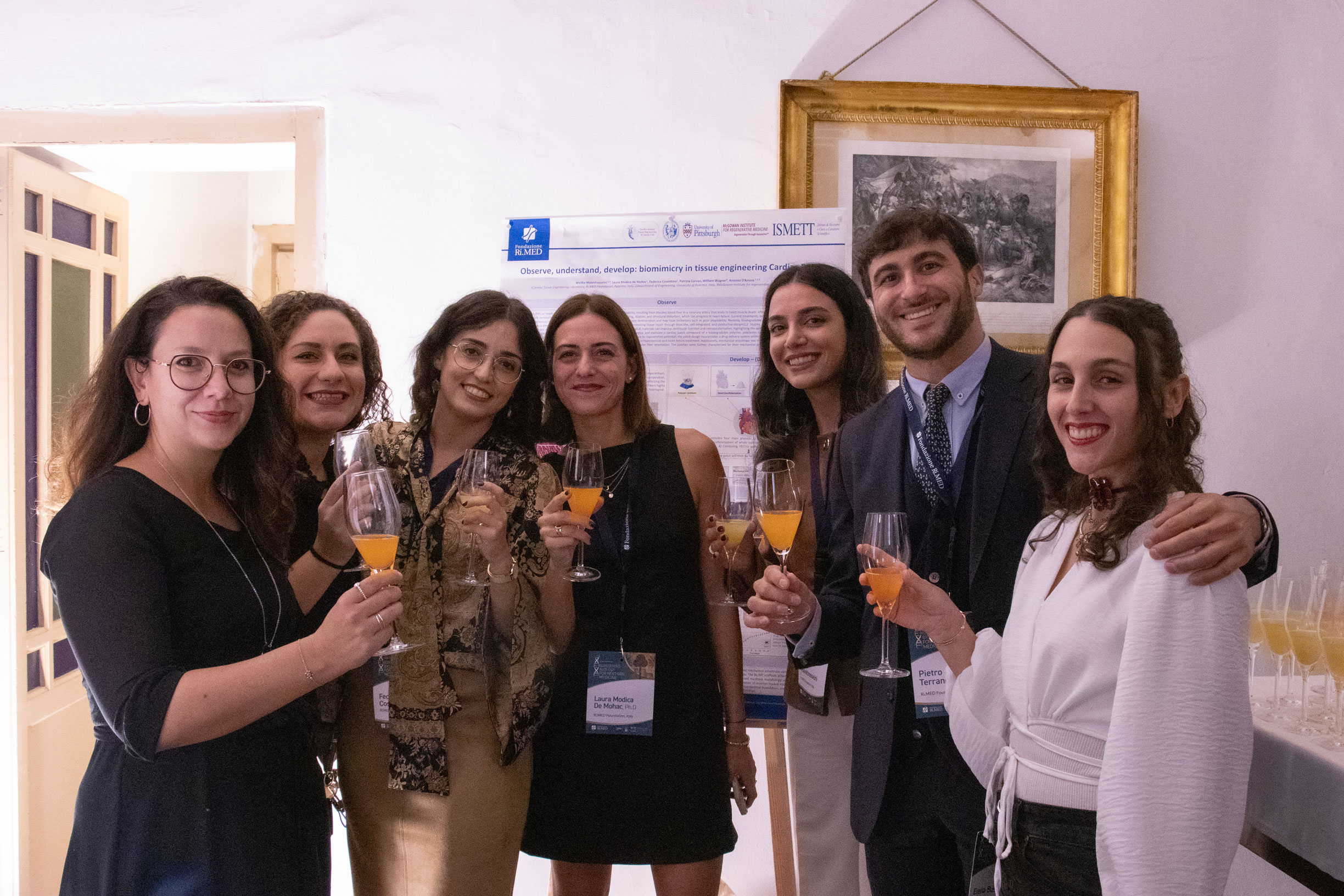
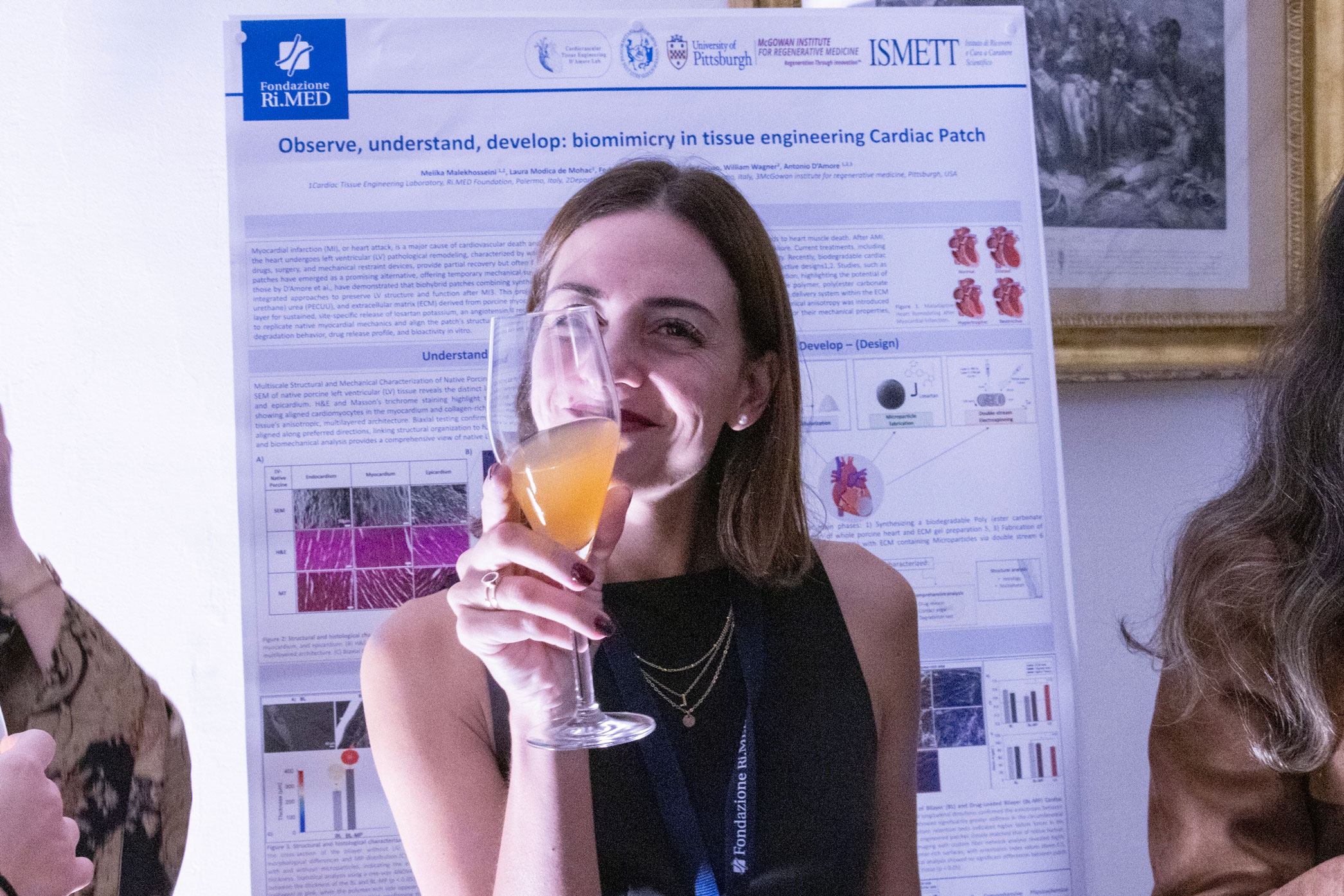
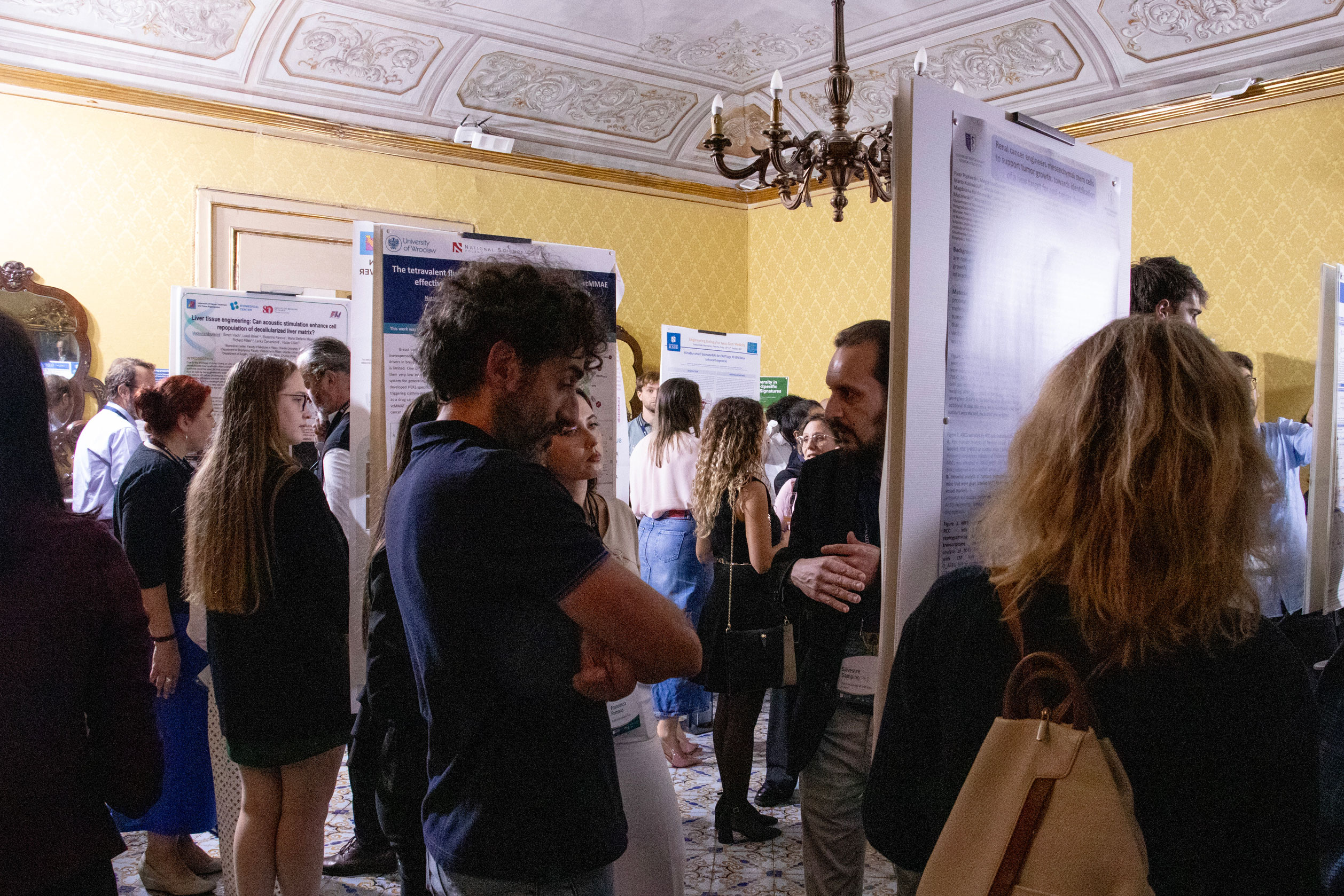
On the first day, at the Palazzo dei Normanni, the symposium featured distinguished talks by Tanja Kortemme, Possu Huang, Ana Teixeira, Nico Callewaert, Antonio D’Amore, Petra Mela, Simone Giaveri, Petra Balbi, and Ben Lehner (EMBO Keynote Lecture), followed by presentations from Maria Lluch-Senar, Georg Winter, and Mo Ebrahimkhani. The day concluded with lively flash talks introducing the posters later showcased during the evening social event at Palazzo Fatta, a stunning venue and testament to Palermo’s aristocratic heritage.
The second day featured presentations by Petra Schwille, Gaetano Burriesci, Pierre Stallforth, Andrea Belluati, Bruno Correia, Djenet Bousbaine, Michael Bronstein, Anastassis Perrakis, Wendell Lim, Francesca Spagnoli, Randall Platt, and Lucia Cassella, each offering unique perspectives on the frontiers of biomedicine and the transformative potential of generative biology. The symposium offered an extraordinary overview of how engineered biology and artificial intelligence are redefining research, therapy, and our understanding of vital processes.
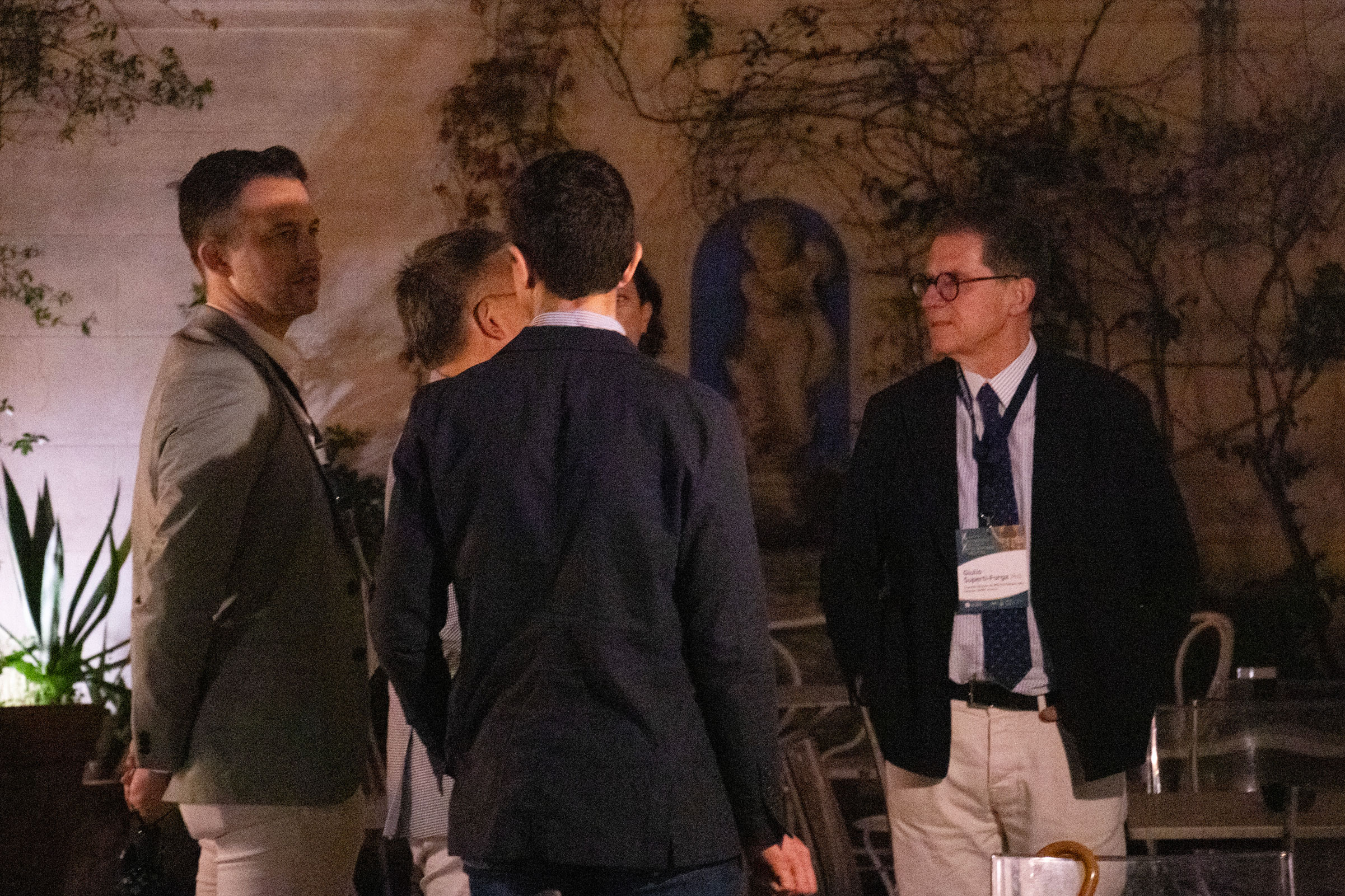
We sincerely thank all participants, speakers, and attendees who contributed to the success of the symposium, and especially the organizers Tanja Kortemme, Petra Schwille, Ben Lehner, Giulio Superti-Furga, along with the chairs Lucia Altucci, Antonino Cattaneo, and Massimo Pinzani, for their dedication, passion, and vision.
An event that took place in a historically rich setting, yet always looking forward toward the most visionary and innovative futures in science.