
Cenni biografici
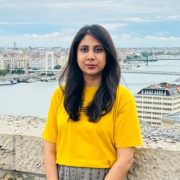
Ayesha Rehman earned her B.Sc. in Biotechnology with distinction from the International Islamic University, Islamabad, Pakistan, in 2018. During her undergraduate studies, she completed internships at the Armed Forces Institute of Pathology, Rawalpindi, where she gained hands-on experience in molecular biology techniques and diagnostic workflows. She also volunteered with the Worldwide Fund for Nature, Islamabad, contributing to projects focused on waterborne disease prevention and awareness campaigns on recycling and environmental sustainability. In addition, she actively participated in breast cancer awareness campaigns, supporting community outreach and advocacy efforts.
She pursued her M.Sc. in Healthcare Biotechnology at the National University of Sciences and Technology, Islamabad, on a merit scholarship. During this time, she also served as a graduate teaching assistant, supporting students in molecular biology coursework and laboratory techniques. Her research project involved using mouse models to investigate the therapeutic effects of biogenic selenium nanoparticles in rheumatoid arthritis.
She later moved to Naples, Italy, to pursue her Ph.D. in Biochemical and Biotechnological Sciences at the University of Campania “Luigi Vanvitelli” (2021–2024), where she studied mitochondrial transfer and drug resistance in breast cancer. During her doctoral training, she developed expertise in 2D/3D co-culture systems, stem cell biology, and modeling the tumor microenvironment.
In 2025, she joined Fondazione Ri.MED in Palermo as a Scientist in Regenerative Medicine, focusing on organoid models of cholangiopathies and tumor progression. She has co-authored high-impact publications, received national awards, and remains dedicated to advancing translational research that bridges cellular modeling with molecular therapeutics.
Attività Scientifica
Her research primarily focuses on developing 3D models to capture the heterogeneity of intrahepatic cholangiocarcinoma and uncover novel molecular drivers of disease progression. In parallel, she contributes to the characterization and optimization of organoid systems aimed at supporting the development of an artificial bile duct for regenerative and translational applications.