
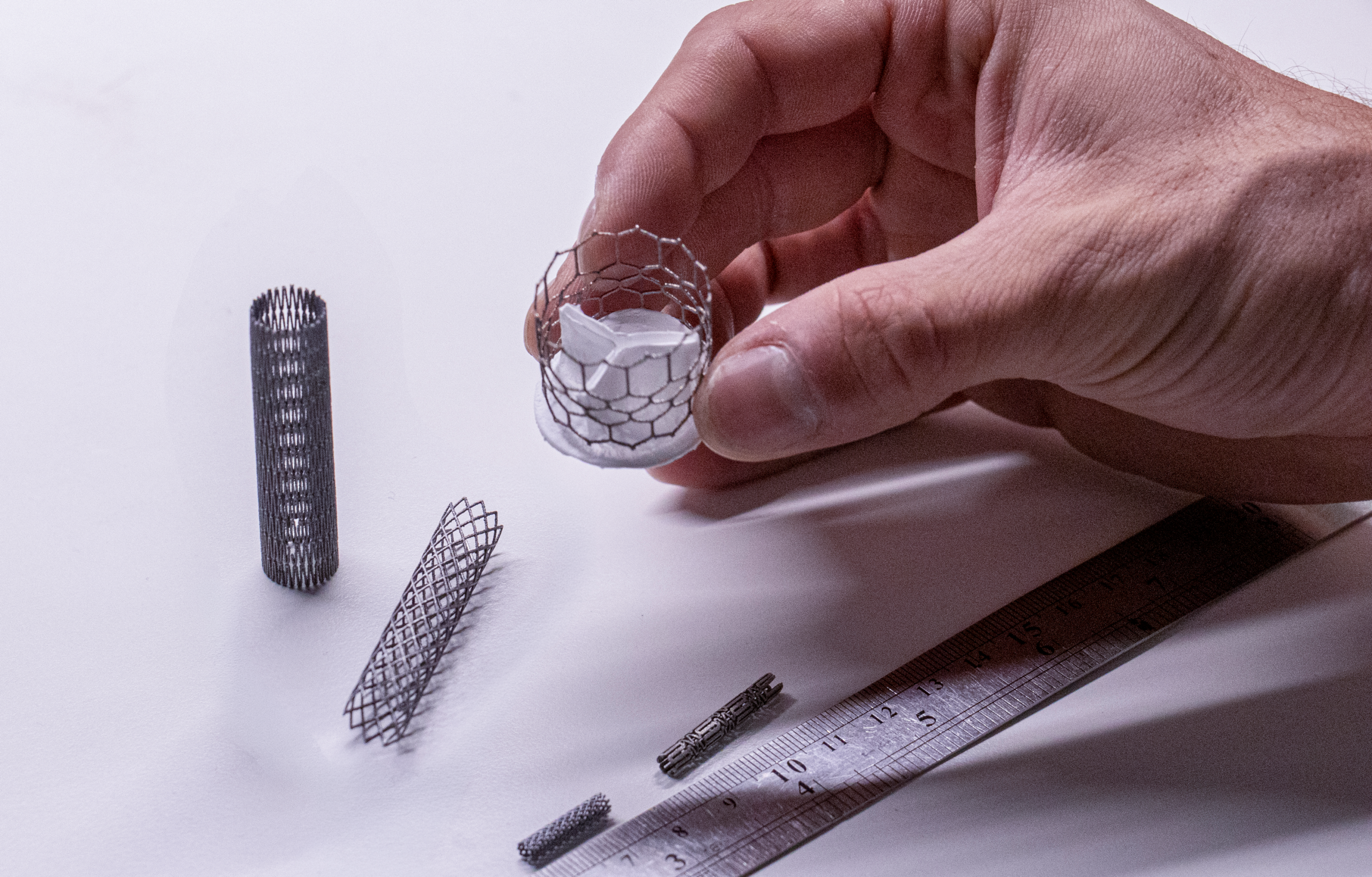
Palermo, August 10, 2026 – Research on bioengineered heart valves developed by Antonio D’Amore (Fondazione Ri.MED, University of Pittsburgh and University of Palermo) has received a new and significant international recognition with the award of an R01 grant from the U.S. National Institutes of Health (NIH).
The innovative concept behind the project, entitled “Structural Biomimicry to Improve Engineered Heart Valve Leaflet Function and Remodeling,” lies in the application of structural biomimicry principles to the development of a new generation of heart valves. The goal is to overcome the intrinsic limitations of currently available prostheses by developing valve replacements capable of integrating seamlessly with the body, accommodating its mechanical stresses, and promoting proper cellular remodeling following implantation.
The funding program, which is characterized by extremely competitive selection criteria, will be supported in particular by the National Heart, Lung, and Blood Institute (NHLBI) and will provide a total of $3,045,679 in funding for the period from July 2026 to March 2030. The research activities will be led by the University of Pittsburgh as the recipient institution, under the direction of D’Amore as Principal Investigator. The project’s Co-Investigators are Prof. Giovanni Ferrari (Columbia University, NYC), Prof. William Wagner (University of Pittsburgh), and Dr. Garret Coyan (Vanderbilt University).
Although the grant is formally awarded to the University of Pittsburgh, the project stems from a research program developed through an international network of collaborations involving, in addition to the U.S. university, UPMC, ISMETT, Fondazione Ri.MED, and the University of Palermo.
“I would like to express my particular gratitude to Fondazione Ri.MED, whose support has been instrumental in the development of the research program that led to this project,” said Antonio D’Amore. “This research has grown thanks to the complementary expertise available across Ri.MED, the University of Pittsburgh, UPMC, ISMETT, and the University of Palermo, demonstrating how collaboration among institutions can generate results with significant impact.”
Indeed, this project represents the natural continuation of the research program that D’Amore has been successfully pursuing for years within Fondazione Ri.MED, and which has already earned him three major grants from the European Research Council (ERC), in addition to numerous other recognitions and awards.
From a technological perspective, the team’s efforts will focus both on the development of innovative robotic manufacturing processes and on their preclinical validation. Automation will make it possible to faithfully replicate the complex geometric microarchitecture of valve leaflets, while investigating the biological mechanisms that regulate tissue formation in vivo. The prosthesis is designed to serve as a temporary scaffold: once implanted, it guides the natural regeneration of the patient’s cells and gradually dissolves, leaving in its place viable, autologous cardiac tissue capable of adapting over time.
The ambition is to contribute to the development of increasingly effective and durable valve replacements, capable of integrating with the body and adapting over time.
The award of this grant confirms the value of the research developed within the scientific ecosystem in which Ri.MED is committed to promoting international collaborations and supporting highly innovative research projects capable of translating scientific results into new therapeutic opportunities for patients.